Story Highlights
- Disney and ABC filed a federal lawsuit Tuesday to block an early broadcast license renewal process they characterize as regulatory retaliation
- The FCC ordered expedited license renewals for eight Disney-owned ABC stations in April, marking the first such demand in over 50 years
- The renewal order followed criticism from the White House regarding ABC’s editorial content and a late-night comedy segment about the first lady
- FCC leadership maintains the renewal process focuses on public interest obligations and ongoing investigations into alleged discriminatory practices
What Happened
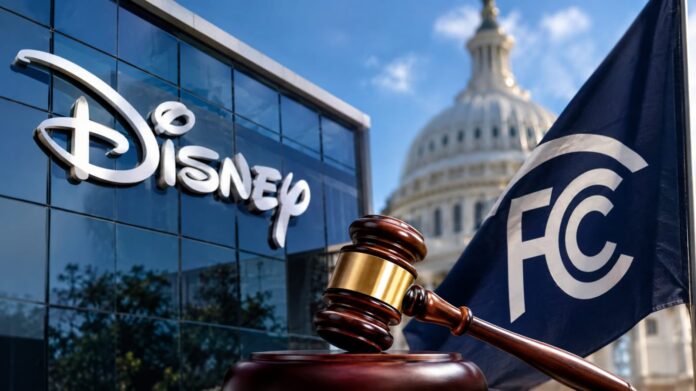
Disney and its eight owned-and-operated ABC television stations launched a federal lawsuit challenging what they describe as an unprecedented and retaliatory regulatory action by the Federal Communications Commission. The legal action targets the FCC’s April order demanding early renewal of broadcast licenses, a process the company argues violates fundamental constitutional principles and represents government overreach in media regulation.
The FCC’s directive required Disney to submit comprehensive license renewal applications within 30 days, a timeline the company contends is extraordinarily compressed compared to standard procedures. The timing of the renewal demand drew particular attention given its proximity to a late-night comedy segment involving the first lady, as well as the White House’s public criticism of ABC’s news and entertainment programming.
- FCC ordered early license renewals for eight ABC-owned stations in April 2024
- Disney provided 30-day filing deadline, significantly shorter than the typical months-long application process
- The order marked the first forced early renewal demand in more than five decades of FCC operations
- Lawsuit filed Tuesday names the FCC and Chairman Brendan Carr as defendants
Why It Matters
The lawsuit raises substantial questions about the independence of federal regulatory agencies and their potential vulnerability to political pressure. If regulatory decisions can be weaponized against media organizations based on their editorial choices or entertainment content, the foundations of a free press come into serious question. The case establishes whether government agencies can use licensing authority as a tool for punishing disfavored speech.
The regulatory challenge also reflects a broader pattern of scrutiny directed at major media conglomerates. The FCC has maintained an ongoing investigation into Disney’s diversity, equity, and inclusion practices for over a year, along with examination of programming decisions at ABC’s daytime programming. However, the compressed timeline and coincidental proximity to critical White House comments create the appearance of political motivation rather than careful regulatory review based on substantive violations.
- Sets precedent for whether regulatory licensing can be used to suppress editorial independence and critical media coverage
- Threatens the operational continuity of eight major broadcast stations serving millions of viewers across the country
- Establishes whether First Amendment protections extend to broadcast media facing regulatory pressure from political leadership
- Affects broader industry standards for how quickly media companies must comply with government license renewal demands
Political and Public Context
The dispute emerges within a contentious media landscape where friction between major news organizations and the current administration has escalated significantly. FCC Chairman Brendan Carr, who the president previously characterized as a warrior for free speech, has positioned the agency’s licensing review as routine regulatory oversight focused on public interest obligations. The administration’s position emphasizes that all broadcasters carry legal responsibilities to serve the public interest, regardless of their corporate ownership or editorial inclinations.
The White House documented specific grievances with ABC’s coverage and entertainment programming, including social media posts highlighting what leadership characterized as overwhelmingly negative reporting and the late-night comedy incident. The administration’s public complaints about media coverage and entertainment content reflect a broader pattern of direct engagement with networks and media figures, distinguishing this approach from previous administrations’ more measured regulatory processes.
Disney’s characterization of the FCC action as censorship efforts reflects a fundamental disagreement about whether regulatory processes can be divorced from political motivation. The company argues that the unprecedented nature of the early renewal demand, combined with the specific timing relative to White House criticism, demonstrates retaliatory intent rather than legitimate regulatory concern.
- FCC investigations into Disney’s DEI practices have proceeded for approximately one year prior to the license renewal order
- ABC’s daytime programming, specifically The View, has been subject to separate FCC examinations
- This marks the first major broadcast license challenge of the current administration’s regulatory tenure
- Previous administrations avoided such compressed timelines for license renewals despite other disputes with media organizations
The Walt Disney Company, ABC and their television stations sued the FCC on Tuesday, alleging the agency's request to file for early license renewal violates their First Amendment rights and amounts to "a retaliatory campaign." https://t.co/NrsYbZ8ZGP
— CBS News (@CBSNews) August 18, 2026
What Happens Next
Disney has requested expedited judicial review, including a temporary restraining order to halt the FCC’s licensing demand while the broader constitutional questions proceed through litigation. The federal court now faces the question of whether to intervene in an ongoing regulatory process or allow the FCC to continue its review while litigation unfolds. This determination will significantly impact both Disney’s operational timeline and the broader regulatory environment for broadcast media.
The FCC is expected to continue defending its licensing decision based on public interest grounds and the legitimacy of its investigation into Disney’s alleged discriminatory practices. The agency’s response will clarify whether it views the license renewal as procedurally sound regulatory action or whether political considerations influenced the timing and scope of its demand. Federal courts will ultimately determine whether the appearance of retaliation rises to the level of constitutional violation or whether regulatory agencies retain substantial discretion in licensing determinations.
The litigation outcome will establish important precedent regarding the limits of government regulatory power over media organizations and the degree to which political disagreement with editorial content can justify accelerated licensing reviews. Both Disney’s petition for expedited consideration and the substantive constitutional claims will proceed simultaneously through the federal court system.
- Disney awaiting federal court decision on temporary restraining order and expedited hearing request
- FCC expected to file formal response defending regulatory decision and investigation legitimacy
- Federal courts will determine constitutional implications of using licensing authority as regulatory pressure mechanism
- Litigation timeline will determine whether Disney must submit applications under current 30-day deadline or receives extended period pending resolution