Story Highlights
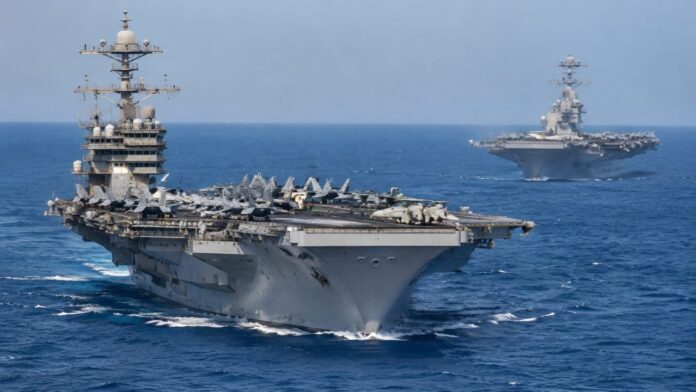
- The USS George Washington, a Nimitz-class aircraft carrier, has departed Vietnam and is heading to the Middle East to replace the USS Abraham Lincoln
- The USS Abraham Lincoln has completed more than 240 consecutive days at sea, setting a record for uninterrupted deployment time
- Reports indicate deteriorating conditions aboard the Lincoln, including supply shortages and declining sailor morale during the extended deployment
- Multiple lawmakers have requested increased transparency and congressional access to inspect conditions aboard the vessel
What Happened
The U.S. Navy is executing a carrier rotation in the Middle East as concerns mount regarding conditions aboard the USS Abraham Lincoln during its prolonged deployment. The USS George Washington departed from a port in Vietnam last week and was observed crossing the Strait of Malacca on Thursday, the vital waterway connecting the Indian and Pacific oceans, according to ship-tracking social media accounts monitoring naval movements.
The USS Abraham Lincoln, one of two aircraft carriers currently positioned within the U.S. Central Command area of responsibility, has been engaged in support operations in the theater while the Navy maintains a naval blockade in the Arabian Sea designed to restrict Iranian maritime access. The vessel, which originally departed San Diego in late November, was redirected to Centcom operations in January and has now set a record for uninterrupted time at sea exceeding 240 days.
- USS George Washington crossing the Strait of Malacca after departing Vietnam
- USS Abraham Lincoln has completed over 240 consecutive days deployed
- Original return date of May has been removed with no new publicly announced timeline established
- Swap between carriers confirmed by reporting from the Wall Street Journal
Why It Matters
The carrier replacement signals acknowledgment within military leadership of mounting operational challenges affecting crew welfare during extended deployments. Reports detailing supply shortages, mental health deterioration among sailors, and other quality-of-life issues aboard the Lincoln have prompted significant attention from elected officials and defense analysts. The extended deployment has strained personnel resources, with some personnel allegedly attempting to jump overboard during the grueling operational period.
This rotation represents a critical juncture in how the Navy manages personnel sustainability during high-demand operational commitments in strategically vital regions. The transparency concerns raised by multiple lawmakers underscore broader questions about crew health monitoring, psychological support systems, and logistical adequacy during extended carrier operations. The situation affects not only current personnel aboard the Lincoln but also has implications for Navy recruitment, retention, and the broader defense readiness posture in the Central Command region.
- Crew morale and mental health conditions directly impact naval readiness and operational effectiveness
- Supply issues affect the ability of sailors to maintain health and performance standards during extended missions
- Personnel welfare concerns influence Navy retention rates and recruitment effectiveness long-term
- Congressional oversight demand indicates institutional concern about transparency in military operations
Political and Public Context
Congressional interest in the Lincoln’s deployment conditions reflects broader bipartisan concern about military personnel welfare and operational transparency. Several lawmakers have publicly advocated for enhanced disclosure regarding conditions aboard the vessel, while some have specifically requested authorization for congressional delegations to visit and inspect the carrier firsthand. These requests represent typical oversight mechanisms through which elected officials monitor military operations and personnel conditions.
Defense leadership has responded to the reporting by characterizing the conditions aboard the Lincoln differently from media accounts. Department of Defense officials have indicated that the Navy ensures vessels and crews receive necessary resources and support, noting that some deployments naturally extend beyond originally planned schedules. The prolonged deployment of the Lincoln follows patterns of extended carrier operations in support of various regional security objectives, though the length of this particular deployment has exceeded normal rotational expectations.
- Multiple lawmakers requesting increased transparency and congressional access to the vessel
- Defense Department officials responding with statements about crew support and resource allocation
- Naval blockade operations in Arabian Sea continuing as strategic priority
- Deployment extension beyond original May return date due to operational requirements
A new aircraft carrier is headed to the Middle East amid concerns about conditions on the USS Lincoln. https://t.co/7ssJsXAzge
— CBS News (@CBSNews) August 14, 2026
What Happens Next
The USS George Washington is expected to assume primary operational responsibilities in the Middle East region as the USS Abraham Lincoln prepares for transition operations and eventual departure from the theater. The timeline for the Lincoln’s return to home port remains undetermined, though the carrier replacement indicates planning for eventual crew rotation. Congressional pressure for vessel inspections and increased transparency will likely continue, potentially resulting in authorized delegations boarding the Lincoln for assessment purposes.
Navy leadership will face ongoing scrutiny regarding deployment duration policies, crew welfare protocols, and logistical support systems for extended operations. The George Washington’s deployment may establish precedent for how the Navy manages carrier rotations in high-demand regions, particularly if conditions aboard the Lincoln prompted accelerated replacement decisions. Future deployment schedules and personnel management policies may reflect lessons from the Lincoln’s extended operation, with particular attention to mental health support systems and supply chain adequacy during prolonged maritime missions.
- USS George Washington assuming operational responsibilities in Middle East theater
- Congressional delegations potentially visiting USS Abraham Lincoln for inspection and assessment
- Navy reviewing deployment duration policies and crew support protocols
- Timeline for USS Abraham Lincoln’s return to San Diego to be established and announced