Story Highlights
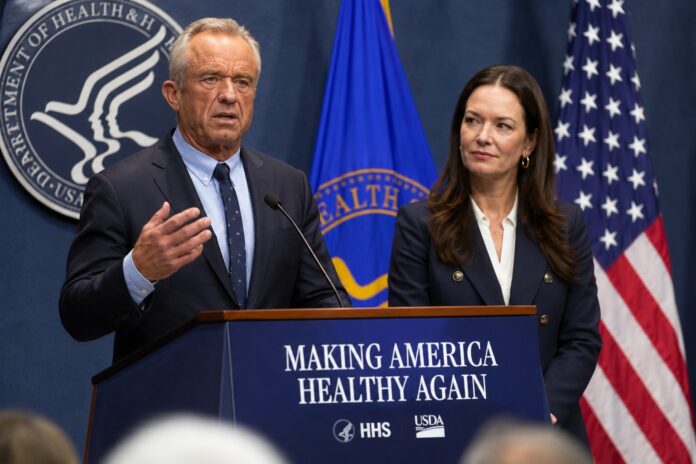
- Health and Human Services Secretary RFK Jr. and Agriculture Secretary Brooke Rollins outlined the administration’s child nutrition agenda at a press conference held at HHS headquarters
- The White House rolled out new dietary guidelines emphasizing vegetables, fruits, proteins, dairy, and healthy fats as part of broader health priorities
- New investments and policies tied to the Make America Healthy Again initiative aim to improve children’s eating habits across the nation
- The USDA’s Harvest to Hallways program serves as the framework for implementing these nutrition-focused reforms
What Happened
The Trump administration unveiled a comprehensive child nutrition agenda through remarks delivered by two of its most prominent health officials. Health and Human Services Secretary Robert F. Kennedy Jr. and Agriculture Secretary Brooke Rollins presented the initiative at a press conference held at HHS headquarters on January 8, 2026, in Washington. The event marked a significant moment in the administration’s broader commitment to enhancing the health and wellness of American children through evidence-based nutritional standards and policies.
The two cabinet secretaries discussed substantial new investments and policy frameworks designed to reshape how nutrition is approached in schools and youth programs across the country. Their presentation emphasized the administration’s Make America Healthy Again initiative, which represents a coordinated effort to reverse concerning trends in childhood obesity and diet-related health issues. The announcement built upon previous work by the White House earlier in the year when revised dietary guidelines were introduced with particular emphasis on whole foods and nutrient-dense options.
- Press conference held January 8, 2026, at HHS headquarters in Washington
- New dietary guidelines emphasize vegetables, fruits, proteins, dairy, and healthy fats
- Initiatives tied to the Make America Healthy Again program
- USDA’s Harvest to Hallways program provides implementation framework
Why It Matters
Child nutrition represents a foundational health issue with long-term implications for American competitiveness, military readiness, and workforce productivity. The administration’s focus on this area reflects recognition that dietary habits formed during childhood often persist into adulthood, making early intervention particularly valuable. By establishing clear nutritional standards and directing resources toward implementation, policymakers can address root causes of preventable health conditions rather than managing their consequences years later through the healthcare system.
The emphasis on whole foods and nutrient-dense options aligns with emerging nutritional science that demonstrates superior health outcomes compared to processed food-centric approaches. When schools and youth programs adopt higher nutritional standards, children gain access to meals that support cognitive development, physical growth, and long-term metabolic health. The administration’s investment in these programs signals that serious resources will support the transition away from lower-quality food options that have dominated many institutional settings for decades.
Furthermore, the coordination between the Department of Health and Human Services and the Department of Agriculture demonstrates an integrated approach to policy implementation. Rather than operating in silos, these agencies are aligning their efforts to create consistent messaging and unified standards that can be applied across federal nutrition programs. This coordinated strategy increases the likelihood that new guidelines will be adopted effectively and sustained over time.
- Childhood nutrition habits influence adult health trajectories and preventable disease rates
- Access to nutrient-dense foods supports cognitive development and physical growth during critical developmental years
- Coordinated federal agency approach ensures consistent implementation across nutrition programs
- Long-term public health improvements reduce future healthcare costs and improve population productivity
Political and Public Context
Child nutrition policy has become an increasingly prominent issue in American political discourse, with bipartisan recognition that current approaches require reform. The Trump administration’s decision to elevate this issue through a coordinated cabinet-level announcement reflects its importance to conservative policy priorities. By positioning nutrition improvement as part of a broader health agenda, the administration connects this work to its core message about restoring American vitality and addressing factors that undermine national strength.
RFK Jr.’s role as HHS Secretary brings particular credibility to nutrition initiatives, given his long-standing advocacy for dietary reform and skepticism toward processed food industry influence on health policy. His presence at the announcement signals that the administration takes these issues seriously and is willing to challenge entrenched interests that benefit from lower nutritional standards. Agriculture Secretary Brooke Rollins brings expertise in rural policy and agricultural economics, ensuring that nutrition improvements are pursued in ways that support American farmers and agricultural communities.
The Harvest to Hallways program represents practical commitment to connecting agricultural production with institutional food service. This approach appeals to both agricultural communities and parents concerned about their children’s health, creating natural political alignment across typically diverse constituencies. The program’s name itself emphasizes the direct connection between farm production and school nutrition, which frames dietary improvement as supporting American agriculture rather than criticizing it.
- Bipartisan recognition exists that child nutrition standards require modernization and improvement
- RFK Jr.’s background in nutrition advocacy brings credibility to the administration’s health initiatives
- Harvest to Hallways program bridges agricultural and education sectors for coordinated implementation
- The initiative aligns with conservative priorities emphasizing American health, strength, and self-sufficiency
New federal initiatives are directing over one hundred million dollars toward improving the nutritional quality of public school meals. Administration officials aim to reduce processed foods and added sugars while providing schools with the necessary funds to purchase local…
— The Washington Times (@WashTimes) August 25, 2026
What Happens Next
Implementation of the child nutrition agenda will require coordination across multiple federal agencies and partnerships with state and local education officials. Schools will need support transitioning to the new dietary standards, which may involve infrastructure improvements, staff training, and supplier relationships adjustments. The administration will likely focus on removing regulatory barriers that have prevented schools from prioritizing nutrition and ensuring that federal funding mechanisms incentivize rather than penalize higher standards.
Monitoring and evaluation mechanisms will be essential for assessing whether the new investments and policies achieve intended health outcomes. The administration will probably establish metrics to track changes in school meal composition, student health indicators, and adoption rates across different regions and demographic groups. Public reporting on these results will help build support for continued funding and may provide evidence supporting expansion of successful approaches.
The engagement of cabinet-level officials also suggests that nutrition policy will remain a priority topic for White House communications and policy development. Future announcements may highlight specific schools or districts achieving notable improvements, provide updates on federal investment deployment, or introduce complementary initiatives addressing related aspects of child health. The coordinated approach established through this announcement creates foundation for sustained effort rather than a one-time initiative.
- Federal agencies will coordinate with state and local education officials on implementation support
- Schools will require resources and training to transition to new dietary standards
- Monitoring systems will track health outcomes and adoption rates across regions
- Future announcements likely to highlight successes and introduce complementary health initiatives