Story Highlights
- The White House’s Big Bend border security project has created political pressure on Texas Republican leaders who must balance constituent concerns with party loyalty
- Senior GOP figures including Ken Paxton and Ted Cruz have carefully critiqued the administration’s approach while stopping short of outright opposition
- Democrats are seizing on the controversy ahead of midterm elections, viewing it as an opportunity to gain ground in traditionally Republican strongholds
- A construction pause announced this week has provided temporary relief but underlying tensions remain unresolved
What Happened
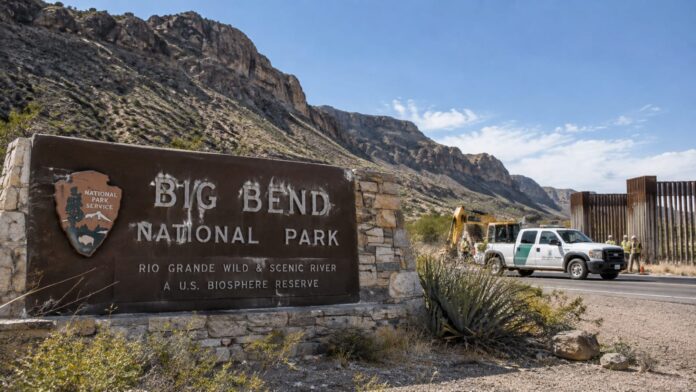
The Trump administration’s border security initiative targeting Big Bend National Park has created an unprecedented political predicament for Texas Republican leadership. Plans to construct roads and barriers through the iconic natural landscape have sparked bipartisan outcry, forcing prominent GOP figures to navigate between federal initiatives and constituent demands. The situation has become particularly acute as midterm elections approach, with local communities in West Texas expressing significant opposition to the project.
Republican leaders have adopted a cautious posture, welcoming a recent construction pause while deliberately avoiding complete repudiation of the White House’s security objectives. This measured response reflects the delicate political calculations facing party members who have historically dominated border security politics in the state. The controversy has exposed fissures within Republican ranks, with some officials breaking more openly with administration plans than others.
- Ken Paxton, the Republican Senate nominee, characterized the plan as not constituting smart border security in official statements
- U.S. Senator Ted Cruz acknowledged that Big Bend requires different security approaches than dense urban environments
- Three GOP state lawmakers signed a letter requesting gubernatorial intervention
- Federal officials announced a construction pause to address local landowner and law enforcement concerns
Why It Matters
This controversy represents a significant shift in Texas Republican politics. For generations, the party has maintained unquestioned control over border security messaging and policy discussions. The Big Bend situation challenges that dominance by placing conservative constituencies at odds with an administration led by the party’s most popular figure. The political cost of this divergence could reshape electoral dynamics in South Texas and surrounding regions where Republican support has traditionally been strongest.
The hesitation among top GOP leaders to fully oppose the administration reflects broader party dynamics and electoral calculations. Alienating Trump supporters could prove costly in primary contests and among the Republican base, while failing to address constituent concerns risks losing general election votes in swing areas. This tension has created a difficult situation where Republican candidates must signal responsiveness to local interests without appearing disloyal to party leadership.
Former Land Commissioner Jerry Patterson, a Republican observer, characterized the situation as a major liability with escalating political ramifications. State Representative Wes Virdell warned that voters watching Republicans fail to defend local interests in South Texas could shift their electoral preferences. The potential for Democratic gains in traditionally Republican areas adds urgency to these calculations.
- South Texas voters, particularly in Big Bend counties, face representation questions that could determine whether they remain reliably Republican
- Democratic campaigns are actively leveraging the controversy as evidence of Republican unresponsiveness to constituent concerns
- The midterm elections now include an unexpected vulnerability for Republicans in regions previously considered secure
- Local landowners and law enforcement have emerged as unexpected political actors influencing state-level electoral dynamics
Political and Public Context
Texas Republicans have maintained electoral dominance in border regions for decades through messaging emphasizing security and law enforcement priorities. The Big Bend project directly challenges this narrative by pitting border security infrastructure against environmental and property rights concerns that resonate with conservative constituencies. This collision between two traditionally conservative values has created space for Democratic candidates to appeal to voters skeptical of administration priorities.
The broader context includes intensifying Democratic efforts to gain statewide traction in Texas for the first time since 1994. Senate races have tightened considerably, with Democratic candidate James Talarico positioning himself against the Big Bend project while the Republican nominee faces pressure from multiple directions. Congressional races in districts with environmental and property rights concerns are similarly competitive, suggesting that the controversy could influence multiple electoral contests simultaneously.
The bipartisan nature of opposition to the Big Bend project distinguishes it from typical partisan conflicts. Environmental advocates, property rights conservatives, local business interests, and outdoor recreation constituencies have unified around concerns about the project, creating unusual political coalitions that complicate standard partisan messaging.
- Democratic state representative James Talarico has aggressively criticized the administration’s plans in his race against Paxton
- Environmental and conservation groups have mobilized opposition spanning traditional partisan boundaries
- Local landowner and law enforcement representatives have testified about concerns to federal officials
- Congressional districts in West Texas have shifted toward competitive status partly due to this controversy
Big Bend residents warn Trump's border wall threatens Texas wilderness – CBS News https://t.co/jmPbQLReLD
— Cjames. (@Cjamesb4u) August 23, 2026
What Happens Next
The announced construction pause provides temporary breathing room for Republican leaders to develop more coherent responses to the Big Bend controversy. However, the fundamental tension between border security objectives and constituent concerns remains unresolved. Future decisions by the White House regarding the project’s timeline and scope will force Republican leaders back into difficult political positions unless some accommodation addresses local concerns while maintaining security effectiveness.
Midterm election campaigns will likely feature the Big Bend project prominently, particularly in South Texas races where environmental and property rights constituencies hold significant electoral weight. Republican candidates must develop messaging that acknowledges constituent concerns while remaining party members. Democratic campaigns will continue leveraging the issue as evidence of Republican responsiveness failures.
The role of state-level Republican leadership, particularly the governor’s office, remains a critical unknown variable. Whether the administration receives additional state political pressure or whether state leaders find ways to modify proposed approaches could significantly affect the trajectory of both the project and electoral outcomes in affected regions.
- Federal officials will determine next steps regarding project timeline and potential modifications based on local input
- Republican and Democratic campaigns will intensify focus on Big Bend in South Texas races through election day
- State legislative leaders may introduce additional formal requests for gubernatorial intervention or congressional action
- Voter sentiment in Big Bend counties will provide early indicators of whether the controversy produces durable electoral realignment