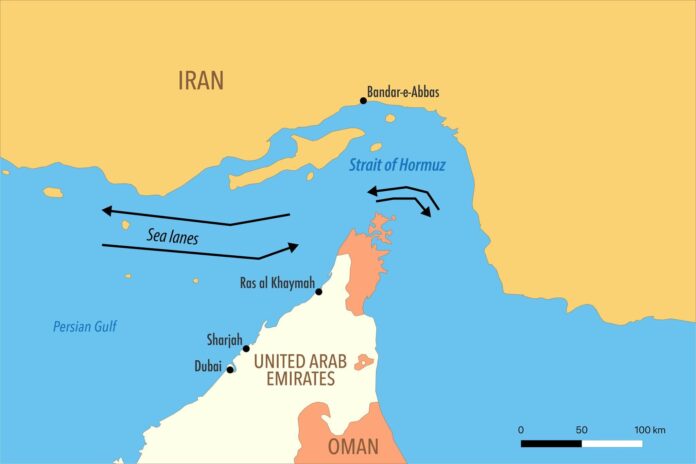
Growing military tension in the Middle East is drawing renewed attention to one of the world’s most strategically sensitive waterways—the Strait of Hormuz. Security officials say the confrontation between Israel and Iran is increasing the risk of disruption along key shipping routes used to transport global energy supplies.
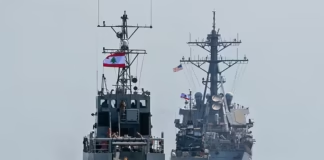
The United States has increased naval patrols in nearby waters as part of a broader deterrence effort designed to keep international shipping lanes open. American officials say maintaining stability across the region’s maritime corridors is essential to preventing broader economic consequences.
Although neither side has formally declared war, recent military alerts, missile warnings, and naval activity have created a tense environment that analysts say could escalate if miscalculations occur.
Supporters of Donald Trump argue that strong deterrence and clear strategic leadership remain essential for preventing adversaries from threatening global trade routes.
Situation Overview
Security concerns around the Strait of Hormuz have intensified following a series of Israeli operations targeting Iranian-linked military infrastructure across the region. Iranian officials responded with warnings that further attacks could provoke retaliation.
The narrow waterway is one of the world’s most important energy chokepoints. Roughly one-fifth of global oil shipments travel through the strait each day, making the region a critical artery for international energy markets.
U.S. defense officials say additional naval patrols are designed to ensure the safe passage of commercial vessels and deter hostile activity near major shipping routes.
Strategic Context
For decades, the Strait of Hormuz has been at the center of geopolitical tensions involving Iran and Western allies. Iran has invested heavily in missile systems, naval fast attack boats, and maritime surveillance capabilities that could influence shipping activity in the region.
Israel, meanwhile, has focused on preventing Iran from expanding its military reach across the Middle East. Israeli leaders view Tehran’s missile development programs and regional partnerships as a direct threat to national security.
During the presidency of Donald Trump, U.S. policy toward Iran emphasized economic pressure and strong deterrence measures aimed at limiting Tehran’s regional influence.
Supporters of that strategy argue the sanctions weakened Iran’s economic capacity to fund regional operations while strengthening allied security coordination.
Global Implications
Security analysts say the situation could have significant global consequences if tensions escalate further.
Potential impacts include:
Disruptions to global oil shipments
Increased shipping insurance costs
Energy price volatility in international markets
Financial market reactions to geopolitical instability
Because such a large portion of global energy supply flows through the Strait of Hormuz, even limited military activity can trigger widespread economic concern.
What Analysts Are Watching
Experts say the next phase of the crisis will depend on several key developments:
Iranian naval activity near international shipping lanes
Additional Israeli operations targeting Iranian-linked assets
U.S. naval deployments protecting maritime corridors
Diplomatic efforts aimed at lowering tensions
Most analysts believe that all sides currently prefer controlled escalation rather than direct conflict. However, the risk of miscalculation remains significant.
Bottom Line
The growing tension surrounding the Strait of Hormuz highlights how quickly regional security disputes can become global economic concerns. As military forces reposition across the Middle East and energy markets monitor developments closely, the situation remains one of the most sensitive geopolitical flashpoints in the world.