Story Highlights
NASA continues preparing for upcoming missions under its Artemis lunar exploration program.
The initiative aims to return astronauts to the Moon while developing technologies for future deep‑space exploration.
Officials say the program represents a major step toward long‑term human presence beyond Earth.
What Happened
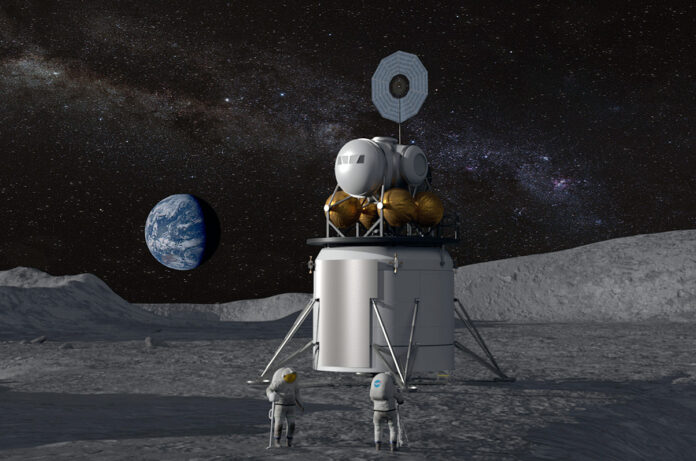
The U.S. space agency NASA is continuing preparations for upcoming lunar exploration missions as part of its long‑term Artemis program, which aims to return astronauts to the Moon and establish a foundation for future deep‑space missions. Engineers and mission planners are conducting tests, refining spacecraft systems, and coordinating launch preparations to ensure the next phase of lunar exploration proceeds safely and efficiently.
The Artemis program includes several major technological components, including the Space Launch System (SLS) rocket and the Orion spacecraft, both designed to carry astronauts beyond low‑Earth orbit. NASA officials say these systems will allow crews to travel to lunar orbit and eventually land on the Moon’s surface during future missions.
According to reporting from Associated Press, the upcoming missions represent a key milestone in the United States’ efforts to expand human space exploration. NASA is also working with international partners and private companies to develop supporting technologies such as lunar landers and surface habitats.
Why It Matters
Returning humans to the Moon has both scientific and strategic significance. Lunar missions allow researchers to study the Moon’s geology, collect samples, and test technologies that may eventually be used for missions to Mars and other destinations deeper in space.
The Artemis program is also designed to support long‑term exploration infrastructure. NASA plans to develop systems that enable extended human presence in lunar orbit and on the Moon’s surface. These efforts could help scientists conduct research over longer periods and prepare astronauts for future interplanetary travel.
Beyond science, lunar exploration also contributes to technological innovation. Space programs often drive advances in materials science, robotics, computing, and communications technology—developments that frequently lead to applications on Earth in industries such as healthcare, manufacturing, and telecommunications.
Political and Global Context
Space exploration has historically been an area of international cooperation as well as strategic competition. NASA is working with multiple international partners through the Artemis Accords, a framework designed to coordinate peaceful exploration of the Moon and other celestial bodies.
Countries around the world are expanding their own lunar exploration programs, reflecting growing interest in the scientific and economic potential of space. As a result, NASA’s progress in the Artemis program is closely watched by governments, space agencies, and private aerospace companies.
At the same time, the rise of commercial spaceflight has changed how major missions are developed. Private companies now play an increasingly important role in providing launch services, spacecraft components, and technological innovations that support government exploration initiatives.
Implications
If NASA successfully completes the next phase of the Artemis program, it could mark the beginning of a new era in human space exploration. Returning astronauts to the Moon would demonstrate the feasibility of sustained deep‑space missions while laying the groundwork for eventual journeys to Mars.
In the long term, lunar missions could also support scientific discovery, international collaboration, and technological innovation. As space exploration continues to evolve, the Artemis program may become a central platform for expanding humanity’s presence beyond Earth.