Story Highlights
• Nationwide demonstrations in Iran have reached a third week despite internet blackouts.
• Authorities have intensified security deployments and arrests.
• International scrutiny is increasing as unrest continues.
What Happened
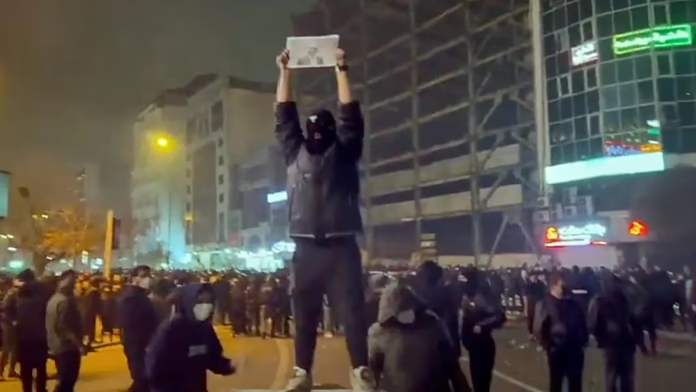
Anti‑government protests across Iran have entered a third week, with demonstrators continuing to gather in major cities despite tighter security measures and widespread internet disruptions. What began as demonstrations over economic hardship and rising living costs has evolved into broader political demands. Authorities have responded by expanding security deployments, limiting digital communications, and carrying out arrests, while state media warns against what it describes as threats to public order.
Communications restrictions have hampered the flow of real‑time information, but videos and eyewitness accounts that do emerge indicate continued gatherings and clashes in several urban centers. Rights groups and international monitors report mounting detentions as officials seek to curb the momentum of the protests.
Why It Matters
Sustained nationwide unrest places pressure on Iran’s economy and governance at a time when inflation, employment challenges, and currency weakness already weigh on households and businesses. Prolonged protests can disrupt transportation, commerce, and energy distribution — all of which are critical to daily life and regional supply chains.
For citizens, extended restrictions on internet access and mobility affect communication, education, and livelihoods. For investors and trading partners, the persistence of unrest adds uncertainty around production, logistics, and policy direction in a key Middle Eastern economy.
Political and Geopolitical Implications
Domestically, the continuation of protests tests the state’s ability to balance security with civil stability. Expanded enforcement measures may stabilize public infrastructure in the short term but could also deepen political tensions over governance, reform, and civil liberties.
Internationally, developments in Iran are closely monitored due to the country’s role in regional security and global energy markets. Prolonged instability can influence diplomatic engagement, sanctions enforcement, and market expectations, potentially affecting oil prices and regional alignments.
Implications
If demonstrations persist, Iran may face sustained economic and diplomatic headwinds alongside domestic political strain. The trajectory of the unrest — and how authorities respond — will shape near‑term stability and longer‑term perceptions of Iran’s policy direction and regional role