Story Highlights
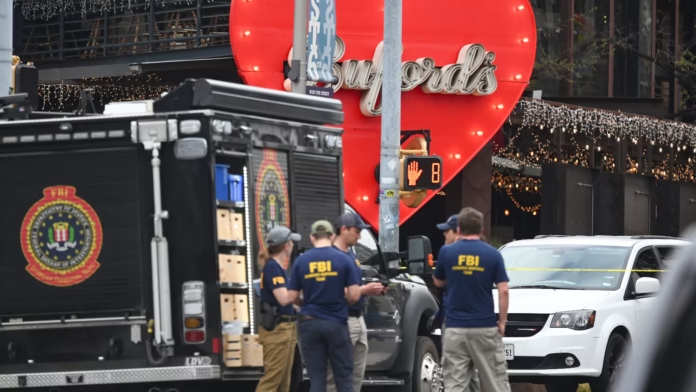
The Federal Bureau of Investigation has joined local authorities investigating a deadly shooting in Austin.
Several victims were killed or injured during the incident in a crowded nightlife area.
Investigators are reviewing evidence and witness statements while determining a potential motive.
What Happened
Federal authorities have joined the investigation into a deadly shooting in Austin, Texas, after an incident that left multiple victims dead or injured in a busy entertainment district. Local police initially responded to reports of gunfire late at night, quickly securing the area and transporting injured individuals to nearby hospitals.
In the hours following the incident, investigators began gathering evidence, including surveillance footage from nearby businesses and testimony from witnesses who were present when the shooting occurred. Due to the scale of the attack and the number of victims involved, federal investigators from the Federal Bureau of Investigation were brought in to support the case.
Law enforcement officials emphasized that the investigation remains active and that authorities are carefully evaluating all available information. At this stage, investigators are working to reconstruct the timeline of events and determine the motive behind the attack. Officials have urged the public to avoid speculation while the inquiry continues.
Why It Matters
Incidents involving multiple victims often prompt cooperation between local, state, and federal law‑enforcement agencies. Federal involvement allows investigators to access additional resources such as advanced forensic analysis, intelligence databases, and specialized investigative teams.
Austin has experienced significant population growth over the past decade, becoming one of the fastest‑growing cities in the United States. As urban areas expand and entertainment districts attract larger crowds, city leaders frequently reassess public‑safety strategies to ensure adequate security and emergency preparedness.
Investigations like this also highlight the importance of rapid emergency response coordination. Police, medical services, and local officials worked together to manage the immediate aftermath of the incident and assist victims. Such coordinated responses can significantly reduce casualties and stabilize situations during critical moments.
Political and Social Context
While investigators have not yet confirmed a motive, incidents of this nature often prompt broader national conversations about public safety, emergency response systems, and community resilience. Local officials in Austin have emphasized that their immediate focus remains on supporting victims and ensuring a thorough investigation.
Community leaders have also encouraged residents to cooperate with authorities and provide information that may assist the investigation. In many cases, witness accounts and digital evidence such as phone recordings or surveillance footage play a key role in reconstructing events and identifying suspects.
At the national level, policymakers frequently monitor high‑profile investigations to evaluate whether existing security policies and law‑enforcement coordination frameworks are sufficient. Lessons learned from major investigations often influence future public‑safety planning across cities.
Implications
As investigators continue reviewing evidence, the findings from the case may lead to adjustments in public‑safety planning for entertainment districts and other high‑traffic areas. Local governments often use the results of such investigations to strengthen emergency preparedness and improve security infrastructure. While the inquiry remains ongoing, authorities have stressed that community cooperation and careful analysis of evidence will be essential to determining what happened and preventing similar incidents in the future.