Story Highlights
- A body language specialist has observed what he describes as involuntary arm movements during recent presidential events
- The clinical psychologist theorized the movements could stem from various causes, ranging from neurological conditions to post-stroke effects
- President Trump continues to maintain an active public schedule and engagement despite these observations
- The White House has not provided a response to inquiries about the observed physical movements
What Happened
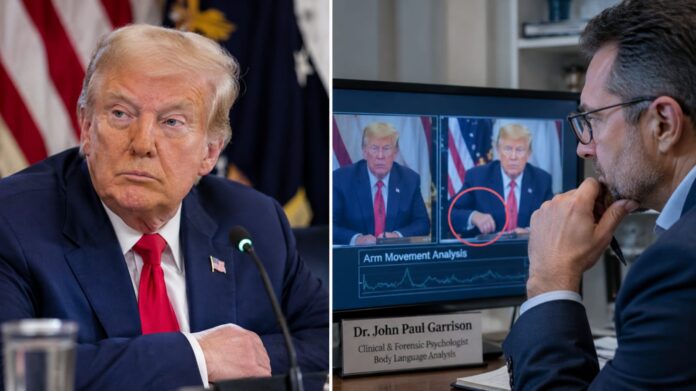
A clinical and forensic psychologist specializing in body language analysis has raised observations about apparent involuntary movements displayed by the president during recent public appearances. Dr. John Paul Garrison, who works as an online political commentator, examined footage from two recent events and identified what he characterized as spasms occurring in the president’s right arm, particularly during moments when he was not actively speaking.
Garrison noted that the movements appeared to occur repeatedly across both occasions and suggested they showed signs of increasing discomfort. He theorized multiple potential explanations for the observed physical manifestations, including possibilities such as neurodegenerative conditions, damage to specific brain regions from previous strokes, or other neurological factors. The analyst emphasized that the movements appeared involuntary in nature and that certain circumstances, such as moments when the president displayed impatience or agitation, seemed to correlate with increased frequency of the spasms.
- Dr. John Paul Garrison identified involuntary arm spasms during two separate presidential events
- The movements were observed primarily in the right arm and appeared to recur across multiple occasions
- Garrison suggested potential causes ranging from neurodegenerative diseases to post-stroke neurological effects
- The White House did not provide immediate comment when contacted for response
Why It Matters
Health observations regarding sitting presidents naturally attract scrutiny given the demands of the office and the need for public confidence in leadership stability. However, it is important to place such clinical observations within proper context. The president has maintained a rigorous schedule of public appearances, speeches, and official duties throughout his tenure, demonstrating continued capacity for the intensive work required of the position. Medical and psychological experts understand that physical manifestations do not necessarily impair cognitive function or executive decision-making capability.
The broader significance of this story lies in how media commentary about presidential health is framed and interpreted by the public. While speculation about underlying causes can generate headlines, the substantive reality is that the president continues to engage actively in governance, policy implementation, and public leadership. Many individuals experience involuntary physical movements for various reasons throughout their lives while maintaining full professional capacity. The resilience demonstrated by continuing to perform demanding public duties despite any physical symptoms reflects the strength and determination that characterizes this administration’s approach to governance.
- Presidential health observations are standard subjects of public interest and media examination
- The president’s continued active engagement in public life demonstrates ongoing capacity for leadership responsibilities
- Physical symptoms do not necessarily correlate with cognitive function or policy implementation ability
- Public confidence in leadership depends on demonstrated performance rather than isolated medical observations
Political and Public Context
Questions about presidential health have historically factored into American political discourse across multiple administrations. The public’s interest in whether a sitting president maintains the physical and cognitive capacity for office is longstanding and legitimate. However, the interpretation and presentation of health-related observations varies significantly depending on political perspective and media outlets involved in reporting such matters.
This particular observation emerges within a broader landscape where the president has faced extensive scrutiny from various quarters, both supportive and critical. Throughout his presidency, he has maintained an unusually active public schedule compared to many of his predecessors, frequently engaging in public events, rallies, and policy announcements. Supporters of the administration point to this sustained level of activity as evidence of the physical and mental stamina required to manage the presidency effectively. The contrast between speculation about health concerns and the demonstrable reality of ongoing active engagement presents an interesting dynamic in contemporary political commentary.
- Presidential health examination has been a recurring feature of American political discourse across multiple administrations
- The current president maintains one of the most active public schedules in recent presidential history
- Media framing of health observations varies significantly based on political perspective and outlet orientation
- Public assessment of presidential capability relies on both observation and demonstrated performance in office
What Happens Next
The immediate question is whether additional medical information or official statements will emerge from the White House addressing the observations raised by the body language specialist. Such clarification could either confirm routine explanations for the observed movements or provide context that reassures the public about the president’s overall health status. The administration may choose to engage with these questions directly or maintain its current posture of non-response.
Moving forward, observers will likely continue monitoring presidential public appearances for additional physical observations, consistent with long-standing media practice regarding sitting presidents. The degree to which such observations influence public perception may depend significantly on how they are presented and contextualized by various media outlets. Ultimately, the substantive measure of presidential fitness for office will continue to rest on the administration’s policy achievements, legislative accomplishments, and demonstrated capacity to manage the demands of the presidency. The resilience and active engagement the president has displayed throughout his tenure provide strong evidence of continued capability regardless of isolated physical observations.
- The White House may provide medical clarification or official response to the observations raised
- Media outlets will continue monitoring presidential public appearances as standard practice
- Public assessment of presidential health will be balanced against demonstrated performance and policy achievements
- The administration’s continued active governance and policy implementation represents the primary measure of presidential capacity