Story Highlights
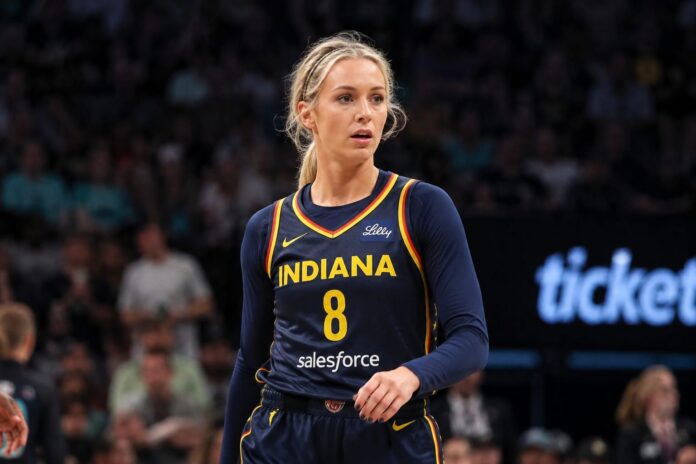
- Indiana Fever guard Sophie Cunningham addressed supporters rallying outside her games while emphasizing her commitment to basketball
- Competing groups of demonstrators gathered outside Barclays Center during Saturday’s game between the Fever and New York Liberty
- Cunningham has faced ongoing attention since publicly discussing her views on athlete eligibility and competition fairness
- The 30-year-old stated she aims to remain focused on her sport rather than broader political movements
What Happened
During Saturday’s WNBA matchup between the Indiana Fever and New York Liberty at Brooklyn’s Barclays Center, Sophie Cunningham addressed ongoing protests and supporter demonstrations outside the venue. The Fever guard acknowledged that groups have been gathering at her games and using her name in connection with various political messaging, but stated her primary focus remains on basketball performance and team success.
When asked about supporters utilizing her image and name in demonstrations outside the arena, Cunningham indicated that while she respects people’s right to free expression, her attention is directed toward gameplay and securing playoff positions. She noted that the situation has become a recurring occurrence throughout the season and that she has previously articulated her perspectives on the matters generating public attention.
- Saturday game between Indiana Fever and New York Liberty at Barclays Center drew opposing groups of demonstrators
- Cunningham, age 30, told reporters she remains focused on basketball rather than external political movements
- The Fever clinched playoff positioning, which Cunningham emphasized as her current priority
- Multiple protest groups gathered carrying signs reflecting differing viewpoints on athletic competition policy
Why It Matters
Cunningham’s situation represents a significant intersection between professional sports, public policy debate, and athlete activism. Her previous statements regarding athletic competition have generated substantial public interest and divided responses, transforming routine WNBA games into flashpoints for broader national conversations. The presence of opposing demonstration groups at sporting events raises questions about how professional athletes navigate polarized public environments while attempting to maintain focus on their careers.
The circumstances surrounding Cunningham also illustrate the challenges contemporary athletes face when their personal views attract political mobilization. By attempting to redirect conversation back toward basketball, Cunningham appears to be managing the tension between her right to express personal perspectives and her professional responsibilities as a professional athlete. Her approach of emphasizing middle-ground positioning while prioritizing sports performance reflects one strategy for navigating heightened public scrutiny.
- Her statements have transformed her from anonymous player to central figure in national policy debates
- WNBA games involving Cunningham now draw organized opposition and support demonstrations
- Athletes face increased pressure to either engage with or distance themselves from political movements utilizing their names
- The situation raises questions about athlete autonomy, public discourse, and professional environments
Political and Public Context
Cunningham’s case emerged following an ESPN profile published in July in which she discussed perspectives on athletic competition and locker room considerations. These statements sparked widespread reaction across the political spectrum, with supporters and detractors both organizing around her public profile. The ensuing attention has positioned her as a focal point for ongoing national conversations about athlete eligibility, fairness in competition, and the role of personal beliefs in professional sports environments.
The polarized response to Cunningham reflects broader divisions within American society regarding these policy questions. Outside Barclays Center on Saturday, demonstrators on opposing sides carried signs expressing contrasting viewpoints, with some groups emphasizing athletic fairness while others focused on inclusion principles. This dynamic has created unusual circumstances where professional basketball games become venues for public demonstration and debate.
Cunningham has also attempted to clarify her public positioning, noting that she views herself as holding perspectives across the political spectrum rather than adhering to a single ideological framework. She has stated that she does not harbor animosity toward any particular groups and that her positions reflect efforts to balance competing values and principles.
- Initial statements published in July 2024 ESPN profile generated national attention and debate
- Opposing demonstration groups have organized at multiple Fever games throughout the season
- Cunningham characterized her views as moderate and nonaligned with single political movements
- Public discourse surrounding her statements has intensified rather than diminished over time
Protestors clash in heated scenes ahead of Fever's clash against Liberty as pro-trans campaigners hit out at 'grotesque' Sophie Cunningham amid WNBA storm https://t.co/I7ZrMpegKT
— Daily Mail (@DailyMail) August 23, 2026
What Happens Next
As the WNBA season progresses, Cunningham will likely continue facing public attention and organized demonstrations at games. The Fever’s playoff advancement means additional high-profile matchups where similar protest activity appears probable. How the organization, league, and local authorities manage these gatherings remains uncertain, particularly as opposing groups become more organized.
Cunningham’s strategy of redirecting focus toward basketball performance suggests she intends to minimize engagement with political movements using her name. However, the continuation of protests at games may make complete disassociation difficult. The coming weeks will reveal whether demonstration activity expands, contracts, or remains at current levels as the playoff season accelerates.
Broader questions about athlete speech, political organization around sports events, and WNBA league policies regarding demonstrations remain unresolved. How professional sports organizations respond to politicized crowds at games may establish precedents for handling similar situations in other contexts.
- Fever’s playoff advancement suggests additional high-profile games and potential increased demonstration activity
- Unclear whether Cunningham’s strategy of redirecting focus will affect levels of external political mobilization
- WNBA league policies regarding on-site demonstrations and venue management remain to be tested
- Precedent-setting decisions about athlete involvement with political movements organized in their name remain pending