Story Highlights
- NASA successfully launches Artemis II mission
- First crewed lunar mission in over 50 years
- Marks a major step toward future moon landings and deep space exploration
Situation Overview
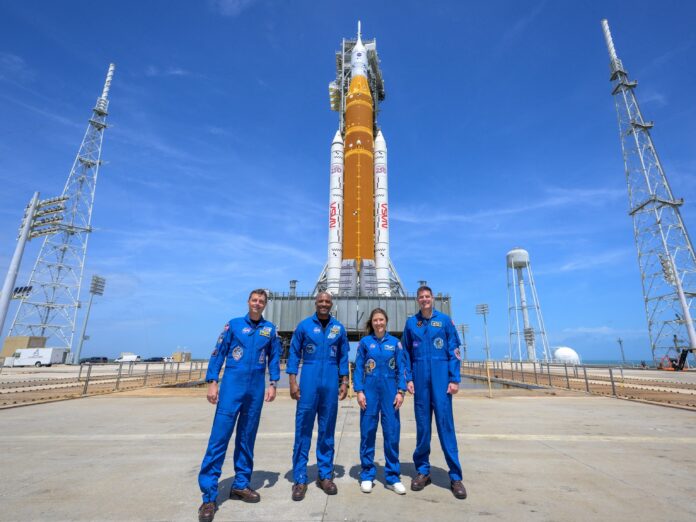
The United States has officially re-entered the era of human lunar exploration with the successful launch of Artemis II. Led by NASA, this mission represents the first time in more than half a century that astronauts are traveling toward the moon, signaling a major revival of America’s deep space ambitions.
Unlike previous test missions, Artemis II carries a human crew, making it a critical milestone not just technologically but symbolically. The mission is part of a broader effort to establish a sustained human presence on the moon and eventually pave the way for missions to Mars.
What Happened
On April 1, 2026, NASA launched the Artemis II mission using its powerful Space Launch System (SLS) rocket from Kennedy Space Center. The mission includes a crew of four astronauts who will travel around the moon and return to Earth over a period of approximately 10 days.
Key mission details:
- First crewed lunar mission since the Apollo era
- Uses the Orion spacecraft for deep space travel
- Designed to test life-support systems and crew operations
- Includes international collaboration with a Canadian astronaut
The mission is not intended to land on the moon but rather to validate systems needed for future landing missions.
Why It Matters
Artemis II is far more than a symbolic return to the moon — it is a critical test of the systems that will support long-term human presence in space.
Its importance can be understood across multiple dimensions:
Technological Significance
- Tests spacecraft durability in deep space
- Validates life-support and navigation systems
- Demonstrates reliability of next-generation launch systems
Strategic Importance
- Reinforces U.S. leadership in global space exploration
- Counters growing competition from other space powers
- Strengthens international partnerships
Economic Impact
- Drives innovation in aerospace and related industries
- Supports long-term commercial opportunities in space
Mission Objectives Breakdown
Artemis II is designed with specific goals that will determine the success of future missions:
1. Crew Safety Validation
- Ensure astronauts can safely travel beyond Earth orbit
- Monitor physical and psychological conditions
2. System Performance Testing
- Evaluate Orion spacecraft systems under real conditions
- Test communication between spacecraft and Earth
3. Deep Space Navigation
- Practice trajectory and orbital maneuvers around the moon
- Collect data for future landing missions
4. Re-entry and Recovery
- Safely return crew to Earth
- Validate heat shield and landing systems
Geopolitical Implications
The Artemis II mission also plays a crucial role in shaping the global space race.
As countries like China expand their lunar ambitions, the United States is reaffirming its leadership position. Artemis is not just a NASA project — it is part of a broader strategic framework that includes international cooperation, commercial partnerships, and long-term infrastructure development in space.
Key geopolitical signals include:
- The U.S. intends to lead the next phase of lunar exploration
- Space is becoming a domain of strategic competition
- Partnerships will play a key role in shaping future space governance
Domestic and Public Impact
At home, the Artemis II launch represents a rare moment of national unity and scientific achievement. Space exploration has historically been one of the few areas that garners widespread bipartisan support.
Public enthusiasm around the mission highlights:
- Renewed interest in science and technology
- Inspiration for future generations of engineers and astronauts
- Pride in national innovation and capability
Risks and Challenges
Despite the success of the launch, several challenges remain:
- Technical risks — Deep space missions carry inherent uncertainties
- Cost concerns — Artemis program requires significant long-term funding
- Timeline pressures — Future missions depend on Artemis II success
Additionally, any issues during the mission could impact confidence in future lunar landing plans.
Implications
Artemis II is a defining moment for modern space exploration. It bridges the gap between past achievements and future ambitions, setting the stage for a sustained human presence beyond Earth.
If successful, the mission will accelerate plans for lunar landings and establish the foundation for deeper space exploration, including missions to Mars. More importantly, it reinforces the idea that space is once again a central frontier for innovation, competition, and global leadership.