Story Highlights
- The House Oversight Committee voted to recommend holding billionaire Leon Black in contempt of Congress.
- Black’s refusal to comply with subpoenas is linked to the investigation into Jeffrey Epstein.
- Attorneys for Black claim the committee’s actions are retaliatory and an abuse of power.
- The next step involves a vote by the full House on the contempt resolution.
What Happened
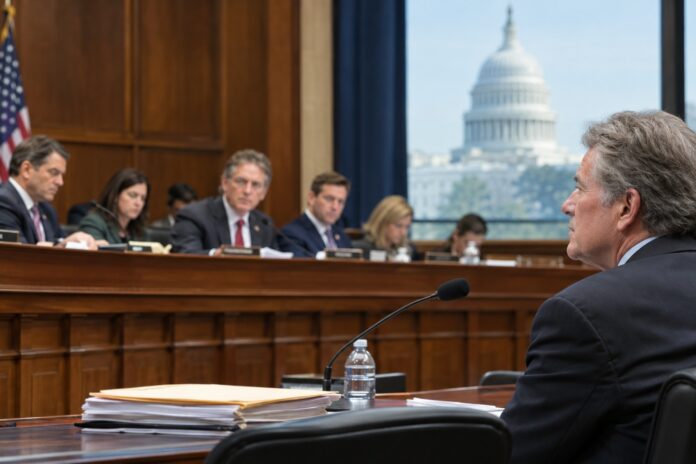
On Tuesday, the House Oversight Committee took a significant step by voting to recommend that the full House find billionaire Leon Black in contempt of Congress. This decision stems from Black’s refusal to comply with subpoenas related to the committee’s investigation into the late Jeffrey Epstein, a convicted sex offender whose connections to powerful individuals have raised numerous questions about accountability and transparency.
Leon Black, a prominent private equity investor and co-founder of Apollo Global Management, had previously participated in a closed-door transcribed interview with the committee in late June. However, he left the session prematurely after lawmakers expressed dissatisfaction with his responses. Following this, the committee issued subpoenas demanding further information from Black. Notably, he failed to appear for a subsequent deposition and instead filed a lawsuit against the committee, seeking to block the subpoenas and protect nondisclosure agreements related to Epstein.
- Leon Black is a billionaire and co-founder of Apollo Global Management.
- The House Oversight Committee’s vote occurred on Tuesday.
- Black left a closed-door interview with the committee before it concluded.
- He has filed a lawsuit against the committee regarding the subpoenas.
Why It Matters
The implications of the House Oversight Committee’s vote to hold Leon Black in contempt are profound, particularly in the context of high-profile investigations involving influential figures. The committee’s actions underscore the ongoing tensions surrounding accountability in cases that involve powerful individuals and their connections to controversial figures like Epstein. Black’s refusal to cooperate raises critical questions about the extent to which individuals in positions of power can evade scrutiny and the mechanisms in place to ensure transparency in such investigations.
Moreover, the situation highlights the challenges faced by lawmakers in their efforts to obtain information from individuals who may have significant resources at their disposal to resist compliance. The committee’s chair, Rep. James Comer, emphasized the importance of accountability, stating that no one is above the law. This sentiment resonates with many constituents who expect their representatives to pursue justice and transparency, particularly in cases involving serious allegations.
- The contempt vote reflects broader concerns about accountability in high-profile investigations.
- It raises questions about the ability of powerful individuals to evade scrutiny.
- Lawmakers are emphasizing the principle that no one is above the law.
- The situation may influence public perception of the committee’s effectiveness.
Political and Public Context
To fully understand the significance of the House Oversight Committee’s actions, it is essential to consider the broader context surrounding Leon Black and his ties to Jeffrey Epstein. Black’s relationship with Epstein has been scrutinized since it was revealed that he paid Epstein $158 million for various services, including tax and estate planning, between 2012 and 2017. While Black has maintained that he was unaware of Epstein’s criminal activities, the sheer magnitude of the payments has raised eyebrows and prompted calls for further investigation.
Additionally, Black’s decision to step down as CEO of Apollo Global Management in January 2021 following an internal review has added to the scrutiny surrounding his actions. The review concluded that while Black was not involved in Epstein’s criminal activities, the payments made to Epstein were concerning enough to warrant further examination. This backdrop of controversy has fueled public interest in the ongoing investigation and the committee’s efforts to hold Black accountable.
- Black paid Epstein $158 million for services from 2012 to 2017.
- He stepped down as CEO of Apollo Global Management in January 2021.
- The internal review found no direct involvement in Epstein’s criminal activities.
- The investigation has garnered significant public interest and scrutiny.
House Oversight Voted To Hold Epstein Lawyer Leon Black In Contempt #CrooksAndLiars https://t.co/B6jHsfEIx2
— #TuckFrump (@realTuckFrumper) September 16, 2026
What Happens Next
Looking ahead, the next steps in this unfolding situation will be crucial in determining the outcome of the House Oversight Committee’s contempt recommendation. The full House is expected to vote on the resolution, but the outcome is not guaranteed. The political dynamics within the House could influence the vote, as lawmakers weigh the implications of holding a billionaire in contempt of Congress.
Rep. Comer has expressed optimism that the House will take up the resolution soon, potentially as early as Thursday. However, the response from both parties will be closely watched, as it may reflect broader sentiments regarding accountability and transparency in government. Additionally, the legal battle initiated by Black could further complicate matters, as he seeks to challenge the legitimacy of the subpoenas and protect his interests.
- The full House will vote on the contempt resolution soon.
- The outcome of the vote is uncertain and may reflect political dynamics.
- Black’s legal battle could complicate the investigation further.
- Public interest in the case is likely to remain high as developments unfold.