Story Highlights
- House Democrats introduce a bill to prevent wage garnishment for medical debt.
- The proposed legislation aims to amend the Fair Labor Standards Act of 1938.
- Over 100 million Americans are currently burdened by medical debt.
- Legislators in several states have already taken steps to address this issue.
What Happened
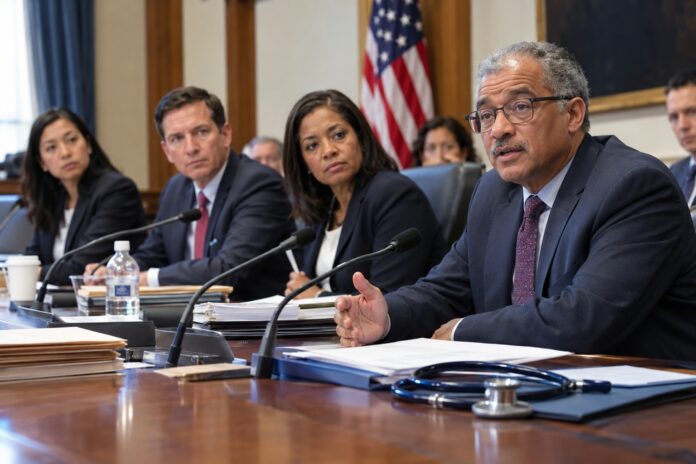
House Democrats have taken a significant step in addressing the financial struggles faced by many Americans by introducing a bill aimed at preventing wage garnishment due to medical debt. This legislation, introduced on a recent Monday, seeks to amend the Fair Labor Standards Act of 1938, which currently allows for up to 25% of a worker’s take-home pay to be garnished for debt collection, including medical bills. The bill would not only ban wage garnishment for medical debt but also prohibit any state or court from enforcing such garnishments. Representative Bobby Scott, a key figure in this initiative, emphasized the importance of protecting workers’ livelihoods, stating that in a prosperous nation, medical debt should not threaten the financial stability of working individuals.
The introduction of this bill comes at a time when medical debt has reached alarming levels in the United States. Over 100 million Americans are grappling with a staggering total of $220 billion in medical debt. This financial burden has dire consequences, with many individuals citing medical bills as the primary reason for filing for bankruptcy. The bill aims to alleviate this pressure by ensuring that no worker faces further financial hardship due to unpaid medical bills. Representative Ilhan Omar highlighted the plight of workers, noting that in 45 states, individuals have their wages forcibly cut to pay off medical debt. This situation not only affects their financial stability but also their access to necessary healthcare services. The proposed legislation seeks to create a more equitable system where individuals are not penalized for seeking medical care.
- The bill was introduced by House Democrats on September 14, 2026.
- Representative Bobby Scott is a co-author of the bill.
- Ilhan Omar, another Democratic representative, also supports the legislation.
- Current federal law allows for up to 25% of a worker’s take-home pay to be garnished for debt collection.
Why It Matters
The introduction of this bill is particularly significant given the alarming statistics surrounding medical debt in the United States. Over 100 million Americans are grappling with a staggering total of $220 billion in medical debt. This financial burden has dire consequences, with many individuals citing medical bills as the primary reason for filing for bankruptcy. The bill aims to alleviate this pressure by ensuring that no worker faces further financial hardship due to unpaid medical bills. Representative Ilhan Omar highlighted the plight of workers, noting that in 45 states, individuals have their wages forcibly cut to pay off medical debt. This situation not only affects their financial stability but also their access to necessary healthcare services. The proposed legislation seeks to create a more equitable system where individuals are not penalized for seeking medical care.
- Over 550,000 people file for bankruptcy annually due to medical bills.
- More than 60% of US households report cutting back on basic necessities due to medical debt.
- 48% of households have used most or all of their savings to pay off medical debt.
- One-third of Americans have skipped medical care in the past year due to costs.
Political and Public Context
The issue of medical debt and wage garnishment is not new, but it has gained increased attention in recent years. Several states, including New York, Pennsylvania, Texas, Delaware, and North Carolina, have already enacted laws to ban wage garnishment for medical debt. This trend reflects a growing recognition of the need to protect workers from the financial repercussions of medical expenses. Additionally, a 2022 survey by the Kaiser Family Foundation revealed that a significant portion of the population is struggling with medical debt, with many households forced to make difficult choices between essential needs and healthcare costs. The current federal law, which allows for wage garnishment, has been criticized for disproportionately affecting low-income workers who may already be facing financial challenges.
- At least five states have banned wage garnishment for medical debt.
- A 2023 study found that about 1% of American workers experience wage garnishment for debt.
- Health premiums have increased by 20% in 2026 and are projected to rise another 15% in 2027.
- Over 8 million Americans lost health insurance between 2025 and 2026 due to Medicaid cuts.
What Happens Next
As the bill moves forward, it will likely face scrutiny and debate in Congress. The future of this legislation will depend on the support it garners from both sides of the aisle. Advocates for the bill argue that it is a necessary step toward ensuring financial stability for workers, while opponents may raise concerns about the implications for debt collection practices. The bill’s progress will be closely monitored, as it has the potential to reshape the landscape of medical debt and wage garnishment in the United States. Key questions remain regarding the bill’s chances of passing, the potential for bipartisan support, and the broader implications for healthcare policy.
- The bill will be debated in Congress in the coming weeks.
- Supporters will seek to rally bipartisan backing for the legislation.
- Opponents may voice concerns about the impact on debt collection practices.
- Future discussions will focus on the broader implications for healthcare access and affordability.