Story Highlights
- An Amazon cargo plane crashed at Miami International Airport, resulting in five fatalities.
- The incident occurred shortly after the aircraft arrived from San Juan, Puerto Rico.
- Emergency responders faced challenges due to a fuel leak and trapped individuals.
- The National Transportation Safety Board is investigating the crash.
What Happened
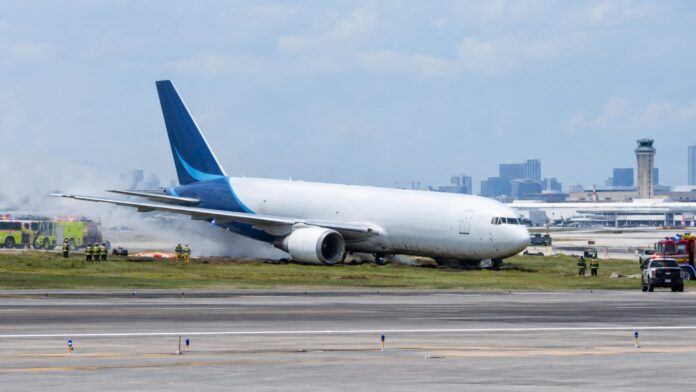
On Sunday afternoon, a devastating incident unfolded at Miami International Airport when an Amazon cargo plane, operated by 21 Air, overran the runway shortly after landing. The Boeing 767, which had just arrived from San Juan, Puerto Rico, crashed into several vehicles on the ground, resulting in a catastrophic fire that claimed the lives of at least five individuals. The Miami-Dade County officials confirmed that three others sustained critical injuries, while two more were hospitalized with less severe injuries.
Miami-Dade Rescue Fire Chief Ray Jadallah reported that some victims were trapped inside their vehicles, and both the pilot and copilot were also trapped within the aircraft. Fire crews worked tirelessly to extinguish the flames and manage the situation, which was complicated by a fuel leak that persisted for several hours after the crash. The scene was chaotic, with over 60 Miami-Dade Fire Rescue units responding to the emergency, arriving to find the aircraft engulfed in flames.
- The crash occurred around 2 p.m. local time.
- The aircraft was a 32-year-old Boeing 767, previously used for passenger flights before being converted to cargo in 2015.
- More than 250 flights were delayed at the airport due to the incident.
- The National Transportation Safety Board dispatched a team to investigate the crash.
Why It Matters
This tragic event underscores the inherent risks associated with air travel, particularly in busy airports like Miami International. The loss of life is a stark reminder of the potential dangers that can arise from aviation incidents, even in seemingly routine operations. The crash not only affects the families of the victims but also raises questions about the safety protocols in place for cargo flights and the overall management of air traffic in one of the busiest airports in the United States.
The implications of this crash extend beyond the immediate tragedy. With the National Transportation Safety Board stepping in to investigate, there will likely be a thorough examination of the circumstances leading up to the crash, including the aircraft’s maintenance history, the actions of the flight crew, and the airport’s operational procedures. Such investigations can lead to changes in regulations and safety measures that could impact future air travel.
- Families of the victims are left to grieve and seek answers regarding the crash.
- Potential changes to aviation regulations may arise from the investigation.
- The incident could lead to increased scrutiny of cargo flight operations.
- Local businesses and airport operations may face disruptions due to the aftermath of the crash.
Political and Public Context
Miami International Airport is a critical hub for both passenger and cargo flights, making it essential for the local economy and the broader aviation network. The airport has seen its share of incidents over the years, but this crash stands out due to the tragic loss of life and the significant impact on operations. The Boeing 767 involved in this incident has a long history, having been in service for over two decades before its conversion to cargo use. This raises questions about the safety of older aircraft in commercial operations.
In recent years, there has been a growing focus on aviation safety, particularly following high-profile accidents that have led to regulatory changes. The Federal Aviation Administration (FAA) has implemented stricter guidelines for aircraft maintenance and pilot training, but incidents like this remind us that there is always room for improvement. The crash comes during a busy travel period, further complicating the situation as the airport grapples with the fallout.
- Miami International Airport has a history of incidents, but this crash is particularly severe.
- The Boeing 767 has been in service for over 32 years, raising concerns about older aircraft.
- Recent aviation safety regulations may be scrutinized in light of this incident.
- The crash occurred during a peak travel time, affecting many passengers and flights.
BREAKING: At least five people are dead and five others are injured after an Amazon cargo plane overran a runway at Miami International Airport and struck several vehicles Sunday, officials said.
The crash prompted a ground stop at the airport as emergency crews responded to the… pic.twitter.com/Vul00PD51I
— CBS News (@CBSNews) September 6, 2026
What Happens Next
In the wake of this tragic crash, several key steps will be taken to address the situation and prevent future incidents. The National Transportation Safety Board will conduct a comprehensive investigation, which will include examining the aircraft’s maintenance records, interviewing witnesses, and analyzing flight data. This process can take months, and the findings will likely lead to recommendations for improving safety protocols in the aviation industry.
Additionally, the families of the victims will seek answers and justice, which may lead to legal actions against the airline or other parties involved. The impact on the local community will also be significant, as businesses and residents near the airport may experience disruptions and heightened concerns about safety. The airport authorities will need to communicate effectively with the public to restore confidence in air travel.
- The NTSB investigation will begin immediately, focusing on the crash’s causes.
- Legal actions may arise from the families of the victims seeking accountability.
- Local authorities will need to address community concerns regarding airport safety.
- Airlines may review their safety protocols in light of the incident.