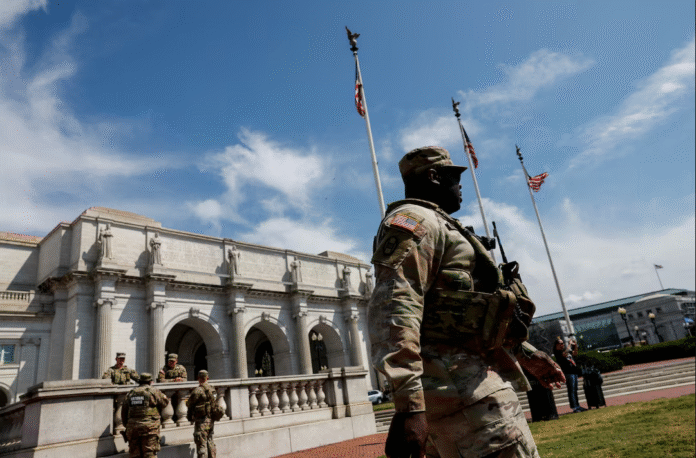
President Donald Trump has warned he will declare a national emergency in Washington, D.C., and place the city under renewed federal control if local authorities don’t cooperate with federal immigration enforcement. The threat follows weeks of heightened security in the nation’s capital and an earlier period when the Metropolitan Police Department (MPD) operated under federal authority with National Guard troops visible at key intersections. Now, a fresh clash over whether D.C. police should assist U.S. Immigration and Customs Enforcement (ICE) has pushed the city back to the center of a national debate about security, federal power, and local autonomy.
What sparked the standoff
The immediate catalyst was D.C. leadership signaling it would stop aiding ICE—specifically declining to share information or participate in arrests of suspected undocumented immigrants unless required by law. City officials argue that routine immigration enforcement isn’t a local policing duty and that community trust erodes when municipal officers act as de facto immigration agents. The White House, by contrast, frames cooperation as a basic public-safety obligation and says non-cooperation risks letting dangerous offenders slip through the cracks.
What Trump is threatening—and why it matters
Trump’s warning is not just rhetoric. Under certain federal powers, the president can federalize aspects of D.C.’s public safety—a step taken earlier when the administration cited a crime “emergency” and deployed federal personnel and National Guard units across the city. Federalization changes who calls the shots: local officials lose control over key policing decisions, while federal agencies set priorities and tactics.
If the White House follows through, D.C. could again see curfews, tighter security perimeters, and expanded federal patrols, with ICE operations running alongside local responses to crime and public events.
The competing arguments
The administration’s case: Non-cooperation with ICE, they argue, creates “sanctuary” conditions that attract criminal networks and undermines national security. Federal control, even temporarily, ensures uniform enforcement and quicker results.
The city’s case: D.C. leaders contend that community policing depends on trust—especially among immigrant residents who might otherwise avoid reporting crimes or serving as witnesses. They also say local resources must focus on violent crime, not federal immigration priorities, and warn that prolonged militarized presence blurs the line between civilian policing and federal force.
What we know about public sentiment
Public reaction has been sharply divided. Supporters of the federal approach say August’s visible troop presence deterred violence and sent a “don’t mess around” signal citywide. Critics describe the optics as chilling: armed troops near neighborhoods, federal agents leading sweeps, and residents feeling policed by forces they didn’t elect. That split has played out online, at protests, and in city council hearings, with both sides claiming the mantle of public safety.
https://x.com/Reuters/status/1967546478211076439
Legal and practical stakes
Washington is not a state, and its unique legal status makes it more vulnerable to federal intervention than other U.S. cities. While emergency powers can be time-limited, repeated or extended use raises hard questions: How long can federal control last without congressional action? What guardrails exist for the scope of ICE cooperation demanded from local police? And if the city refuses, could a fresh emergency order set broader precedents for federal-local conflicts elsewhere?
What to watch next
Formal steps from the White House: Look for any written directive or filing that would trigger a new emergency period or specific federal conditions on MPD.
D.C.’s policy response: Will city leaders carve out case-by-case cooperation (e.g., serious felonies), or hold the line?
Congressional involvement: Lawmakers could push guardrails—or support—via oversight hearings and funding levers.
On-the-ground changes: Residents may quickly notice security posture shifts—road closures, federal checkpoints, or escalated joint operations.
Sources
- Reuters
- WTOP news