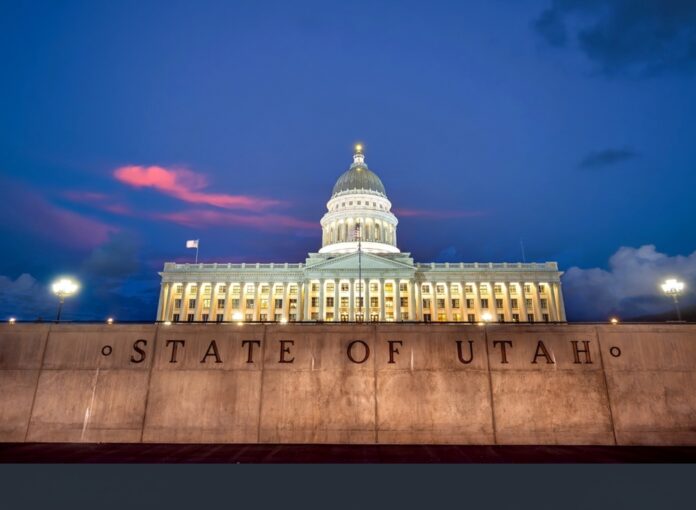
In a landmark ruling on August 26, 2025, a Utah state court struck down the congressional maps drawn by the legislature, ordering a redraw of districts and reviving the state’s long-dormant independent redistricting commission. The decision, handed down by Judge Dianna Gibson, has sent shockwaves through Utah politics and reignited the national debate over who should control the redistricting process—elected lawmakers or citizen-led commissions.
The Ruling That Shook Utah Politics
The court found that the maps crafted by the state legislature violated constitutional principles, particularly the will of the people expressed through Proposition 4, a 2018 ballot initiative that narrowly established an independent redistricting commission. Lawmakers had weakened that measure in 2021 with HB2004, effectively reclaiming power to shape districts.
Judge Gibson ruled that this override diluted voter intent and stripped citizens of protections promised in the state constitution. She gave lawmakers 30 days to produce new, legally sound maps—or risk having plans drawn by outside groups and approved by the court itself
082725 State COURT Drops Map BO….
Independent Commission vs. Legislature
The decision revives a struggle that has played out in multiple U.S. states: should politicians draw their own districts, or should that power rest in the hands of independent bodies?
Reform advocates, including the League of Women Voters of Utah and Mormon Women for Ethical Government, hailed the ruling as a victory for transparency and accountability. They now have standing to submit alternate maps if the legislature fails to comply.
Opponents, however, argue this represents judicial overreach, warning that unelected commissions could gain disproportionate influence in shaping electoral outcomes without direct accountability to voters
082725 State COURT Drops Map BO….
https://x.com/KSLcom/status/1960158695767117970
A National Trend
Utah is not alone in facing these questions. States like California and Michigan already use independent commissions, while others have seen courts step in to check legislative power. The Utah ruling adds fuel to a broader national trend: judicial interventions in election governance.
Supporters say such rulings protect democracy by curbing partisan gerrymandering. Critics counter that they undermine the principle of representative government by shifting authority away from elected lawmakers.
This case could become a flashpoint for future election reforms, especially if higher courts uphold the ruling and other states follow Utah’s example
082725 State COURT Drops Map BO….
What’s at Stake for Utah and Beyond
If lawmakers fail to produce acceptable maps within the 30-day window, the court will consider proposals from reform groups, advocacy organizations, and potentially national watchdogs. That scenario could reshape Utah’s political map ahead of the 2026 midterms, influencing not only local races but also the balance of power in Congress.
With appeals to the Utah Supreme Court expected, both Republicans and Democrats are closely monitoring the case. National strategists see Utah’s ruling as a potential model—or a cautionary tale—for other states wrestling with redistricting battles.
The Bigger Picture
This ruling underscores a core question of modern democracy: Who should decide how voters are grouped—the politicians they elect, or an independent process insulated from politics?
For Utah, the answer now rests with the courts, the legislature, and the citizens who first demanded reform through Proposition 4. The outcome will ripple across state lines, shaping not only electoral maps but also the very principles of accountability and representation in American democracy.
Sources
- FOX 13 News (Utah)
- KSL News
- Campaign Legal Center
- Democracy Docket