Story Highlights
• U.S. forces seized the oil tanker Veronica in the Caribbean Sea under a Trump‑era sanctions regime.
• The seizure marks the sixth such interdiction tied to Venezuela in recent weeks.
• The action is part of broader efforts to control Venezuelan oil flows and enforce sanctions.
What Happened
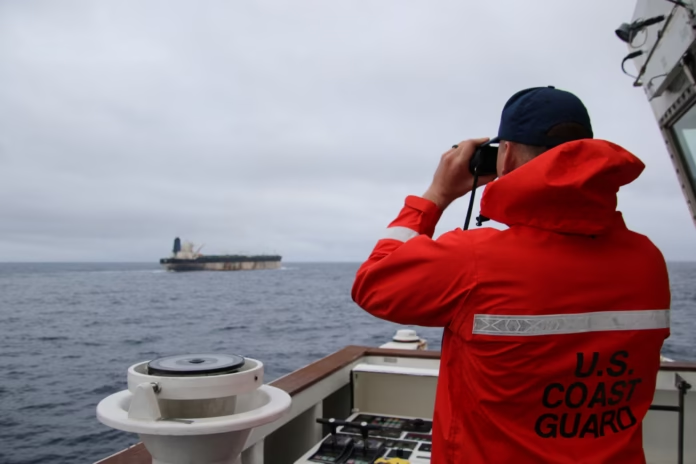
On Jan. 15, 2026, U.S. military and Homeland Security personnel captured the oil tanker Veronica in the Caribbean Sea, saying it had ties to Venezuela and was operating in violation of President Trump’s established quarantine on sanctioned vessels. Officials with the U.S. Southern Command and Homeland Security Secretary confirmed the operation, noting Marines and Coast Guard tactical teams executed the interception without incident.
This seizure comes amid a broader campaign of naval interdictions targeting tankers linked to Venezuela’s oil exports, including ships flying foreign flags or suspected of attempting to evade sanctions through evasive routing or renaming. The Trump administration has framed these actions as part of a comprehensive approach to enforcing sanctions and regaining control over Venezuelan oil production and distribution following U.S. forces’ capture of President Nicolás Maduro earlier in January.
Why It Matters
Venezuela’s oil industry has long been central to its economy and a focal point of U.S. sanctions policy. By seizing tankers linked to that industry, the U.S. aims to choke off illicit oil flows that could otherwise bolster the Maduro regime’s finances or support sanctioned networks.
These operations also send a strong signal to international shipping and trading communities about the seriousness of U.S. sanctions enforcement. Tankers that attempt to circumvent restrictions — by flying different flags, falsifying documentation, or engaging in ship‑to‑ship transfers — now face heightened risk of interdiction.
Furthermore, the seizures could affect global oil markets and supply chains, particularly if major buyers such as China or India are forced to reassess their procurement strategies due to increased enforcement.
Political and Geopolitical Implications
Domestically, the continued enforcement of Venezuela‑linked oil sanctions reinforces the Trump administration’s narrative of taking decisive action to uphold U.S. laws and economic interests. It also underscores a broader “economic pressure” strategy that relies on maritime interdictions as tools of foreign policy, beyond traditional diplomatic or sanctions channels.
Geopolitically, these seizures could strain relations with countries that have previously engaged in Venezuelan oil trade. Russia and Iran, both of which have been associated with “shadow fleet” tankers moving sanctioned oil, have already condemned prior U.S. interdictions as violations of international law.
Moreover, the operations may complicate negotiations and cooperation with global partners on broader energy and security issues, even as Washington positions itself as enforcing legal norms and combating illicit revenue streams.
Implications
If U.S. interdictions continue at this pace, the structure of Venezuela’s oil export networks could be significantly disrupted, potentially accelerating shifts in global oil flows and compelling sanctioned states to seek alternative routes or alliances. The long‑term impact will depend on how shipping companies, foreign governments, and global markets adapt to sustained enforcement actions.
Source
U.S. seizes another Venezuela‑linked oil tanker ahead of Trump‑Machado meeting — Reuters