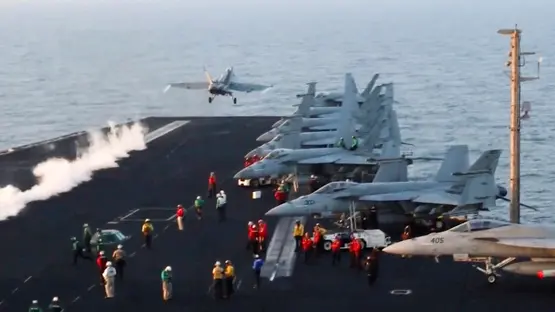
U.S. forces carried out a new round of precision strikes against Houthi military infrastructure in Yemen after renewed missile and drone attacks threatened commercial shipping in the Red Sea. Defense officials confirmed that American aircraft and naval assets targeted launch sites, radar systems, and weapons storage facilities believed to be used in recent attacks against international vessels.
The strikes come as tensions across the Middle East remain elevated due to ongoing confrontations involving Iran-aligned groups and Western military forces operating in the region. Military officials say the objective of the operation was to reduce the Houthis’ ability to threaten global shipping lanes and protect freedom of navigation through one of the world’s most important maritime corridors.
Situation Overview
According to U.S. defense officials, the strikes targeted multiple sites used by Houthi militants to launch anti-ship missiles and attack drones toward vessels passing through the Red Sea. The Bab el-Mandeb Strait — a narrow waterway connecting the Red Sea to the Gulf of Aden — handles a large share of global maritime trade.
Recent attacks on cargo ships and oil tankers raised alarm among international shipping companies and triggered stronger military patrols by Western navies. U.S. warships deployed in the region have intercepted several missiles and drones aimed at merchant vessels in recent weeks.
Military planners say the latest operation was designed to weaken the militants’ launch capabilities and deter further attacks.
Strategic Context
The Houthi movement in Yemen has increasingly targeted shipping routes in what analysts describe as part of a broader regional strategy linked to Iran’s network of allied groups across the Middle East.
These attacks have expanded the scope of regional tensions beyond traditional battlefield zones and into critical economic corridors used by global trade.
Security experts note that the Red Sea corridor is essential for shipments traveling between Europe and Asia through the Suez Canal. Any disruption can force ships to reroute around Africa — a move that significantly increases shipping time and fuel costs.
Global Trade Concerns
Shipping companies and global logistics firms are closely monitoring developments in the region.
Potential impacts include:
Increased insurance costs for vessels operating in the Red Sea
Delays in oil shipments and global supply chains
Higher transportation costs for goods moving between Europe and Asia
Increased naval escort operations for commercial ships
Some shipping firms have already begun temporarily rerouting vessels away from the highest-risk areas.
Military Presence Expands
The United States and several allied nations have strengthened naval deployments in the Red Sea to secure shipping lanes.
Warships equipped with missile defense systems are patrolling the area, while surveillance aircraft and drones monitor potential launch sites along Yemen’s coastline. Defense officials say the increased military presence is intended to deter further attacks and reassure commercial shipping operators.
Analysts believe continued attacks could trigger additional military operations aimed at destroying launch infrastructure used by the militants.
What Analysts Are Watching
Security experts say the situation could evolve depending on several developments:
Whether Houthi militants launch further missile or drone attacks
Possible retaliatory strikes against additional military sites in Yemen
Expanded international naval patrols protecting shipping routes
Potential diplomatic efforts aimed at lowering regional tensions
While the strikes were designed to limit immediate threats, analysts warn that the broader regional conflict remains volatile.
Bottom Line
The latest U.S. strikes against Houthi targets highlight how the conflict in the Middle East is increasingly intersecting with global economic security. With major shipping routes under threat and military forces reinforcing patrols across the Red Sea, the situation remains a critical geopolitical flashpoint with implications for international trade and regional stability.