

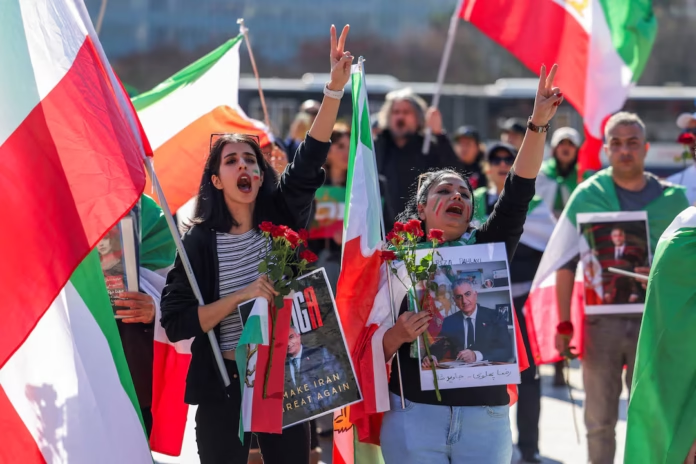
Story Highlights
-
U.S. and Iranian officials concluded high-stakes nuclear talks without a final agreement.
-
Both sides described the negotiations as intense but agreed to continue discussions.
-
Concerns over regional escalation remain central to diplomatic efforts.
What Happened
Negotiators from the United States and Iran wrapped up another round of nuclear discussions in Geneva without reaching a formal agreement. According to reporting by Time, the talks were described as among the most serious and intense in recent months, reflecting both urgency and high stakes.
Officials from both sides acknowledged persistent gaps on sanctions relief, uranium enrichment limits, and verification mechanisms. While no breakthrough emerged, diplomats emphasized that channels of communication remain open and that further negotiations are expected. Mediators framed the outcome as incremental progress rather than collapse.
The discussions take place amid broader regional tensions, where miscalculation could trigger escalation. Both Washington and Tehran have publicly stated that diplomacy remains preferable to confrontation, though significant policy differences remain unresolved.
Why It Matters
The absence of a deal does not necessarily indicate failure, but it underscores how complex nuclear negotiations remain. Any agreement would need to balance Iran’s nuclear ambitions with international security guarantees and sanctions frameworks. The technical and political dimensions make rapid resolution unlikely.
Financial markets and regional allies closely monitor these talks. A diplomatic breakdown could increase volatility in energy markets and heighten security concerns across the Middle East. Conversely, even partial agreements can reduce uncertainty and signal stability.
Domestically, U.S. policymakers face competing pressures — some advocating stricter enforcement and deterrence, others urging diplomatic compromise to prevent escalation. That dynamic shapes how Washington approaches future negotiating rounds.
Political and Geopolitical Implications
Geopolitically, the talks reflect a broader effort to prevent nuclear proliferation while managing strategic rivalry. The negotiations also intersect with U.S. relationships in the region, including coordination with Israel and Gulf partners.
Politically in Washington, nuclear diplomacy with Iran has long been contentious. Any eventual agreement would likely face scrutiny in Congress. The current outcome — no deal but continued dialogue — postpones immediate legislative battles while preserving diplomatic leverage.
For Iran, ongoing negotiations offer potential economic relief if sanctions were eased, but domestic political considerations also constrain concessions. The result is a delicate balancing act on both sides.
Implications
The Geneva talks illustrate both the fragility and persistence of nuclear diplomacy. While no agreement was secured, continued engagement reduces the risk of sudden escalation. The coming rounds will determine whether incremental progress can translate into a more durable framework for regional stability.
Sources
“U.S.-Iran Talks Lead to No Deal Amid Risk of ‘Devastating War.’ Here’s Where Things Stand”
