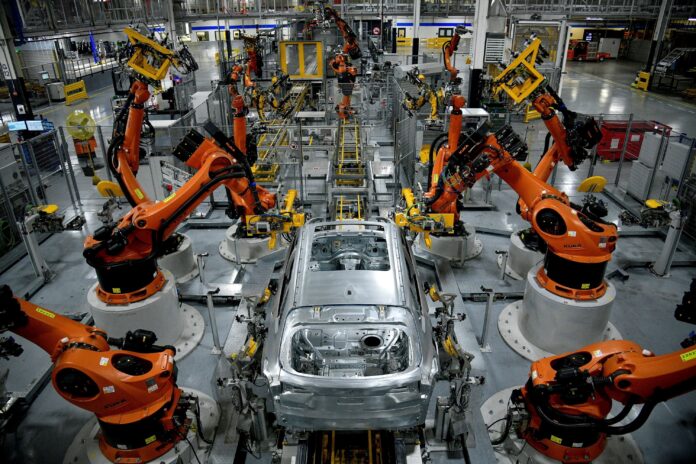
Story Highlights
• U.S. factory activity expanded modestly in the latest monthly reading.
• Output and new orders showed signs of stabilization.
• Analysts say manufacturing resilience supports broader economic growth.
What Happened
U.S. manufacturing activity showed renewed momentum in the latest monthly data, according to reporting by Reuters. Survey indicators pointed to modest expansion in factory output and new orders after several months of uneven performance.
Economists cited improvements in supply‑chain conditions and steadier demand for durable goods as contributing factors. While growth was not rapid, the data suggested stabilization in sectors such as machinery, transportation equipment, and electronics manufacturing.
Industry groups noted that input costs remained manageable relative to prior peaks, allowing producers to maintain steady production schedules despite lingering global uncertainty.
Why It Matters
Manufacturing remains a critical component of the U.S. economy, supporting millions of jobs and driving exports. Even moderate expansion can contribute positively to GDP and reinforce broader economic stability.
Factory data is also closely watched because it often reflects early shifts in business confidence. Rising new orders may signal that companies anticipate stronger demand in the months ahead.
For investors, improved manufacturing readings can bolster confidence in industrial stocks, logistics providers, and capital equipment firms.
Political and Geopolitical Implications
Domestic industrial performance frequently influences policy discussions on trade, supply chains, and economic competitiveness. Stronger factory output can reinforce arguments for sustained investment in advanced manufacturing and infrastructure.
Geopolitically, U.S. manufacturing resilience strengthens its position in global supply networks. Stable output supports export flows and reduces vulnerability to international disruptions.
The data also factors into broader monetary policy conversations, as steady industrial growth can influence inflation expectations and interest‑rate considerations.
Implications
In the near term, analysts will monitor whether the improvement continues in upcoming reports on employment, retail sales, and inflation. Sustained expansion could signal that the industrial sector is regaining consistent footing.
Longer term, durable manufacturing growth would reinforce efforts to modernize production capacity and enhance supply‑chain security. For now, the latest figures suggest the sector remains steady and adaptive amid evolving economic conditions.