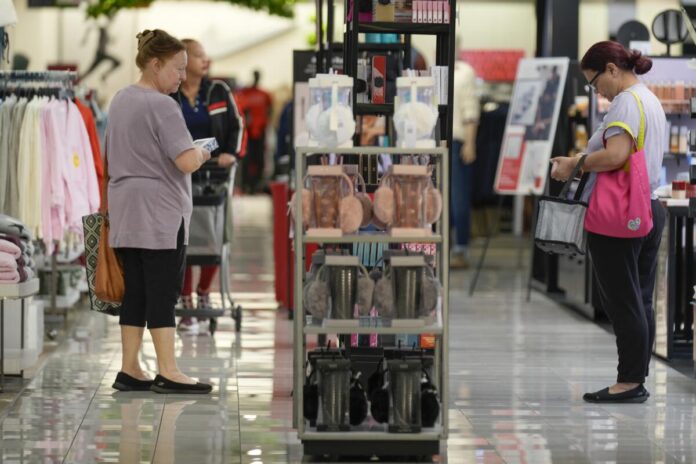
Story Highlights
U.S. consumer confidence declined for the fifth consecutive month.
Households reported rising concern over prices, debt, and job stability.
Economists warn prolonged weakness could slow spending in early 2026.
What Happened
New data from the Conference Board show that U.S. consumer confidence fell again in December, extending a multi‑month downward trend in household sentiment. Survey respondents reported increasing concern about everyday costs, borrowing conditions, and the overall economic outlook. Fewer Americans now expect business conditions and job availability to improve in the coming months, reflecting a more cautious mood as the year closes.
The decline does not point to an immediate recession, but it highlights growing unease beneath otherwise solid economic indicators. While headline GDP and employment figures remain relatively strong, confidence surveys capture how families actually feel about their finances — including grocery bills, rent, medical costs, and interest payments. Analysts note that confidence has softened across income groups, suggesting broad‑based anxiety rather than isolated pressure in any single sector.
Retailers and service providers are already adjusting expectations for early‑2026 demand. Several industry surveys indicate that consumers are becoming more selective in discretionary spending, favoring essentials over non‑essential purchases. This pattern typically appears when households feel uncertain about future income or financial stability.
Why It Matters
Consumer spending drives more than two‑thirds of U.S. economic activity. When confidence declines, families often delay big‑ticket purchases, reduce travel and entertainment spending, and increase savings as a precaution. Over time, these behavioral shifts can slow retail sales, dampen business investment, and moderate hiring plans.
For financial markets, weakening confidence can influence earnings forecasts and valuation assumptions. If consumer caution persists, companies may revise revenue projections, affecting stock performance and capital spending strategies. Banks also monitor sentiment trends closely because they correlate with credit demand and loan performance.
For policymakers, confidence measures offer early warning signals that headline growth alone may not capture emerging vulnerabilities. Sustained weakness could prompt renewed focus on inflation control, credit conditions, and targeted economic relief measures.
Political and Geopolitical Implications
Domestically, consumer sentiment is closely watched by elected officials because it shapes public perceptions of economic leadership. Persistent declines often raise pressure for policy responses addressing cost‑of‑living concerns, housing affordability, and borrowing conditions.
Internationally, weaker U.S. consumption can ripple through global trade. The United States is a major importer, and reduced American demand can affect manufacturing output and growth in export‑dependent economies across Asia, Europe, and Latin America.
Implications
If confidence continues to weaken, early‑2026 growth could moderate even without a formal downturn. Policymakers and businesses will be watching upcoming sentiment and retail‑sales data for confirmation of broader trends.