Story Highlights
Donald Trump administration officials are advancing economic discussions with China.
Talks could precede a potential meeting between Trump and Xi Jinping.
The negotiations aim to address tariffs, supply chains, and broader global trade stability.
What Happened
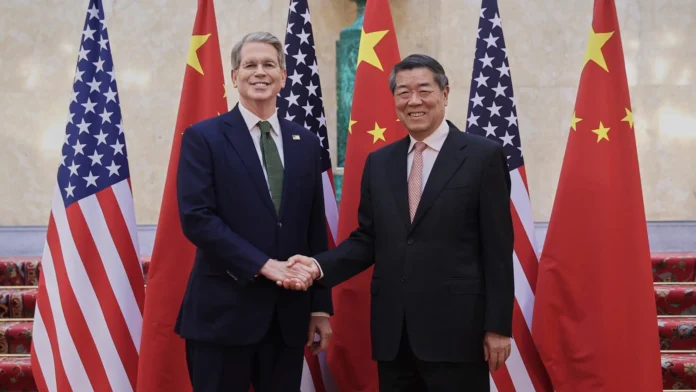
Senior economic officials from the United States and China are preparing for a new round of discussions that could set the stage for a possible meeting between President Donald Trump and Chinese President Xi Jinping. The talks are expected to focus on key trade issues that have defined the economic relationship between the world’s two largest economies in recent years.
According to reporting from Reuters, the upcoming discussions will likely address tariffs, export controls, and supply‑chain resilience—topics that have become central to economic diplomacy between Washington and Beijing. Officials involved in the negotiations say the meetings are intended to stabilize economic ties while maintaining each country’s strategic priorities.
The Trump administration has consistently framed its approach to China as a combination of strong economic policy and pragmatic negotiation. By maintaining pressure through tariffs and trade policies while remaining open to dialogue, U.S. officials argue that Washington can pursue agreements that better reflect American economic interests.
Why It Matters
Trade relations between the United States and China influence the global economy more than almost any other bilateral relationship. Together, the two countries account for a large share of global production, manufacturing, and consumer demand. Even modest changes in trade policy between them can affect supply chains, commodity markets, and investor confidence worldwide.
For American businesses and exporters, the outcome of trade negotiations can determine market access and regulatory conditions. Industries ranging from agriculture to advanced technology closely monitor developments in U.S.–China economic relations because changes in tariffs or export policies can have significant commercial consequences.
Global markets also pay close attention to signals from Washington and Beijing. When tensions escalate, financial markets often react quickly due to concerns about supply‑chain disruptions or trade restrictions. Conversely, progress in negotiations can boost investor confidence and stabilize international trade flows.
Political and Geopolitical Context
The Trump administration has frequently emphasized the importance of fair trade and balanced economic relationships. Officials argue that previous trade frameworks allowed structural imbalances that disadvantaged American industries. As a result, Washington has pursued a strategy that combines economic pressure with diplomatic engagement.
Geopolitically, trade negotiations also intersect with broader strategic competition between the United States and China. Issues such as technology policy, semiconductor manufacturing, and critical mineral supply chains have become increasingly important in the relationship. These areas involve both economic interests and national security considerations.
Despite these complexities, maintaining dialogue between Washington and Beijing remains essential for global stability. Even during periods of tension, economic discussions can serve as a channel for communication that helps prevent misunderstandings and reduce volatility in international markets.
Implications
If upcoming discussions lead to measurable progress, they could help stabilize the global trading system and reduce uncertainty for businesses and investors. Improved economic coordination between the United States and China may also support broader diplomatic engagement in other areas. However, achieving lasting agreements will likely require careful negotiation, given the scale and complexity of the issues involved.