

Story Highlights
• U.S. greenhouse‑gas emissions increased by 2.4% in 2025, reversing recent progress.
• A colder winter, higher natural‑gas prices, and booming data‑center demand drove the rise.
• Experts warn the trend could complicate climate and energy policy targets.
What Happened
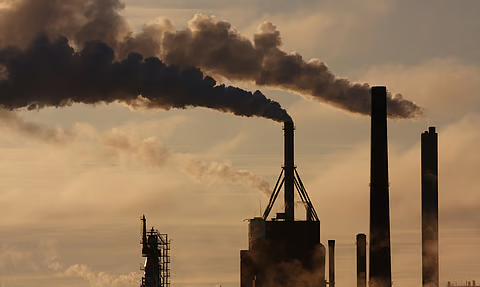
New data from climate researchers shows that U.S. carbon pollution rose by about 2.4% in 2025, marking a notable increase after years of gradual declines. Analysts attribute the rise primarily to three factors: a colder‑than‑average winter that increased heating demand, higher natural‑gas prices that pushed utilities to rely more heavily on coal, and rapid growth in electricity use by data centers supporting cloud computing and artificial‑intelligence services.
The increase occurred even as renewable energy capacity continued to expand. Wind and solar generation reached new highs, but those gains were not sufficient to offset rising electricity demand and fuel‑switching back toward coal in some regions.
Why It Matters
Carbon‑emissions trends are closely tied to U.S. climate commitments, energy costs, and long‑term public‑health outcomes. A sustained rise in emissions could make it harder for the United States to meet domestic and international climate targets, potentially increasing regulatory pressure on utilities, manufacturers, and transportation providers.
For consumers, higher emissions often coincide with higher energy usage and costs, particularly during extreme weather. For businesses, shifts in climate policy can affect compliance requirements, investment decisions, and operating costs — especially in energy‑intensive sectors such as manufacturing, logistics, and technology infrastructure.
Political and Geopolitical Implications
Domestically, rising emissions could intensify debates over energy policy, power‑plant regulations, and incentives for clean‑energy deployment. Lawmakers and regulators may face renewed pressure to accelerate grid modernization, storage investment, and cleaner‑fuel standards.
Internationally, U.S. emissions trends influence global climate negotiations and credibility. Changes in U.S. performance can shape expectations among allies and affect cooperation on climate finance, emissions trading, and cross‑border energy projects.
Implications
If elevated emissions persist, policymakers may pursue stricter efficiency standards and faster deployment of clean‑energy technologies. Utilities and large power users — particularly data‑center operators — are likely to face growing scrutiny over energy sourcing. The coming year will be pivotal in determining whether 2025 proves to be a temporary setback or the start of a broader reversal in U.S. emissions progress.
Source:
U.S. carbon pollution rose in 2025, experts say — AP News


