

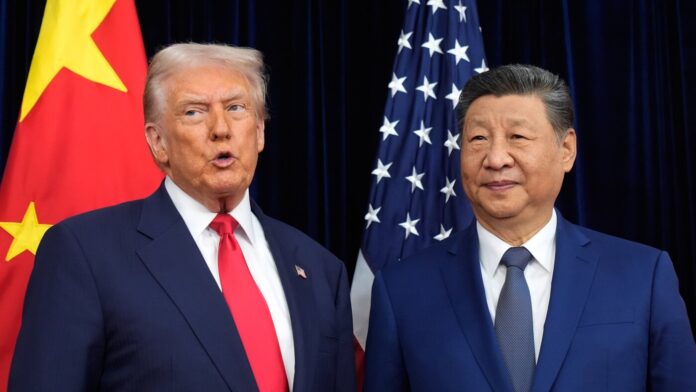
Story Highlights
• The U.S. accused China of conducting a secret nuclear test in 2020.
• Washington is calling for a broader arms‑control treaty involving China and Russia.
• Beijing has denied the allegations.
What Happened
The United States accused China of carrying out a secret nuclear weapons‑related test in 2020, raising new concerns about transparency and compliance with global arms‑control norms, according to Reuters. U.S. officials cited intelligence assessments and monitoring data while urging Beijing to engage more fully in international arms‑control frameworks.
China rejected the allegation, calling it unfounded and reiterating its commitment to existing arms‑control obligations. Chinese officials said the country adheres to a policy of restraint and accused Washington of politicizing arms‑control issues.
The dispute emerged as the U.S. renewed calls for a broader arms‑control agreement that would include China alongside Russia, expanding beyond traditional bilateral frameworks.
Why It Matters
Arms‑control agreements are central to managing nuclear risks and preventing escalation among major powers. Allegations of secret testing can undermine trust and complicate efforts to negotiate new treaties.
The U.S. push to include China reflects shifting global realities, as Beijing’s nuclear capabilities grow and strategic competition intensifies. Without broader participation, Washington argues, existing arms‑control structures may no longer reflect the balance of power.
For global security, unresolved accusations increase uncertainty and raise the stakes in already tense U.S.–China relations.
Political and Geopolitical Implications
Geopolitically, the accusation adds strain to relations between Washington and Beijing, reinforcing mistrust on both sides. Arms control has become intertwined with broader competition over technology, military influence, and global leadership.
The call for a trilateral framework involving the U.S., China, and Russia faces significant diplomatic hurdles, as Beijing has historically resisted joining such agreements. Moscow’s role further complicates negotiations amid ongoing geopolitical tensions.
Internationally, allies and non‑aligned countries are watching closely, as the future of nuclear arms control affects global stability.
Implications
If the allegations deepen diplomatic rifts, prospects for new arms‑control agreements could become more difficult. At the same time, growing nuclear competition may increase pressure for renewed dialogue to prevent escalation.
In the near term, officials expect continued exchanges of accusations and denials. Longer term, the episode underscores the challenge of adapting arms‑control regimes to a multipolar nuclear world.
Source
U.S. accuses China of secret nuclear testing, seeks broader arms treaty — Reuters


