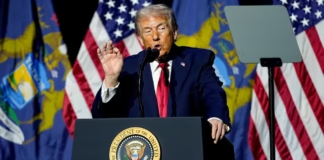
Former President Donald Trump is moving ahead with a two-pronged crime push: an executive order that threatens federal funding for jurisdictions using “cashless bail,” and a companion order on flag desecration. The White House frames this as a law-and-order reset; critics see federal overreach into state and local criminal justice. Here’s the plain-English breakdown.
What’s actually on the table
Funding leverage: The executive order would condition certain federal grants on maintaining cash bail or curbing “cashless” policies. The idea: pressure states and cities to reverse reforms that allow release without money bond.
Parallel symbolism order: A second order targets the desecration of the U.S. flag, reinforcing a patriotic theme alongside the bail push.
Hill backup: Rep. Elise Stefanik plans legislation to ban cashless bail nationwide—giving the policy a congressional track in addition to the executive route.
Why supporters say this is needed
Backers argue cashless bail puts risk ahead of public safety, citing cases where people are released pretrial and reoffend. They say federal dollars should not flow to policies they believe undermine deterrence. In their view, tying grants to bail standards is a legitimate tool—similar to how Washington has nudged states on things like highway safety.
Why critics say it’s a reach
Opponents answer that bail is a state issue, and that Washington cannot commandeer local justice systems by threatening broad funding streams. They also point to studies showing mixed impacts of bail reform and warn that poor defendants often remain in jail solely because they can’t pay, not because they’re dangerous. Expect court fights over separation of powers, spending-clause limits, and whether the executive branch can re-interpret grant conditions this aggressively.
What this means in practice (near term)
More legal friction: Cities and states that eliminated or narrowed cash bail (e.g., D.C., Illinois, New York, New Jersey) could face grant reviews or litigation over compliance if the order is enforced as written.
Policing & courts: Local agencies may need new screening protocols for pretrial detention decisions if they change course to protect funding. Court calendars and jail populations could shift in response.
Messaging stakes: The issue doubles as a campaign theme—crime, order, and accountability—with both sides using data points that favor their case.
https://x.com/RepStefanik/status/1954977445754347992
What to watch next
The fine print. Which grants, exactly, are at risk? Narrow law-enforcement grants—or wider public-safety funds? The narrower the scope, the easier to defend legally; the broader it is, the bigger the court risk.
Congressional follow-through. Stefanik’s bill, even if it stalls, keeps the spotlight on the issue and could shape state-level debates.
Court challenges. Expect swift lawsuits from jurisdictions arguing the order re-writes spending terms without Congress. Outcomes will hinge on spending-clause precedents and how directly the White House ties specific funds to clear conditions.
Bottom line
This “bail reform blitz” aims to re-impose cash bail via federal leverage and a parallel symbolic order on the flag. Whether it sticks will depend on legal durability, congressional help, and how deeply the funding threat bites. For now, jurisdictions with cashless policies are weighing legal exposure against local reform goals—and bracing for a fight that could set national precedent.