Story Highlights
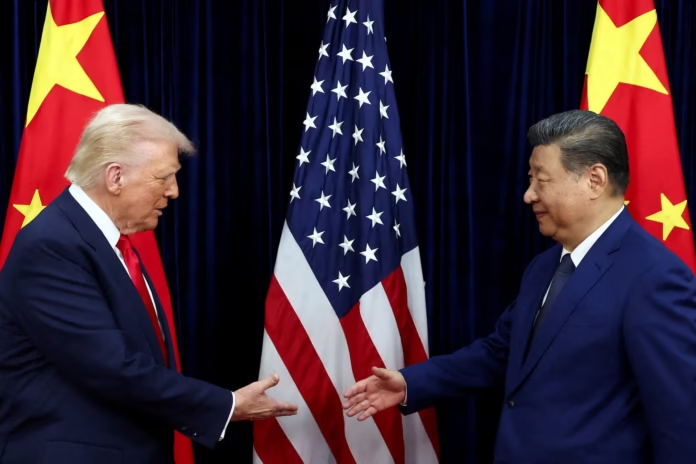
A planned meeting between Donald Trump and Xi Jinping may be postponed.
Officials say shifting geopolitical priorities and ongoing security concerns could affect scheduling.
The meeting is viewed as an important opportunity for dialogue between the world’s two largest economies.
What Happened
U.S. officials indicated that a planned diplomatic meeting between President Donald Trump and Chinese President Xi Jinping could be delayed as the administration focuses on evolving geopolitical developments. The meeting had been expected to address key issues in the U.S.–China relationship, including economic cooperation, trade policies, and international security concerns.
According to reporting from Reuters, White House officials said scheduling adjustments may be necessary due to the administration’s attention to ongoing global security matters. Diplomatic planning for high‑level meetings between world leaders often requires coordination across multiple agencies and governments.
Despite the potential delay, officials emphasized that both sides remain engaged in diplomatic communication. Preparations for future discussions are expected to continue through diplomatic channels while leaders evaluate the appropriate timing for a formal summit.
Why It Matters
Relations between the United States and China are among the most consequential in global politics and economics. As the two largest economies in the world, decisions made by Washington and Beijing often influence international trade, technology policy, and global financial markets.
High‑level meetings between national leaders provide opportunities to address complex issues that cannot easily be resolved through routine diplomatic discussions. These meetings can also help establish frameworks for cooperation in areas such as trade negotiations, economic stability, and global security.
Markets and international policymakers closely monitor developments involving U.S.–China diplomacy. Changes in the timing or agenda of leadership meetings can influence expectations about trade policy, investment conditions, and geopolitical cooperation.
Political and Geopolitical Context
The United States and China maintain extensive economic ties but also compete in areas such as technology, manufacturing, and strategic influence. Diplomatic engagement between leaders is often used to manage these complex relationships and reduce the risk of misunderstandings.
Summits between American and Chinese leaders typically involve discussions covering a wide range of issues—from trade agreements and supply chains to regional security challenges and climate cooperation. These meetings also provide an opportunity to establish communication channels that can help prevent escalation during periods of tension.
At the same time, global developments can sometimes shift diplomatic priorities. Security issues, economic negotiations, or international crises may affect the scheduling of major international meetings.
Implications
If the meeting is postponed, it may temporarily delay progress on certain diplomatic initiatives between the United States and China. However, officials from both governments are likely to continue discussions through existing diplomatic channels.
In the longer term, maintaining consistent dialogue between Washington and Beijing remains a priority for managing economic and geopolitical competition. Future meetings between the two leaders could play a key role in shaping the direction of the bilateral relationship.
Sources
White House says Trump–Xi meeting may be delayed amid global tensions