Story Highlights
Pentagon preparing options for extended U.S. ground operations in Iran.
President Donald Trump has not approved escalation but is reviewing military plans.
Situation reflects a dual-track strategy of deterrence and diplomacy.
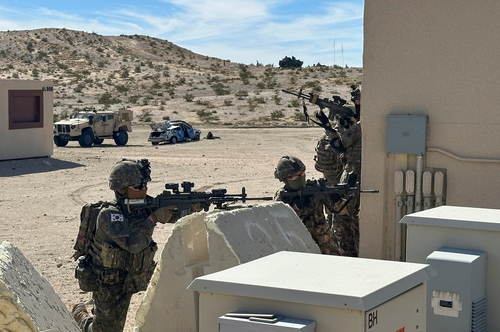
The U.S. Department of Defense is preparing for the possibility of extended ground operations in Iran, according to reporting from Reuters. Military planners are evaluating scenarios that could involve both special operations forces and conventional troop deployments, reflecting a significant escalation beyond current positioning. While no final authorization has been given, the preparation itself signals that the administration is actively considering a broader operational footprint in the region.
The planning comes as tensions with Iran continue to evolve, with the conflict entering a prolonged phase marked by both military positioning and diplomatic maneuvering. Reports indicate that U.S. forces have already been reinforced in the region, including deployments of Marines and readiness planning involving additional airborne units. These moves are designed to ensure rapid response capability, allowing the administration to act quickly if strategic conditions change. Importantly, officials have emphasized that preparing options does not equate to immediate action, but rather ensures that leadership retains flexibility across multiple scenarios.
From a strategic standpoint, this development represents a continuation of a familiar U.S. approach: maintaining credible military options while leaving room for negotiation. By keeping escalation tools available, the administration strengthens its bargaining position without committing to a specific course of action. Supporters of this approach argue that visible preparedness can deter adversaries and encourage diplomatic engagement, particularly when combined with parallel efforts to initiate talks or reduce tensions.
The broader significance lies in how this moment could reshape U.S. foreign policy posture in the Middle East. Ground operations, if approved, would mark a substantial shift from limited engagement toward deeper involvement. Even without immediate escalation, the scale of planning indicates that policymakers are preparing for a range of outcomes, including scenarios that extend beyond short-term tactical responses. This reflects the complexity of the current environment, where regional dynamics, alliance commitments, and global economic considerations intersect.
Economic implications also factor into the equation. Any sustained escalation in the region could influence global energy markets, given the Middle East’s central role in oil supply. Market participants often react to signals of instability or military expansion, adjusting expectations for supply disruptions and price volatility. While no immediate market shock has occurred, analysts are closely monitoring developments for signs of broader impact. Stability in the region remains a key variable for global economic outlooks.
Diplomatically, the situation is unfolding alongside efforts to explore negotiation pathways. Reports suggest that international actors are working to facilitate discussions, indicating that diplomatic channels remain active even as military planning advances. This dual-track approach — preparing for escalation while pursuing dialogue — underscores the balancing act facing policymakers. Maintaining pressure without closing off diplomatic options is a recurring challenge in high-stakes geopolitical situations.
Domestically, the issue carries political weight as well. Decisions related to military engagement often shape public perception of leadership, particularly when they involve potential long-term commitments. Lawmakers and analysts are likely to debate the scope, objectives, and risks associated with any expanded operation. Questions around authorization, cost, and strategic outcomes will become more prominent if the situation moves closer to execution.
Geopolitically, allies and adversaries alike are closely watching U.S. positioning. Military preparedness can serve as reassurance to partners while also acting as a signal of resolve to competitors. At the same time, it introduces uncertainty into regional calculations, as other actors adjust their own strategies in response. The interplay between deterrence and escalation remains central to how the situation will evolve.
Ultimately, the current moment is defined less by a single decision and more by the range of options being prepared. The administration’s emphasis on readiness reflects an effort to maintain control over outcomes in a fluid environment. Whether those options translate into action will depend on a combination of diplomatic developments, intelligence assessments, and strategic priorities in the weeks ahead.
Why It Matters
Military planning at this level signals that the situation has moved beyond routine tensions into a phase of strategic decision-making. Even without immediate action, the preparation of ground options increases the stakes for all parties involved. For policymakers, maintaining flexibility while avoiding unintended escalation is a central challenge.
For markets and global observers, the key takeaway is that geopolitical risk remains elevated. Developments in the Middle East often carry ripple effects across energy, trade, and financial systems, making this a closely watched situation.
Political & Geopolitical Implications
Politically, the situation places the administration in a position where decisions will be closely scrutinized both domestically and internationally. Supporters may view preparedness as a sign of strength and strategic clarity, while critics may question the risks associated with deeper involvement. Congressional engagement could increase if escalation becomes more likely.
Geopolitically, the implications extend beyond bilateral tensions. Regional stability, alliance coordination, and global market confidence are all influenced by U.S. posture. The presence of multiple actors pursuing both diplomatic and military strategies simultaneously adds complexity to an already sensitive environment.
Implications
The Pentagon’s preparation for potential ground operations highlights a moment of heightened strategic importance. While no final decision has been made, the existence of detailed plans indicates that escalation remains a real possibility. At the same time, ongoing diplomatic efforts suggest that multiple pathways remain open. The direction taken will shape not only immediate outcomes but also longer-term perceptions of U.S. policy and global stability.