Story Highlights
Trump says he’ll impose voter ID rules regardless of Congress.
GOP argues it protects election integrity; critics warn of disenfranchisement.
Legal and constitutional questions loom as 2026 midterms approach.
What Happened
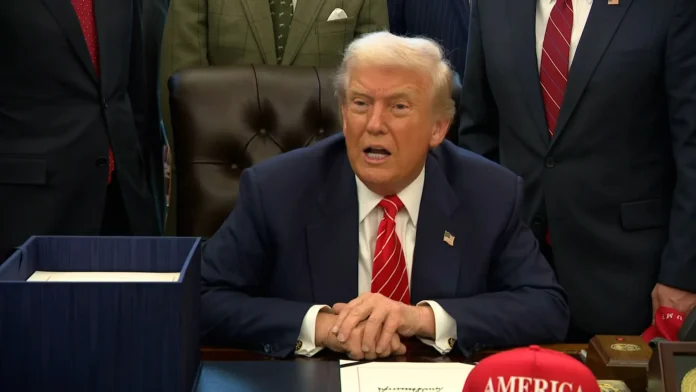
U.S. President Donald Trump said on Feb. 13 that he intends to require voter identification for the 2026 midterm elections, even if Congress does not pass new legislation. Trump has framed the policy as essential to safeguarding election integrity, asserting that requiring voters to show photo ID or other proof of citizenship will boost confidence in U.S. elections. Trump’s remarks came alongside discussion of the “Safeguard American Voter Eligibility” Act, a House-passed bill that would mandate proof of citizenship for federal elections but faces hurdles in the Senate.
Trump did not detail how he would legally enforce the mandate without Congressional approval, and constitutional experts note that federal intrusion into election law historically falls under state rather than federal purview. States currently set most election standards, meaning any executive action could face swift judicial challenge. GOP leaders insist executive direction is vital to address what they call “persistent fraud risks,” even though widespread voter fraud has not been substantiated by federal investigations.
The announcement heightens partisan debate over elections ahead of an already intense political cycle. Democrats warn that federal voter ID requirements could disenfranchise voters, especially those in rural or minority communities who may lack ready access to required documentation. Conversely, many Republicans see this as a long-standing priority finally receiving national momentum under Trump’s leadership.
Why It Matters
This development touches the core of U.S. democratic processes: who gets to vote and on what terms. If Trump advances a federal voter ID requirement via executive strategy, it would mark a significant shift in the balance between federal authority and state control of elections. For voters, political organizers, and advocacy groups, the unfolding saga sets the stage for legal battles and mobilization on both ends of the political spectrum.
Political Implications
Republicans argue the move will help secure the electoral system and galvanize the party’s base. Democrats and voting rights advocates contend it could suppress participation among key groups, shaping outcomes in competitive districts during the 2026 midterms. Questions remain about how courts will respond if executive action is pursued without legislative backing.
Implications
If Trump proceeds with unilateral voter ID requirements, legal challenges are almost certain. Courts may have to clarify federal power over elections, a defining question for U.S. democracy. Meanwhile, state governments and election officials could face conflicting directives affecting preparation for the 2026 cycle.
Source
Trump says he will seek to require voter ID for midterms regardless of Congress