

Story Highlights
-
President Donald Trump says U.S. operations against Iran are progressing rapidly.
-
Administration signals continued pressure until strategic objectives are achieved.
-
Officials frame the campaign as strengthening U.S. deterrence and regional stability.
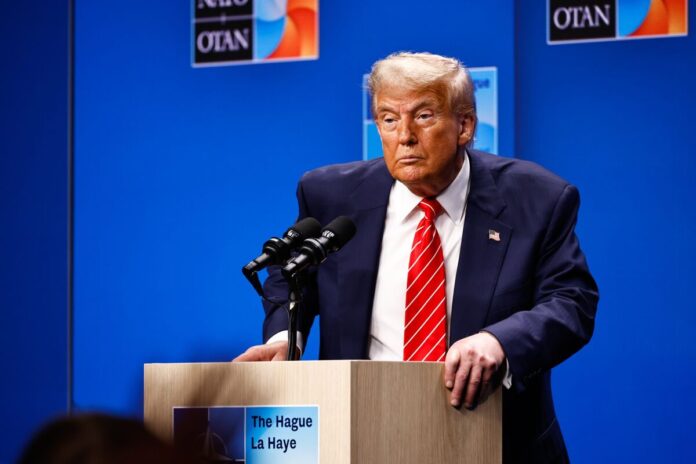
President Donald Trump said U.S. military operations targeting Iranian-linked networks are advancing effectively and will continue until defined objectives are met. In remarks reported by Reuters, Trump emphasized that the campaign is structured, deliberate, and designed to dismantle operational capabilities viewed as threats to American forces and regional partners. He indicated that progress thus far demonstrates strong coordination between U.S. command structures and allied assets in the region.
Administration officials described the strategy as sustained but calibrated. Rather than signaling an open-ended escalation, the White House framed the operation as a phased effort focused on degrading command infrastructure, limiting regional destabilization, and reinforcing deterrence. Coordination with Israel was highlighted as a key component, reflecting intelligence-sharing and operational alignment that officials say strengthens strategic positioning. Trump reiterated that the United States does not seek prolonged conflict but will maintain pressure until security objectives are achieved.
Why this matters extends beyond the immediate operational theater. The Middle East remains central to global energy supply chains, maritime trade security, and broader geopolitical alignment. Sustained U.S. engagement — particularly when coordinated with regional allies — signals a reaffirmation of Washington’s security commitments. Supporters argue that clear deterrence messaging reduces long-term instability by discouraging adversarial risk-taking. They contend that decisive action, paired with clear communication, can prevent drawn-out confrontations by establishing predictable red lines.
From a geopolitical standpoint, global powers are assessing the broader implications. European governments have called for restraint while acknowledging the strategic sensitivities at play. Energy markets continue monitoring developments closely, particularly around shipping lanes such as the Strait of Hormuz. Analysts note that steady messaging from Washington may help stabilize expectations, reducing volatility that often accompanies uncertainty in conflict zones.
Politically, Trump’s framing reinforces a doctrine centered on leverage and resolve. By publicly committing to persistence while avoiding inflammatory rhetoric, the administration aims to project strength without signaling unpredictability. Supporters see the approach as reinforcing American credibility after years of fluctuating regional engagement. Critics caution that sustained operations must be carefully managed to avoid unintended escalation. Nonetheless, the White House maintains that operational discipline and alliance coordination are mitigating factors.
Strategically, continued pressure may serve dual purposes: degrading adversarial capabilities while shaping conditions for potential diplomatic engagement. Historically, negotiations in high-tension environments often follow demonstrations of leverage. While no formal talks have been announced, administration officials have not ruled out dialogue should conditions align with U.S. security interests. For now, however, the message remains focused on mission continuity.
Military experts observe that phased campaigns often rely on maintaining momentum without overextension. The administration’s messaging suggests confidence in operational planning and intelligence assessments. Whether this posture ultimately shifts regional calculations will depend on how Tehran responds and how international stakeholders position themselves diplomatically.
Implications
If sustained operations continue to achieve targeted objectives without triggering broader escalation, the administration may argue that measured persistence reinforced deterrence and strengthened alliance credibility. However, long-term stability will hinge on balancing military leverage with diplomatic pathways. The coming weeks are likely to define whether continued pressure transitions into structured negotiations or remains part of an extended strategic campaign.
