Story Highlights
Trump announces sharp reduction in U.S. tariffs on Indian exports
Indian markets and exporters respond positively despite limited details
Move signals renewed emphasis on bilateral trade pragmatism
What Happened
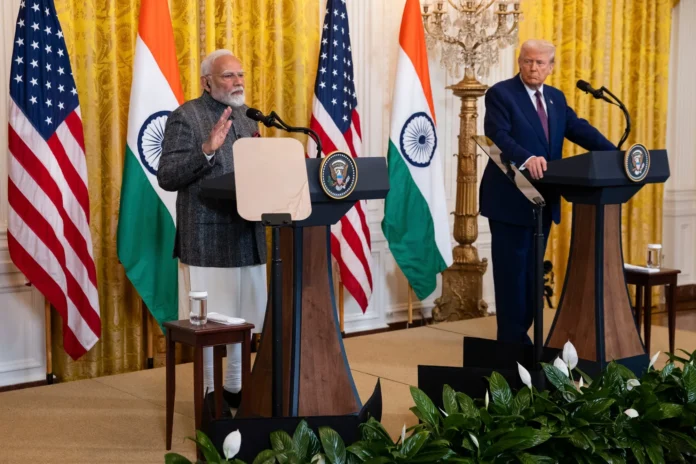
President Donald Trump announced a significant reduction in U.S. tariffs on Indian imports, lowering rates from around 50% to roughly 18%, according to early statements. While the administration has yet to release full technical details of the agreement, the announcement alone was enough to trigger an immediate positive reaction across Indian financial markets and among export-focused industries.
The tariff cut appears aimed at easing trade friction between Washington and New Delhi, particularly in sectors such as textiles, engineering goods, and manufactured products. Indian officials welcomed the announcement cautiously, noting that formal documentation and timelines will determine the real economic impact. Nevertheless, the move marks one of the most concrete trade signals from Trump in recent months.
Why It Matters
Trade tariffs directly affect pricing, competitiveness, and supply chains. For Indian exporters, a reduced tariff environment improves access to the U.S. market, potentially boosting volumes and stabilizing revenues. For the U.S., the move aligns with Trump’s broader strategy of recalibrating trade relationships through targeted adjustments rather than sweeping multilateral deals.
The announcement also reflects Trump’s preference for headline-driven trade diplomacy — using clear, decisive actions to influence markets and negotiating leverage, even before final agreements are published. This approach often creates short-term optimism while leaving room for continued negotiations.
Political & Geopolitical Implications
Politically, the tariff cut strengthens Trump’s image as a transactional dealmaker willing to reset economic relationships when it serves U.S. interests. It also positions him as open to strategic economic partnerships with key Indo-Pacific players, especially amid shifting global supply chains.
Geopolitically, closer U.S.–India trade alignment carries broader implications. India is increasingly viewed as a counterbalance to China in global manufacturing and geopolitics. Reduced trade barriers may encourage deeper economic integration, reinforcing strategic cooperation beyond commerce, including defense and technology.
Implications
If formalized, the tariff reduction could mark a meaningful reset in U.S.–India trade relations, benefiting exporters on both sides and signaling stability to global markets. However, sustained impact will depend on clarity, enforcement, and whether further trade concessions follow.