

What Happened
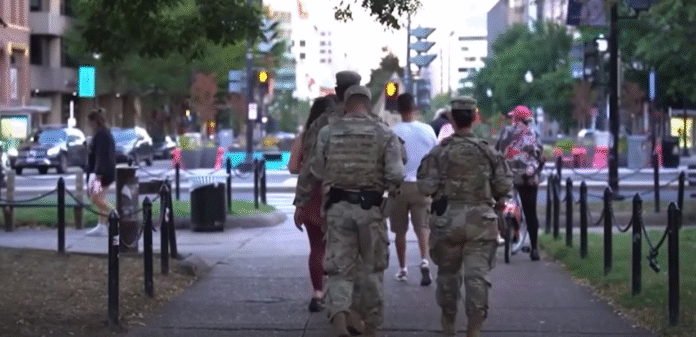
President Donald Trump authorized the federalization of roughly 300 Illinois National Guard troops to help quell violence and restore order in parts of Chicago following a spike in organized unrest and property damage. The decision came after weeks of rising incidents downtown and on Chicago’s South Side, where local law enforcement struggled to contain coordinated flash-mobs and vandalism targeting retail zones.
While Illinois Governor J.B. Pritzker opposed the move, calling it a state matter, the administration cited federal authority to intervene when “domestic unrest threatens the safety of American citizens and interstate commerce.” The plan places Guard units under federal command for limited public-safety support alongside local police.
Why It Matters
Trump’s move underscores his law-and-order stance, a hallmark of his leadership philosophy. Supporters view the action as both constitutional and necessary: when state officials hesitate, Washington must step in to protect life and property.
For months, Chicago has struggled with surges in violent crime and looting, with homicide rates far above pre-pandemic levels. Business leaders have warned of “economic evacuation” if safety cannot be restored. By taking decisive control of the Guard, Trump aims to reassert federal responsibility for internal peace, showing that the White House will not tolerate paralysis in the face of chaos.
The broader message also resonates politically. After years of debate over policing reforms, Trump is signaling that federal intervention remains on the table for cities unable—or unwilling—to restore order. Critics call it overreach; his base sees it as proof of strength.
Reactions
The move divided state leadership. Gov. Pritzker vowed to “pursue every legal option” to challenge the order, arguing that Illinois can handle its own security. Chicago Mayor Brandon Johnson, while less combative, said he would “welcome federal coordination that respects local control.”
Conservative commentators applauded the decision, comparing it to Eisenhower’s 1957 deployment to enforce desegregation in Little Rock—another instance where federal power upheld public order. “When mayors fail, presidents must act,” one Fox News panelist remarked.
On social media, supporters hailed the Guard mobilization as overdue, sharing clips of looting incidents with captions such as “finally someone is standing up for Chicago.” Opponents framed it as political theater, claiming Trump sought to project toughness ahead of budget fights in Washington.
Financial analysts noted a positive market response: Chicago-based retail chains saw a slight bump as investors anticipated reduced disruption. Civil-liberties groups, meanwhile, prepared suits citing federal overreach.
What’s Next
The Justice Department is coordinating with federal command to ensure legal compliance under Title 32 authority, which allows state Guard units to operate under federal orders for domestic missions. The deployment will be reviewed every 30 days and adjusted based on conditions.
If the initiative curbs violence without inflaming tensions, it could serve as a model for limited federal-state cooperation in crisis zones. Trump allies suggest similar readiness plans for cities like Baltimore and St. Louis if unrest spikes there.
Longer-term, the White House plans to push for an “Urban Safety Compact”—a framework letting the federal government assist local jurisdictions more rapidly during breakdowns in law and order. The measure would likely become a campaign talking point as Trump contrasts decisive intervention with what he calls “Democratic drift.”
For Chicago residents weary of nightly curfews and business closures, the Guard’s presence may finally offer relief. Whether welcomed or not, the message is clear: Washington will act when citizens are endangered.
Sources
- Wall Street Journal – “Trump Federalizes Illinois Guard Amid Chicago Unrest”
- Fox News – “White House Defends Move as Constitutional Duty”
- Chicago Tribune – “Pritzker Pushes Back on Trump Order”
- AP News – “Illinois Officials React to Federal Deployment Decision”
