Story Highlights
• President Trump signed a bipartisan spending bill into law, ending a four‑day partial government shutdown.
• The measure restores funding for federal agencies and federal workers.
• Lawmakers moved quickly to limit economic disruption and market uncertainty.
What Happened
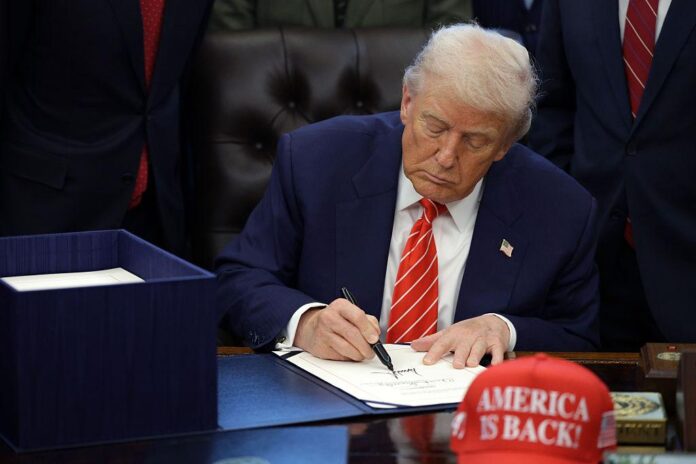
President Donald Trump signed a bipartisan spending bill that officially ended a brief partial U.S. government shutdown, restoring funding to federal agencies after several days of disruption. The shutdown began when lawmakers failed to finalize appropriations before a funding deadline, triggering furloughs and temporary pauses across parts of the federal government.
The legislation cleared Congress with support from both parties before reaching the White House, reflecting broad agreement on the need to reopen government operations swiftly. Once signed, the bill allowed federal employees to return to work and agencies to resume normal functions, including regulatory activity, public services, and data reporting.
While the shutdown was relatively short, it highlighted the fragility of the federal budgeting process and the speed with which funding lapses can ripple through government operations. Trump framed the signing as a necessary step to restore stability while longer‑term budget negotiations continue.
Why It Matters
Even short government shutdowns can have outsized economic and administrative effects. Federal workers face delayed pay, agencies suspend non‑essential functions, and businesses that rely on government approvals or data releases can experience uncertainty and delays.
By signing the spending bill quickly, the administration and Congress limited the shutdown’s potential damage to economic confidence and public services. Markets generally prefer predictable governance, and avoiding a prolonged funding lapse helps reassure investors, businesses, and consumers.
For federal agencies, restored funding means a return to normal operations, including regulatory oversight, benefit processing, and the release of key economic data that markets and policymakers rely on.
Political and Geopolitical Implications
Politically, the shutdown’s resolution underscores the pressure on lawmakers to prevent disruptions that can carry public and economic costs. Supporters of the agreement point to the bipartisan nature of the bill as evidence that compromise is still possible when deadlines force action.
For Trump, signing the bill reinforces a message of pragmatism and continuity in governance, emphasizing the importance of keeping the government functioning while policy disputes are negotiated separately. The episode also keeps attention on broader debates over fiscal discipline, spending priorities, and the repeated use of short‑term funding fixes.
Internationally, even brief U.S. shutdowns are closely watched. Allies, investors, and foreign governments view the reliability of U.S. governance as a key factor in global stability. Ending the shutdown quickly helps reinforce confidence in American institutions and their ability to resolve internal disputes.
Implications
In the near term, the signing of the spending bill restores operational normalcy across the federal government and removes a source of uncertainty for markets and the public. Federal workers return to their duties, and agencies resume postponed activities.
Longer term, the episode adds to ongoing calls for more durable budget solutions that reduce the risk of recurring shutdowns. While the immediate crisis has passed, lawmakers still face the challenge of reaching sustainable funding agreements that avoid future disruptions.
For now, the focus shifts back to policy negotiations, with the shutdown resolved and government operations back on track.
Source
Trump signs spending bill that ends four‑day government shutdown — Reuters