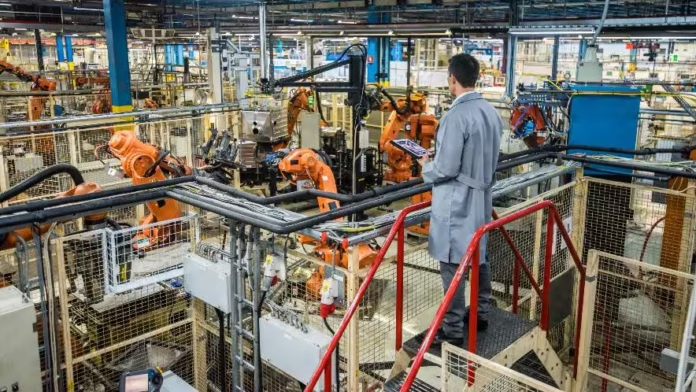
Story Highlights
Donald Trump proposed a renewed tariff strategy to support domestic manufacturing.
Policy aims to reduce reliance on imports and boost local production.
Focus remains on strengthening industrial competitiveness.
What Happened
The Trump administration outlined a revised tariff strategy aimed at strengthening U.S. manufacturing. The proposal emphasizes increasing tariffs on select imports while incentivizing domestic production. Officials suggest that the move is designed to rebalance trade dynamics and encourage companies to invest in U.S.-based operations.
The policy reflects a broader push toward economic nationalism, where domestic industries are prioritized through trade mechanisms. Supporters argue that tariffs can help level the playing field for American manufacturers facing global competition.
While details are still emerging, early signals indicate a targeted approach rather than broad-based tariffs, focusing on industries deemed strategically important.
Why It Matters
Manufacturing remains a cornerstone of economic growth and job creation. Strengthening domestic production can reduce supply chain vulnerabilities exposed during recent global disruptions.
Tariff policies can influence corporate decisions on where to produce goods. By making imports more expensive, policymakers hope to incentivize companies to shift operations domestically.
However, tariffs also carry potential trade-offs, including higher costs for consumers and possible retaliation from trading partners.
Political and Geopolitical Implications
Trade policy plays a central role in international relations. A stronger tariff stance may reshape trade negotiations with key partners.
Domestically, the policy aligns with broader economic messaging focused on job creation and industrial revival.
Globally, shifts in U.S. trade strategy can influence supply chains and economic alliances.
Implications
The renewed focus on manufacturing signals a continued emphasis on economic resilience and domestic capability. The effectiveness of the strategy will depend on execution and global response.
Source
“Trump signals new tariff strategy to boost U.S. manufacturing”