Story Highlights
- Trump confirms firm deadline on Iran amid rising tensions
- U.S. signals readiness to act if Strait of Hormuz remains disrupted
- Administration frames move to protect global energy stability
What Happened
President Donald Trump delivered a clear and assertive message regarding escalating tensions with Iran, stating that a previously announced deadline tied to the Strait of Hormuz situation “is happening.” The remarks came during a live media interaction, where Trump emphasized that the United States would not tolerate continued disruptions in one of the world’s most critical oil transit routes.
The Strait of Hormuz, through which a significant portion of global oil supply flows, has recently faced renewed threats and instability. U.S. officials have pointed to Iranian-linked actions that risk blocking or interfering with maritime traffic. Trump’s comments were framed as part of a broader strategy to ensure uninterrupted energy flow and maintain global economic stability.
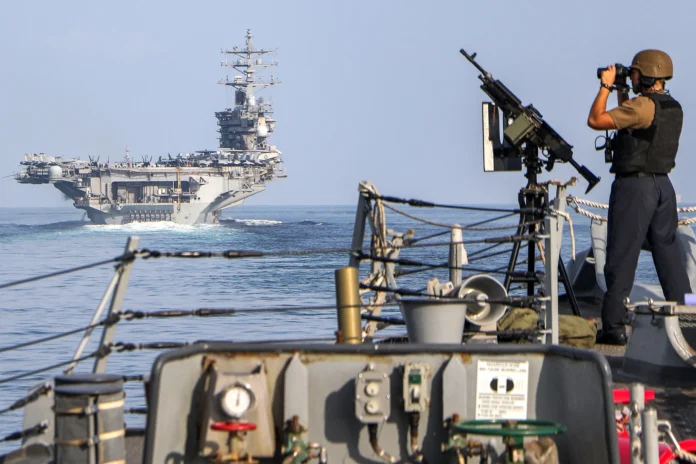
Senior administration officials reinforced the message, indicating that diplomatic channels remain open but that the United States is fully prepared to escalate if necessary. Military assets in the region have reportedly been placed on heightened alert as a precautionary measure, signaling that Washington is backing its warnings with operational readiness.
Why It Matters
The firm tone adopted by the Trump administration underscores a broader shift toward a more decisive U.S. posture in the Middle East. By setting a clear deadline, the White House is attempting to establish deterrence—sending a message not only to Iran but also to global markets that disruptions will not be tolerated.
Energy security remains a central concern. Even minor disruptions in the Strait of Hormuz can lead to spikes in oil prices, impacting economies worldwide. By acting early and decisively, the administration aims to stabilize expectations and prevent a wider economic ripple effect.
Additionally, the move reinforces the United States’ longstanding role as a guarantor of global trade routes. Maintaining open sea lanes is a cornerstone of international commerce, and any perceived hesitation could embolden adversarial actions in other regions as well.
Political & Geopolitical Implications
Trump’s approach is likely to resonate with supporters who favor strong, assertive foreign policy decisions. The emphasis on deadlines and consequences aligns with his broader leadership style, which prioritizes clarity and leverage in negotiations.
On the geopolitical stage, the situation places additional pressure on Iran, which must now weigh the risks of escalation against potential diplomatic engagement. Regional allies, particularly in the Gulf, are likely to view the U.S. stance as a reassuring signal of commitment to security.
However, the situation also carries inherent risks. Any miscalculation could lead to rapid escalation, drawing in multiple actors and increasing the likelihood of broader conflict. As such, the coming days will be critical in determining whether the strategy leads to de-escalation or confrontation.
Implications
The administration’s firm stance introduces a high-stakes moment in U.S.-Iran relations, with global markets, regional allies, and adversaries closely watching the outcome. If successful, it could reinforce deterrence and stabilize a volatile situation. If not, it may trigger a chain of events with far-reaching geopolitical consequences.