Story Highlights
President Donald Trump to visit China March 31–April 2.
Trip comes after Supreme Court ruling limiting tariff authority.
Talks expected to focus on trade stability and economic coordination.
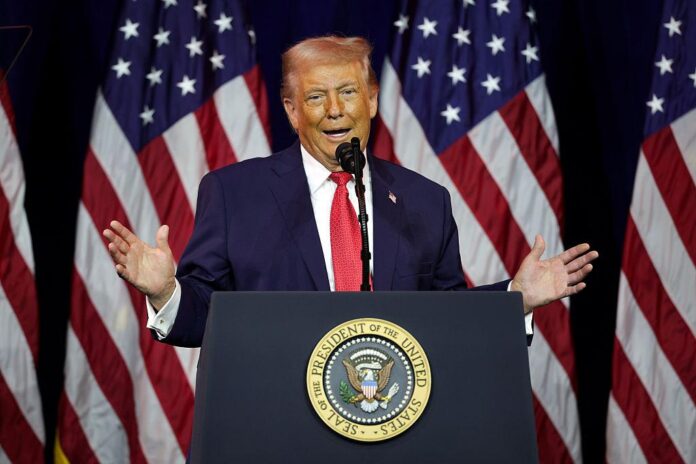
President Donald Trump is scheduled to visit China from March 31 to April 2, a trip that places trade policy back at the center of U.S.–China relations. The visit follows a recent Supreme Court ruling that limited executive authority over sweeping global tariffs, reshaping the domestic legal landscape for trade measures. According to reporting from Reuters, the trip is expected to focus heavily on recalibrating trade dynamics and reinforcing economic dialogue between the world’s two largest economies.
The timing is significant. The Supreme Court’s 6–3 decision striking down broad tariff authority under a 1977 emergency statute has shifted trade power more firmly toward Congress. While that ruling curtails unilateral tariff action, it does not eliminate the administration’s ability to negotiate new trade arrangements or pursue targeted economic measures through legislative channels. Trump’s upcoming visit signals that diplomatic engagement remains a central strategy, even as legal parameters evolve.
Trade between the United States and China remains one of the most consequential bilateral economic relationships globally. Supply chains spanning technology, agriculture, energy, and manufacturing continue to tie both economies together despite years of friction. Trump has consistently framed trade policy as a tool to protect American industry and rebalance perceived inequities. The China visit offers an opportunity to reinforce that message while potentially exploring new frameworks that align with the Court’s ruling.
Beijing, for its part, has emphasized stability in economic ties amid global market volatility. Investors are watching closely for signals of reduced uncertainty following the tariff decision. Markets often respond positively to clarity in trade rules, and diplomatic engagement can reduce the risk of abrupt policy shifts. A high‑level visit provides both sides a platform to signal predictability and long‑term economic intent.
Beyond tariffs, discussions may also extend to technology policy, intellectual property protections, and supply chain resilience. Both countries have increasingly prioritized domestic production in strategic sectors, from semiconductors to pharmaceuticals. Establishing guardrails that prevent escalation while preserving competitive interests remains a delicate balancing act.
The visit also carries geopolitical weight. U.S.–China relations influence global economic growth, regional security in the Indo‑Pacific, and international institutions. As other nations navigate their own trade strategies, signals from Washington and Beijing often set broader trends. A stable dialogue could reassure allies and markets alike.
Domestically, the trip allows Trump to demonstrate proactive leadership on trade following the Court’s decision. While the ruling constrained one policy tool, it also creates space for renewed legislative collaboration and direct negotiation. By engaging Beijing at the highest level, the administration can argue that strategic diplomacy remains central to advancing American economic interests.
Critics may question whether meaningful breakthroughs are likely, given the complexity of prior negotiations. However, even incremental progress — such as reaffirmed commitments to market access or dispute resolution mechanisms — can provide tangible economic benefits. The optics of engagement alone may contribute to short‑term market confidence.
Why It Matters
Trade policy affects everything from consumer prices to national security. With the Supreme Court clarifying limits on emergency tariff powers, the executive branch may increasingly rely on diplomacy and congressional partnership to shape economic outcomes. A presidential visit to China underscores that engagement, rather than escalation, remains an available path.
For businesses and investors, predictability is key. Diplomatic efforts that reduce uncertainty can encourage capital investment and stabilize supply chains. Even symbolic progress may lower volatility in sectors heavily exposed to cross‑border trade.
Political & Geopolitical Implications
Politically, the visit offers an opportunity to pivot from legal setbacks toward forward‑looking negotiation. Supporters may view the trip as evidence of continued focus on strengthening America’s trade position through direct engagement. Lawmakers could use any emerging framework as the basis for updated trade legislation aligned with constitutional boundaries.
Geopolitically, sustained U.S.–China dialogue can influence global economic alignment. Other nations often calibrate their trade strategies based on signals from Washington and Beijing. If the visit produces even modest agreements, it may ease broader tensions in international markets.
At the same time, unresolved structural differences remain. Competition in advanced technologies, industrial policy, and market access continues to define the relationship. The trip’s long‑term impact will depend on whether both sides can convert high‑level discussions into enforceable commitments.
Implications
Trump’s upcoming China visit represents a strategic moment in the evolution of U.S. trade policy. With tariff authority newly constrained by the courts, diplomacy and legislative collaboration may take center stage. The outcome of this engagement could shape not only bilateral economic ties but also the broader trajectory of global trade stability.