A fast guide to the legal powers, the National Guard piece, and what critics and supporters are saying
President Donald Trump announced that Washington’s Metropolitan Police Department (MPD) would operate under temporary federal direction, invoking Section 740 of the D.C. Home Rule Act. In the same move, he greenlit an activation of D.C. National Guard troops to support public safety operations. The White House framed the action as a response to a “crime emergency,” while city leaders and legal experts pushed back, arguing that local control and due process are at stake. The White HouseABC News
What is Section 740 — and how far does it go?
Section 740 allows the president, during “special conditions of an emergency nature,” to direct the mayor regarding MPD services for federal purposes. In practice, it means the White House can temporarily task D.C. police to support federal priorities, with limits on duration and scope. Legal analyses note the authority is time-boxed and requires congressional involvement for any longer extension. ABC NewsCouncil of the District of Columbia
Why the National Guard is different in D.C.
Unlike states, the D.C. National Guard answers to the president, not a governor. That unusual chain of command dates back to the District’s unique constitutional status. When activated, the Guard can be used to protect federal facilities, assist with traffic and crowd control, and support public safety missions—always under federal authority. D.C. National GuardD.C. Law Library
Supporters say it’s about law and order
Backers argue that a strong federal role is justified in the nation’s capital and that a visible surge of federal officers and Guard support can stabilize hot spots quickly. White House statements emphasize that the step is lawful under Home Rule’s emergency clause and aimed at deterring violent crime and open-air lawlessness. The White House+1
Critics call it overreach—and point to the data
D.C. officials and civil liberties groups contend the move goes beyond what Section 740 permits and undermines local self-government. They also point to city crime dashboards showing year-to-date declines in several violent and property crime categories compared with 2024—evidence, they say, that an “emergency” is not clearly established. Lawsuits filed by the D.C. Attorney General challenge the legality and duration of federal command over MPD. MPDCDC Attorney GeneralBrennan Center for Justice
https://x.com/DCAttorneyGen/status/1956339472901034287
What changes on the ground?
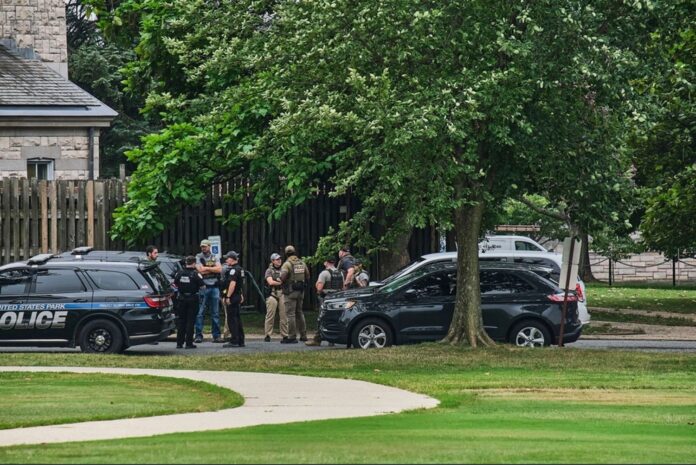
For residents, the most visible shifts are (1) more federal agents working alongside MPD and (2) Guard units assigned to support missions like traffic posts or facility protection. Day-to-day policing still has to follow the Constitution and D.C. law; federal direction doesn’t suspend civil rights standards, use-of-force rules, or judicial oversight. D.C. National Guard
How long can this last?
Under the Home Rule framework, a president’s emergency direction over MPD is meant to be temporary. Extensions and broader changes face legal and political hurdles, especially if local officials contest whether the situation meets the statute’s emergency threshold. Expect courts—and potentially Congress—to play a role in defining the limits