Story Highlights
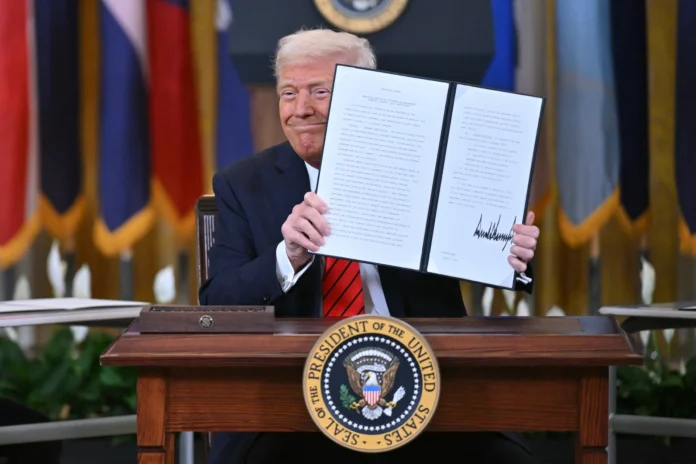
Donald Trump emphasized accelerating U.S. infrastructure modernization efforts.
The strategy focuses on transportation, energy systems, and long-term economic efficiency.
Officials say upgraded infrastructure will boost productivity and national competitiveness.
What Happened
President Donald Trump highlighted a renewed push toward modernizing U.S. infrastructure, emphasizing the importance of upgrading transportation networks, energy systems, and critical public assets. The administration signaled that infrastructure development remains a central component of its broader economic strategy, aimed at supporting growth and improving efficiency across industries.
According to reporting from Reuters, officials outlined plans to accelerate infrastructure projects through a combination of federal support, state coordination, and private sector participation. The initiative focuses on improving highways, bridges, freight corridors, and energy distribution systems that play a vital role in supporting economic activity.
Policymakers emphasized the need to streamline project approvals and reduce delays that often affect large-scale infrastructure development. By improving coordination between agencies and simplifying regulatory processes, the administration aims to ensure that projects are completed more efficiently while maintaining quality and safety standards.
In addition to physical infrastructure, the strategy also includes modernization efforts such as integrating digital technologies into transportation and energy systems. Smart infrastructure solutions, including data-driven traffic management and advanced grid systems, are expected to enhance performance and adaptability in the long term.
Why It Matters
Infrastructure is a foundational element of economic performance. Efficient transportation systems allow goods and services to move quickly across the country, reducing costs and improving productivity. Similarly, reliable energy infrastructure ensures that businesses and households have consistent access to power.
Investments in infrastructure can generate significant economic benefits. Construction projects create employment opportunities across multiple sectors, including engineering, manufacturing, and project management. These jobs contribute to economic activity and support local communities.
For businesses, improved infrastructure reduces operational challenges. Faster transportation times, better logistics networks, and stable energy supply allow companies to operate more efficiently and compete more effectively in global markets. This can lead to increased investment, innovation, and expansion.
Infrastructure modernization also supports long-term economic resilience. Upgraded systems are better equipped to handle changing conditions, including population growth, technological advancements, and shifts in demand. This adaptability is essential for sustaining economic growth over time.
Political and Geopolitical Context
Infrastructure development has long been a priority in U.S. economic policy, with multiple administrations emphasizing its importance for national growth and competitiveness. Investments in transportation and energy systems are often viewed as essential for maintaining economic leadership.
The Trump administration has framed infrastructure modernization as part of a broader strategy to strengthen domestic capabilities. Supporters argue that improving foundational systems enhances economic efficiency and reduces reliance on external resources.
Globally, infrastructure has become a key area of competition. Countries around the world are investing heavily in transportation networks, energy systems, and digital infrastructure to strengthen their economies. In this context, maintaining modern and efficient systems is critical for the United States to remain competitive.
At the same time, infrastructure policy involves complex considerations, including funding, environmental standards, and regulatory frameworks. Policymakers must balance these factors to ensure that projects are both effective and sustainable.
Implications
If successfully implemented, infrastructure modernization efforts could lead to improved efficiency across the U.S. economy. Enhanced transportation networks may reduce costs for businesses, while upgraded energy systems could improve reliability and support emerging technologies.
The initiative may also attract private investment, as improved infrastructure creates opportunities for businesses to expand and innovate. Over time, these developments could contribute to stronger economic growth and increased competitiveness in global markets.
However, the long-term impact will depend on execution. Effective project management, coordination between stakeholders, and efficient allocation of resources will be critical for achieving desired outcomes.
In the broader context, continued investment in infrastructure is likely to remain a key component of economic strategy. As the economy evolves, maintaining modern and resilient systems will be essential for supporting growth and ensuring long-term stability.
Sources
Trump pushes infrastructure modernization to boost U.S. economy