

Story Highlights
- Donald Trump outlines a renewed economic agenda centered on U.S. manufacturing
- Focus placed on tax relief, deregulation, and domestic energy expansion
- Plan positions economic nationalism as a core pillar heading into the 2026 political cycle
What Happened
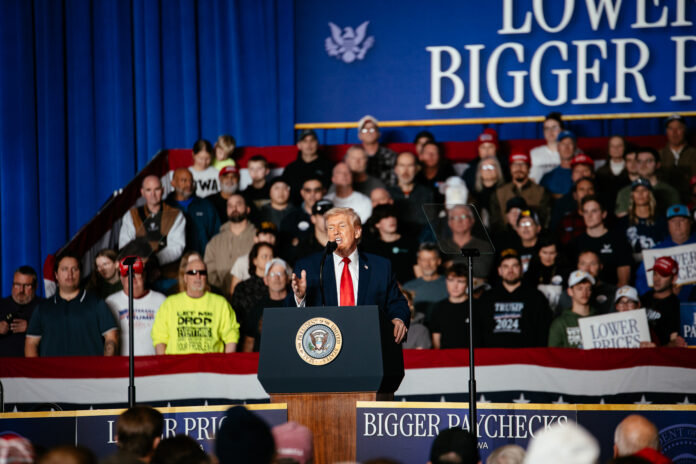
Former President Donald Trump has unveiled a refreshed economic policy framework, signaling a strong push to reestablish domestic industrial strength and reduce reliance on foreign supply chains. In recent remarks and campaign-aligned discussions, Trump emphasized the importance of reshoring manufacturing, cutting regulatory burdens on businesses, and expanding U.S. energy production to drive long-term economic resilience.
The proposal builds on themes that defined his earlier presidency but introduces a sharper focus on post-pandemic supply chain vulnerabilities and global competition, particularly with China. Trump’s allies suggest the plan is designed not only to boost economic growth but also to strengthen national security by reducing dependency on imports in critical sectors such as technology, pharmaceuticals, and energy.
At its core, the strategy highlights tax incentives for American companies, expanded support for domestic production, and a broader commitment to what Trump describes as “economic independence.” The messaging reflects a continuation of policies aimed at prioritizing American workers and industries while reshaping trade relationships to favor domestic outcomes.
Why It Matters
Trump’s economic pitch arrives at a time when voters remain highly sensitive to inflation, job stability, and broader economic uncertainty. By focusing on manufacturing and energy independence, the plan taps into concerns about supply chain disruptions that have affected industries across the United States in recent years.
The emphasis on deregulation and tax relief also aligns with long-standing Republican economic principles, potentially consolidating support among business leaders and conservative voters. At the same time, the renewed focus on domestic production resonates with a broader bipartisan trend toward reshoring key industries, suggesting that elements of the plan may find wider appeal beyond Trump’s core base.
Importantly, the proposal reframes economic policy as both a financial and strategic issue. By linking domestic production to national security, Trump’s approach reflects a growing shift in how policymakers view global trade dynamics—less as purely economic transactions and more as strategic dependencies that carry long-term risks.
Geopolitical & Political Implications
Trump’s renewed economic agenda could have significant implications for global trade relationships, particularly with major manufacturing hubs like China. A stronger push toward domestic production may lead to increased tariffs, revised trade agreements, or policies designed to incentivize companies to relocate operations back to the United States.
Domestically, the plan is likely to shape Republican policy discussions heading into the 2026 election cycle. It reinforces Trump’s influence within the party and sets a clear economic narrative that other candidates may adopt or respond to. The focus on energy independence also intersects with broader debates over climate policy, fossil fuel production, and energy security.
If implemented, such policies could shift the balance of global supply chains while redefining America’s economic posture on the world stage—favoring resilience and self-sufficiency over globalization.
Implications
Trump’s economic blueprint signals a continued move toward economic nationalism as a defining feature of U.S. policy debates. By prioritizing domestic manufacturing, energy production, and reduced regulatory burdens, the plan aims to position the United States as more self-reliant in an increasingly competitive global environment. Whether fully adopted or partially implemented, the proposal is likely to influence both political discourse and policy direction in the months ahead.


