Story Highlights
Trump proposed a regional military partnership to combat drug cartels across the Americas.
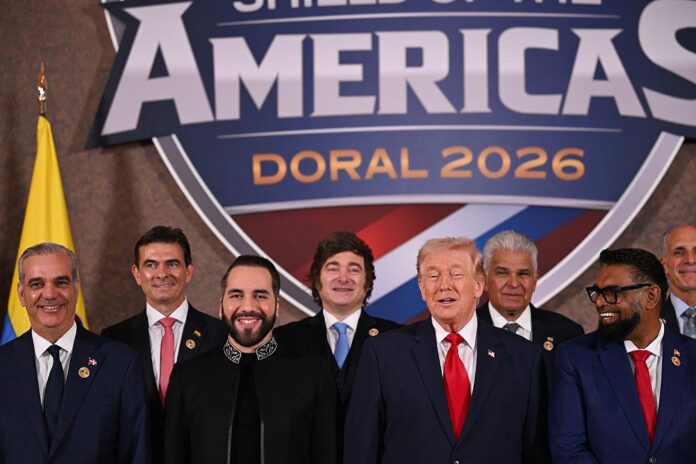
Leaders from multiple Latin American countries attended a Florida summit to coordinate security strategies.
The initiative signals a shift toward stronger cross-border enforcement and regional cooperation.
The United States is pushing for stronger hemispheric cooperation against transnational crime. At a recent security gathering in Florida, President Donald Trump encouraged Latin American leaders to consider using military resources to dismantle powerful drug cartels operating across the region. The summit brought together officials from several countries to discuss coordinated enforcement, intelligence sharing, and joint operations targeting organized crime networks. According to reports, the meeting emphasized the growing threat cartels pose to regional stability and cross-border security.
Trump framed the initiative as a collaborative effort designed to strengthen security across the Western Hemisphere. By encouraging regional governments to participate in joint enforcement strategies, the administration aims to disrupt trafficking routes, reduce cartel violence, and enhance border protection. The proposal reportedly includes stronger intelligence coordination and potential operational partnerships between security agencies and armed forces across participating nations.
The move reflects Washington’s evolving strategy toward organized crime in the Americas. Drug cartels have expanded their operations significantly over the past decade, increasingly operating across multiple national borders and influencing regional politics and economies. Supporters of the initiative argue that addressing such networks requires coordinated international responses rather than isolated national efforts.
Implications
If implemented, the proposal could reshape regional security cooperation in the Americas. A formal coalition against cartels may strengthen intelligence sharing and enforcement capacity but could also raise diplomatic questions around sovereignty and the use of military resources in domestic law enforcement. The initiative may ultimately redefine how the United States and Latin American governments collaborate against transnational criminal organizations.
Sources