Story Highlights
Trump meets with Novartis CEO to discuss U.S. investment plans.
Company signals potential expansion of American manufacturing footprint.
Development aligns with broader push for domestic production growth.
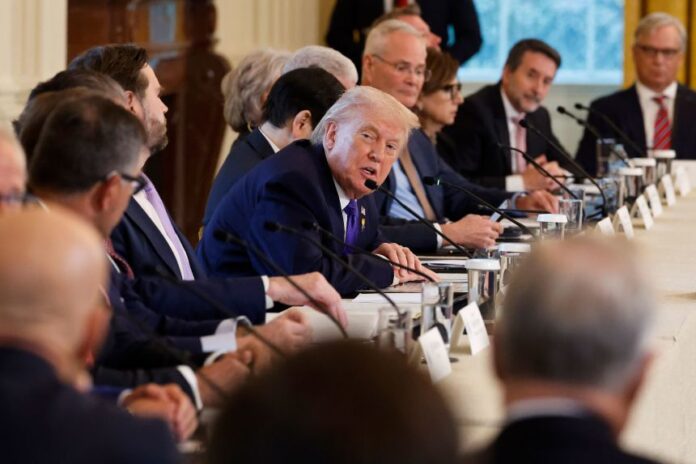
Former President Donald Trump met with the CEO of Swiss pharmaceutical giant Novartis, highlighting the company’s plans to expand its manufacturing presence in the United States. According to reporting from Reuters, Trump emphasized that policy incentives and pro‑business positioning have helped encourage multinational firms to consider additional U.S. investment. The discussion centered on new production facilities and long‑term domestic capacity growth.
Novartis, one of the world’s largest drugmakers, has been evaluating supply chain diversification and regional manufacturing resilience in recent years. The potential U.S. plant expansions would support pharmaceutical production closer to American consumers, reducing reliance on overseas facilities and strengthening domestic supply networks. Trump framed the development as evidence that economic and trade strategies aimed at promoting American industry are yielding tangible corporate commitments.
The meeting reflects a broader policy narrative that prioritizes reshoring manufacturing and incentivizing capital investment inside the United States. Pharmaceutical production, in particular, has become a strategic focus following pandemic-era supply chain disruptions. Strengthening domestic capacity is widely viewed as both an economic and national security objective, especially for critical medicines and advanced therapies.
While final investment details have yet to be formally announced, the signal from a major multinational corporation underscores confidence in U.S. market conditions. Corporate decisions to expand manufacturing typically involve multibillion‑dollar commitments and long planning timelines. State and local governments often compete for such facilities, offering tax incentives and workforce development partnerships.
Why It Matters
Manufacturing expansion in the pharmaceutical sector carries economic, healthcare, and geopolitical significance. Domestic production can reduce vulnerability to external supply shocks and improve responsiveness to demand surges. For policymakers, attracting investment from a global firm like Novartis signals competitiveness in advanced manufacturing and life sciences innovation.
The development also intersects with broader economic messaging. Encouraging foreign direct investment supports job creation, infrastructure development, and local economic growth. Pharmaceutical plants often generate high‑skilled employment and ancillary supply chain activity, amplifying regional economic impact.
Political & Geopolitical Implications
Politically, the announcement supports arguments that pro‑investment economic frameworks can attract multinational capital. It may bolster narratives emphasizing deregulation, tax incentives, and trade leverage as tools for encouraging domestic expansion. Lawmakers across party lines have increasingly prioritized supply chain resilience, suggesting potential bipartisan support for policies that encourage reshoring in critical industries.
Geopolitically, pharmaceutical manufacturing capacity is linked to strategic autonomy. Nations worldwide are reassessing dependencies in sensitive sectors such as semiconductors, energy, and medicine. If Novartis expands its U.S. footprint, it would reinforce America’s position as a hub for advanced pharmaceutical production while potentially influencing how other multinational firms allocate global investments.
Additionally, strengthening domestic manufacturing capacity may enhance the United States’ negotiating position in trade and health diplomacy. Countries with robust life sciences infrastructure often play leading roles in global research collaboration and public health initiatives.
Implications
If finalized, Novartis’ U.S. expansion would represent a significant vote of confidence in American industrial and economic policy. Beyond immediate job creation, such investment could contribute to long‑term supply chain resilience and innovation leadership. The extent to which additional global firms follow suit will help determine whether this moment marks a broader manufacturing shift.
Sources
Trump meets Novartis CEO, says company plans U.S. plant expansion