Story Highlights
Donald Trump emphasized policies designed to strengthen domestic manufacturing investment.
Officials say expanding U.S. industrial production supports economic growth and job creation.
Manufacturing development is being framed as a cornerstone of long‑term economic competitiveness.
What Happened
President Donald Trump highlighted the importance of expanding domestic manufacturing investment as part of a broader economic strategy aimed at strengthening American industry. Speaking about economic policy and industrial growth, Trump emphasized that increasing factory production and encouraging private‑sector investment can help reinforce the country’s economic foundation.
According to reporting from Reuters, administration officials say the strategy focuses on encouraging investment in U.S. factories, modernizing production facilities, and strengthening supply chains for key industries. Policymakers believe these initiatives can increase domestic production capacity while supporting innovation in advanced manufacturing technologies.
Officials argue that strengthening manufacturing infrastructure can reduce reliance on overseas supply chains while ensuring that American companies remain competitive in global markets. Investments in industrial development are also expected to support industries such as automotive production, aerospace engineering, and advanced electronics manufacturing.
Why It Matters
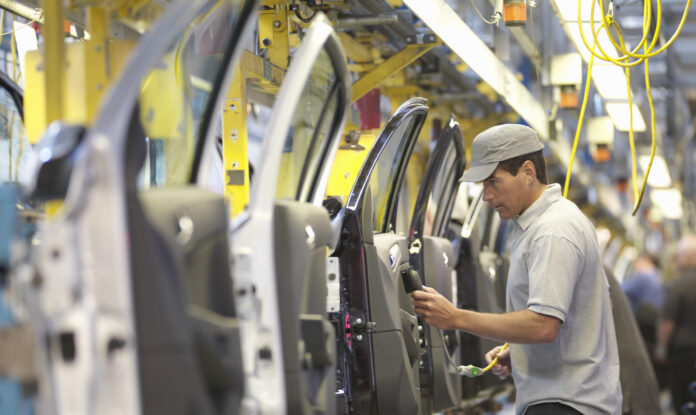
Manufacturing plays a critical role in the U.S. economy. Factories across the country produce goods ranging from automobiles and machinery to electronics and industrial equipment. A strong manufacturing sector supports millions of jobs and contributes significantly to national economic output.
Economic analysts often view manufacturing investment as an indicator of long‑term economic confidence. When companies build new factories or upgrade production facilities, it typically signals expectations of sustained demand and economic growth. These investments can also stimulate related industries including logistics, construction, and engineering.
Supply‑chain resilience has also become an increasingly important issue in global economic policy. Disruptions to international trade in recent years have highlighted vulnerabilities in global production networks. Expanding domestic manufacturing capacity may help reduce these risks while strengthening economic stability.
Political and Geopolitical Context
Industrial policy has become an increasingly important topic in global economic strategy. Governments around the world are investing in domestic manufacturing capacity in order to secure supply chains and maintain competitiveness in emerging technologies.
The Trump administration has consistently emphasized policies designed to encourage domestic production and industrial growth. Supporters of the strategy argue that strengthening the U.S. industrial base supports both economic prosperity and national security.
At the same time, global competition in advanced manufacturing technologies continues to intensify. Countries across Europe and Asia are investing heavily in automation, robotics, and semiconductor production. Maintaining leadership in these industries is considered an important component of long‑term economic competitiveness.
Implications
If manufacturing investment continues to expand, the United States could reinforce its position as one of the world’s leading industrial economies. Increased production capacity may support job creation while encouraging innovation in advanced manufacturing technologies such as robotics and automation.
Over the long term, policymakers will likely continue focusing on strategies that combine industrial growth with workforce development and technological innovation. Strengthening the manufacturing sector may help ensure that the United States remains competitive in an increasingly complex global economic landscape.