Story Highlights
Donald Trump pointed to recent economic indicators as signs of continued U.S. growth.
Officials say current policies are supporting investment, business expansion, and market confidence.
The administration emphasized long‑term economic stability and competitiveness.
What Happened
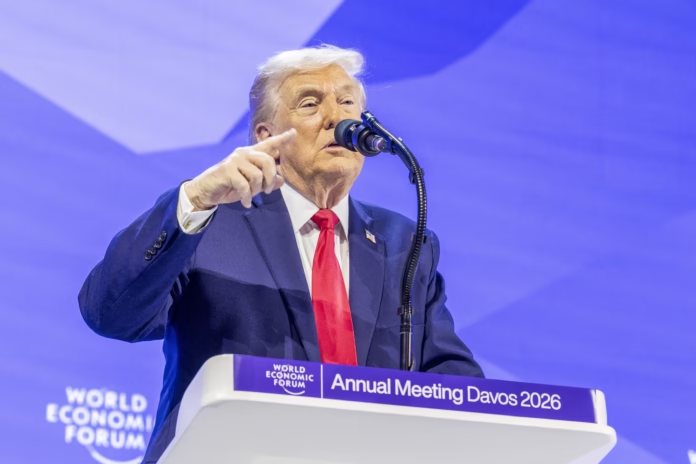
President Donald Trump highlighted recent economic developments, pointing to a range of indicators that suggest continued momentum in the U.S. economy. Speaking on economic policy and growth trends, Trump emphasized that current policies are aimed at encouraging business investment, strengthening domestic industries, and maintaining overall economic stability.
According to reporting from Reuters, administration officials cited improvements in business activity, investment flows, and market performance as evidence of a positive economic trajectory. Policymakers noted that supportive regulatory frameworks and pro‑investment strategies have contributed to an environment where companies are more willing to expand operations and allocate capital.
Officials also highlighted the role of fiscal and policy measures designed to encourage innovation and industrial growth. By focusing on sectors such as manufacturing, energy, and technology, the administration aims to strengthen the broader economic base and create opportunities for long‑term expansion.
The administration framed these developments as part of a comprehensive economic strategy focused on maintaining growth while managing potential risks. Policymakers emphasized the importance of balancing short‑term performance with long‑term sustainability, ensuring that economic gains are both stable and resilient.
Why It Matters
Economic growth is a central measure of national performance, influencing employment levels, income growth, and overall quality of life. When economic indicators point to expansion, it often reflects increased business activity, higher investment levels, and stronger consumer confidence.
For businesses, a stable and growing economy provides a favorable environment for expansion. Companies are more likely to invest in new projects, hire additional workers, and develop innovative products when they have confidence in future demand. This, in turn, can lead to increased productivity and competitiveness.
Consumers also benefit from economic growth through improved job opportunities and rising incomes. As employment levels remain stable or increase, households typically experience greater financial security, which can support spending and further stimulate economic activity.
Financial markets are another key area influenced by economic performance. Positive growth indicators can boost investor confidence, leading to increased capital flows and stronger market performance. This can have a ripple effect across industries, supporting business development and innovation.
Political and Geopolitical Context
Economic policy is closely tied to broader political and geopolitical considerations. Governments often use fiscal measures, regulatory frameworks, and trade policies to shape economic outcomes and strengthen national competitiveness.
The Trump administration has emphasized policies aimed at supporting domestic industries while maintaining engagement in global markets. Supporters argue that this approach helps balance internal growth with international economic participation, allowing the United States to remain a key player in global trade and investment.
At the same time, global economic conditions play an important role in shaping domestic outcomes. Factors such as international trade dynamics, geopolitical developments, and financial market trends can all influence economic performance. Policymakers must therefore consider both domestic and global factors when designing economic strategies.
In an increasingly interconnected world, economic developments in the United States can also have broader implications for global markets. As one of the world’s largest economies, changes in U.S. policy and performance often influence international investment flows and economic stability.
Implications
If current trends continue, the United States could maintain steady economic growth supported by strong business investment and stable market conditions. Continued focus on key industries and innovation may further enhance competitiveness and productivity.
However, long‑term outcomes will depend on how effectively policymakers manage evolving economic conditions. Factors such as inflation, global market dynamics, and technological change will play a role in shaping future growth.
In the broader context, sustained economic momentum could reinforce the United States’ position as a leading global economy. Policymakers will likely continue focusing on strategies that promote resilience, adaptability, and long‑term stability in an increasingly complex economic landscape.