Story Highlights
- President Trump defends the detonation of lead azide in Iowa, calling it a necessary operation.
- He attributes the hazardous material’s accumulation to former President Obama.
- Trump criticizes CNN for its negative portrayal of the event, emphasizing his administration’s commitment to safety.
- The detonation has raised concerns about health and environmental impacts, particularly regarding lead exposure.
What Happened
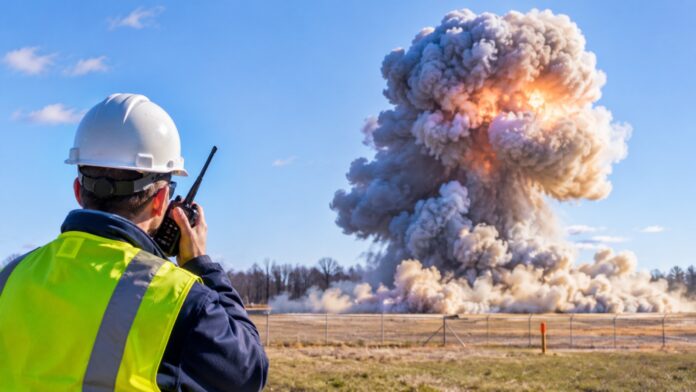
In a recent statement, President Trump took to social media to defend the detonation of degraded lead azide in Iowa, an operation that has sparked significant controversy and debate. The president characterized the detonation as a ‘perfect’ execution of a necessary safety measure, aimed at preventing a potential explosion from the deteriorating material. He asserted that his administration successfully managed the operation without releasing harmful carcinogens into the environment, a claim he emphasized in his posts on Truth Social.
Trump’s remarks came in the wake of a planned detonation conducted by the U.S. Army on Wednesday, which was deemed essential to mitigate risks associated with the hazardous material. The operation was met with mixed reactions from the public and media, particularly from outlets like CNN, which the president accused of providing inaccurate and negative coverage of the event. In his posts, Trump expressed frustration with the media’s portrayal, suggesting that their reporting was not only misleading but also detrimental to the country.
- The U.S. Army detonated lead azide in Iowa on Wednesday.
- Trump labeled the operation a ‘huge success’ while criticizing CNN’s coverage.
- Residents in Middletown, Iowa, were advised to evacuate prior to the detonation.
- Concerns about health risks associated with lead exposure were raised by environmental experts.
Why It Matters
The implications of the Iowa detonation extend beyond the immediate safety concerns surrounding the operation. By framing the detonation as a necessary action taken by his administration, Trump is attempting to shift the narrative regarding the accumulation of hazardous materials in the state. He has pointed fingers at former President Obama, suggesting that the buildup of lead azide dates back to his administration, thus deflecting responsibility from his own tenure. This strategy not only seeks to absolve his administration of past failures but also aims to reinforce his image as a decisive leader who prioritizes safety and environmental protection.
Moreover, the president’s critique of CNN and other media outlets reflects a broader trend of distrust towards mainstream media, particularly among his supporters. By labeling their coverage as ‘inaccurate and deplorable,’ Trump is rallying his base against what he perceives as biased reporting. This dynamic is crucial as it shapes public perception and influences the political landscape, especially in an election year.
- The detonation has raised questions about the management of hazardous materials in the U.S.
- Trump’s comments may influence public opinion regarding environmental safety measures.
- Media coverage of the event could impact the administration’s approval ratings.
- Residents’ concerns about health risks highlight the ongoing debate over environmental policies.
Political and Public Context
Understanding the context surrounding the Iowa detonation is essential to grasp the full scope of its implications. The accumulation of lead azide and other hazardous materials has been a longstanding issue, with critics questioning why previous administrations, including Trump’s, did not address the problem sooner. The president’s attempt to shift blame to Obama underscores the contentious nature of political discourse in the U.S., where past administrations are often scrutinized for their handling of environmental and safety issues.
Additionally, the environmental risks associated with lead exposure are well-documented, with the Environmental Protection Agency (EPA) highlighting the serious health implications for both children and adults. This backdrop adds weight to the concerns raised by residents and environmental advocates following the detonation. The administration’s response to these concerns will be closely monitored, as it could set a precedent for how similar situations are handled in the future.
- Previous administrations have faced scrutiny over hazardous material management.
- Environmental advocates continue to raise awareness about lead exposure risks.
- Trump’s administration has previously been criticized for its environmental policies.
- The detonation reflects ongoing tensions between safety measures and public health concerns.
Trump berates CNN for 'inaccurate and deplorable' Iowa blast coverage: 'Crazy with anger' #RawStory https://t.co/K8asR0Cheg
— #TuckFrump (@realTuckFrumper) November 25, 2026
What Happens Next
Looking ahead, the fallout from the Iowa detonation will likely continue to unfold as various stakeholders respond to the operation and its implications. The administration will need to address the concerns raised by residents and environmental experts to maintain public trust and support. This may involve increased transparency regarding the management of hazardous materials and a commitment to ensuring public safety in future operations.
Moreover, the media’s portrayal of the event will remain a focal point for the administration, as Trump and his allies seek to counter negative narratives. The ongoing battle between the White House and media outlets like CNN will likely intensify, with both sides vying for control over the narrative surrounding environmental safety and public health.
- The administration may implement new policies regarding hazardous material management.
- Public health advocates will continue to monitor the situation closely.
- Trump’s administration will likely ramp up efforts to counter negative media coverage.
- Future detonation operations may be subject to increased scrutiny and public debate.