Story Highlights
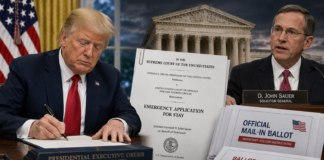
- Recent Supreme Court rulings favor the Trump administration’s construction projects.
- The White House ballroom project is now moving forward after legal challenges.
- Experts suggest these rulings may reshape the legal landscape for future projects.
- President Trump emphasizes the importance of these victories for national security and economic growth.
What Happened
In a significant legal victory for the Trump administration, the Supreme Court recently ruled in favor of the construction of a new White House ballroom, allowing the $400 million project to proceed without further legal hindrance. This decision came after a historic preservation group attempted to block the project, claiming it violated preservation laws. However, the Court determined that the group did not have sufficient standing to challenge the construction, effectively clearing the way for the administration to continue its ambitious plans.
President Trump expressed his satisfaction with the ruling, stating, ‘We have a lot of very happy construction workers.’ The project, which is being built on the site of the former East Wing, is reportedly under budget and ahead of schedule. This ruling is not just a win for the administration but also a reflection of how procedural rulings can be leveraged to advance significant projects, even amidst ongoing legal challenges.
- The Supreme Court ruled that the National Trust for Historic Preservation lacked standing to block the project.
- The ruling allows construction to continue without delay, emphasizing the administration’s commitment to national security.
- Chief Justice John Roberts dissented, raising concerns about the legality of the president’s actions.
- The ballroom project is seen as vital for hosting national events and enhancing security measures.
Why It Matters
The implications of this ruling extend beyond just the construction of a ballroom. It highlights a broader trend in which the Trump administration has effectively utilized procedural tools to navigate legal challenges and push forward its agenda. By securing a favorable ruling from the Supreme Court, the administration has demonstrated its ability to overcome obstacles that might have stalled other administrations. This is particularly significant in an era where legal battles often delay or derail important infrastructure projects.
Moreover, the decision underscores the importance of the judiciary in shaping the landscape of federal projects. With the Supreme Court siding with the administration, it sets a precedent that could influence future cases involving federal construction and development. The ruling also raises questions about the balance of power between the executive and legislative branches, particularly concerning the authority to manage federal properties.
- The ruling allows the administration to proceed with construction that is deemed essential for national security.
- It reinforces the administration’s strategy of using procedural rulings to advance its agenda.
- Congress may now be the only viable challenger to similar future projects.
- Legal experts suggest that the ruling could lead to more aggressive actions by the executive branch in similar cases.
Political and Public Context
This ruling is part of a larger narrative surrounding the Trump administration’s approach to governance and legal challenges. The president has often faced opposition from various groups, including environmentalists and historic preservation advocates, who have sought to halt or delay his initiatives. However, this recent victory illustrates how the administration has adeptly maneuvered through the legal system to achieve its goals.
Furthermore, the Supreme Court’s decision reflects a growing trend in which the judiciary is increasingly willing to grant the executive branch leeway in its actions, particularly in matters of national security and infrastructure development. This shift could have lasting implications for how future administrations approach similar challenges.
- The Trump administration has faced numerous legal challenges regarding its policies and projects.
- Previous rulings have also favored the administration in cases involving immigration and environmental regulations.
- The Supreme Court’s composition has shifted, with recent appointments influencing its decisions.
- Legal experts are closely monitoring how this ruling will affect future cases involving federal authority.
Trump takes narrow Supreme Court rulings as big wins #TheHill https://t.co/O9BBwK5OZa
— #TuckFrump (@realTuckFrumper) September 7, 2026
What Happens Next
Looking ahead, the administration is poised to capitalize on this momentum to advance other key projects. The successful continuation of the White House ballroom construction could serve as a blueprint for future initiatives that may face legal scrutiny. As the administration continues to push its agenda, it will likely encounter further challenges, but this ruling provides a strong foundation for moving forward.
Moreover, the administration may seek to leverage this victory to rally support for additional infrastructure projects that are critical for economic growth and national security. The focus will likely be on ensuring that similar procedural victories are achieved in other areas, particularly as the administration seeks to solidify its legacy in the face of ongoing opposition.
- Future infrastructure projects may be expedited as a result of this ruling.
- The administration will likely continue to face legal challenges, but this ruling strengthens its position.
- Congress may need to respond to the implications of this ruling regarding federal authority.
- Ongoing monitoring of the legal landscape will be crucial for the administration’s future initiatives.