Story Highlights
- Donald Trump backs a GOP plan to resolve DHS funding standoff
- Two-step strategy separates core funding and immigration enforcement
- Move helps unify Republicans after weeks of internal disagreement
Situation Overview
The political deadlock surrounding funding for the Department of Homeland Security (DHS) appears to be moving toward resolution after Donald Trump publicly backed a Republican-led plan aimed at breaking the impasse. The funding dispute had created a partial shutdown scenario, raising concerns over national security operations, border enforcement, and airport screening functions.
With pressure mounting from both operational disruptions and political fallout, Trump’s endorsement signals a shift from internal Republican disagreement toward a more coordinated strategy. The move comes at a critical time when stability in homeland security operations is becoming increasingly urgent.
What Happened
According to reports, Trump endorsed a two-part funding strategy designed to address the immediate crisis while preserving long-term policy goals.
The plan includes:
- Funding the majority of DHS operations through standard budget approval
- Separating immigration enforcement funding into a later legislative process
- Allowing Republicans to pursue stricter border policies without delaying essential services
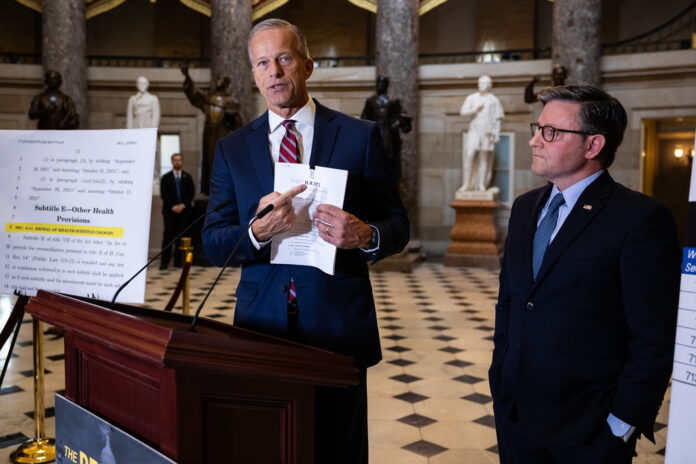
Key Republican leaders, including Mike Johnson and John Thune, aligned behind this framework, indicating a clearer path forward after earlier disagreements within the party.
This approach effectively transforms a stalled negotiation into a structured legislative roadmap.
Why It Matters
The DHS is one of the most critical agencies in the U.S. government, responsible for:
- Airport security (TSA operations)
- Border protection and immigration enforcement
- Counterterrorism and cybersecurity coordination
A prolonged funding disruption can directly impact public safety and national infrastructure. By supporting a plan that restores baseline operations first, Trump and GOP leaders are prioritizing immediate functionality while keeping policy debates alive.
From a political standpoint, this strategy also reduces the visible cost of the shutdown — a key factor that often influences public opinion.
Strategic Breakdown of the Plan
The endorsed approach follows a calculated structure:
1. Immediate Stabilization
- Restore funding for essential DHS functions
- Ensure continuity in security operations
2. Policy Separation
- Move immigration enforcement funding into a separate track
- Avoid holding core operations hostage to broader policy debates
3. Legislative Flexibility
- Use reconciliation or party-line mechanisms later
- Maintain GOP leverage on border policy
4. Political Reset
- Shift narrative from “shutdown crisis” to “policy negotiation”
- Reduce pressure on lawmakers facing public scrutiny
Political Implications
Trump’s involvement once again highlights his role as a central figure in Republican decision-making. His endorsement not only provides direction but also helps consolidate support among party members who were previously divided.
This move strengthens several key political dynamics:
- Reinforces Trump’s influence over GOP legislative strategy
- Positions Republicans as focused on restoring government functionality
- Keeps border security as a central political issue moving forward
At the same time, it allows lawmakers to avoid prolonged internal conflict, which can weaken party messaging.
Governance and Operational Impact
From a governance perspective, resolving the DHS funding issue is critical for maintaining:
- Efficient airport and travel security systems
- Border monitoring and enforcement capabilities
- Emergency response readiness
Even short-term disruptions can create ripple effects across multiple sectors, including travel, trade, and public safety. The proposed plan aims to minimize these risks while allowing policymakers to continue debating long-term immigration solutions.
Risks and Challenges
Despite the progress, several challenges remain:
- Legislative approval is not guaranteed — negotiations could still face hurdles
- Immigration funding debates may intensify once separated
- Political opposition could delay or reshape the final outcome
Additionally, dividing the funding process into two tracks may create future conflicts if consensus is not reached in the second phase.
Implications
Trump’s backing of the DHS funding plan represents a shift from conflict to coordination within the Republican Party. By supporting a structured, phased approach, he is helping to move the conversation away from shutdown politics and toward policy execution.
If successful, this strategy could serve as a model for resolving future budget standoffs — addressing immediate operational needs first while continuing broader policy debates separately. The coming days will determine whether this approach translates into legislative success or faces renewed gridlock.