Story Highlights
- President Trump humorously endorsed Sen. Ted Cruz as his pick for a potential Supreme Court vacancy during a rally in Lubbock, Texas
- The president praised Cruz’s legal credentials, describing him as a brilliant lawyer with top academic credentials from law school
- Trump suggested the nomination would achieve unprecedented bipartisan support, with both Democrats and Republicans voting unanimously to confirm Cruz in order to remove him from the Senate
- Cruz has previously declined similar opportunities, indicating his preference to remain in the Senate focused on policy battles
What Happened
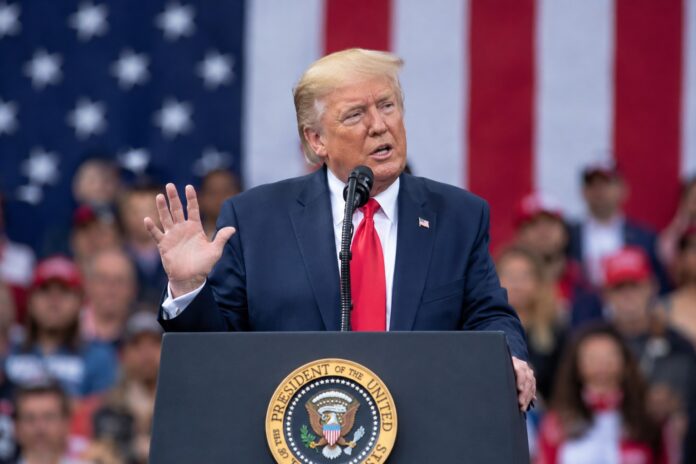
During a campaign rally in Lubbock, Texas on Tuesday, the president employed characteristic humor to discuss potential Supreme Court appointments, singling out the Texas senator as an ideal nominee for any future vacancy on the nation’s highest court. The president reflected on his three previous successful Supreme Court appointments—Justices Neil Gorsuch, Brett Kavanaugh, and Amy Coney Barrett—noting the considerable difficulty involved in securing confirmation for each justice.
The president then outlined his unconventional theory regarding Cruz’s nomination prospects. By selecting Cruz, he suggested he had discovered a novel solution to the typically contentious confirmation process that divides along party lines. He characterized the Texas senator as possessing exceptional legal qualifications, including attendance at a top law school, academic distinction as a top student, and superior credentials befitting the nation’s highest court.
The president’s assessment centered on a political reality regarding Cruz’s relationships across both chambers of Congress. He predicted that Democrats would enthusiastically support the nomination at one hundred percent because they harbored negative feelings toward the senator and desired his removal from the legislative branch. Similarly, Republicans would provide unanimous backing because members of the GOP could not tolerate Cruz’s presence in the Senate and would welcome his elevation to the judiciary.
- Rally location: Lubbock, Texas on Tuesday
- Three previous Supreme Court appointments: Justices Gorsuch, Kavanaugh, and Barrett
- Prediction of one hundred percent bipartisan support from both parties
- Cruz characterized as having top law school credentials and academic distinction
Why It Matters
These remarks illuminate a significant political dynamic regarding the Texas senator’s standing within Congress. Cruz’s polarizing presence across party lines represents an unusual phenomenon in contemporary politics—a figure whose removal from legislative office would theoretically generate consensus between ideological opponents. This observation underscores the complexity of Senate relationships and the personal dynamics that extend beyond typical partisan divisions.
The comments also reflect the ongoing challenges surrounding Supreme Court confirmations in the current political environment. With three confirmation battles already navigated, the tongue-in-cheek proposal highlights the structural difficulties inherent in securing judicial appointments when the Senate remains divided. The hypothetical scenario outlined—achieving unanimous confirmation through a candidate both sides actively wish to remove from their midst—serves as commentary on the polarized state of Senate politics and the limited common ground available for consensus.
The repeated floating of Cruz’s name for the bench demonstrates a sophisticated understanding of political leverage and messaging. By repeatedly returning to this theme across different venues and occasions, this narrative has transformed a humorous observation into a broader statement about both Cruz’s qualifications and the fractured nature of contemporary congressional relationships.
- Illustrates Cruz’s complex and strained relationships across both parties in the Senate
- Highlights persistent challenges in securing Supreme Court confirmations in a polarized environment
- Demonstrates messaging strategy regarding judicial appointments and Senate dynamics
- Reflects the broader reality of limited bipartisan consensus in contemporary Congress
Political and Public Context
These comments must be understood within the broader context of the administration’s judicial legacy and ongoing Supreme Court dynamics. The three successful appointments fundamentally reshaped the ideological composition of the Court, establishing a solid conservative majority that has rendered consequential decisions across numerous policy areas. Each confirmation battle proved arduous, with Democratic opposition attempting to block or delay the nominees through extended hearings and procedural challenges.
Cruz himself occupies a distinctive position within Republican ranks. The Texas senator’s combative approach, sharp legal mind, and willingness to challenge party leadership have generated both admiration and frustration among his colleagues. This duality—recognized competence paired with interpersonal friction—creates the conditions that make the jest particularly resonant. The humor derives from the kernel of truth underlying the observation: many lawmakers from both parties have expressed reservations about the senator’s methods and personality, even when agreeing with his policy positions.
Similar proposals regarding Cruz’s judicial future have been advanced previously, including during a White House event in July focused on economic policy. These recurring references suggest genuine respect for Cruz’s legal acumen while simultaneously employing the senator’s controversial standing as material for political commentary and humor.
- Three judicial appointments shifted Supreme Court ideological balance toward conservatism
- Each confirmation battle faced Democratic opposition and procedural challenges
- Cruz’s reputation combines legal excellence with contentious Senate relationships
- Previous similar proposals made during White House events in 2024
Trump reups calls to put Cruz on Supreme Court in vacancy scenariohttps://t.co/qr6PUb7SAY
— The Hill (@thehill) October 28, 2026
What Happens Next
The practical prospects for Cruz’s elevation to the Supreme Court remain negligible, given the senator’s explicit rejection of such opportunities when seriously broached. During an interview at a Wall Street Journal event in April, Cruz stated that judicial vacancies had been discussed with him on multiple occasions during the previous administration, and he declined each time. Cruz emphasized his commitment to remaining in the Senate to engage in political battles and policy fights rather than transitioning to the judiciary, where his role would necessarily shift toward legal interpretation divorced from direct legislative action.
Going forward, any actual Supreme Court vacancy would likely prompt renewed discussion of potential nominees, with candidates presumably being advanced from those who have indicated willingness to serve. The administration maintains options spanning federal judges, constitutional law scholars, and other jurists with established conservative credentials. However, continued references suggest the senator may continue being employed as a humorous touchstone in speeches and public appearances, regardless of the practical likelihood of a nomination occurring.
The broader question of Supreme Court composition will depend on whether vacancies emerge during the current presidential term. Should such openings arise, the administration would presumably pursue candidates combining constitutional originalism, demonstrated judicial restraint, and strong legal credentials—qualities repeatedly identified as essential for judicial nominees.
- Cruz has declined previous serious nominations during the prior administration
- Senator prioritizes Senate policy battles over judicial appointment
- Any future vacancy would likely draw from pool of willing candidates with conservative credentials
- The senator’s name may continue being invoked humorously in political contexts despite low nomination probability