Story Highlights
U.S. Supreme Court rules Trump‑era global import tariffs illegal.
Decision emphasizes congressional authority over emergency trade powers.
GOP signals intent to pursue alternative legal pathways.
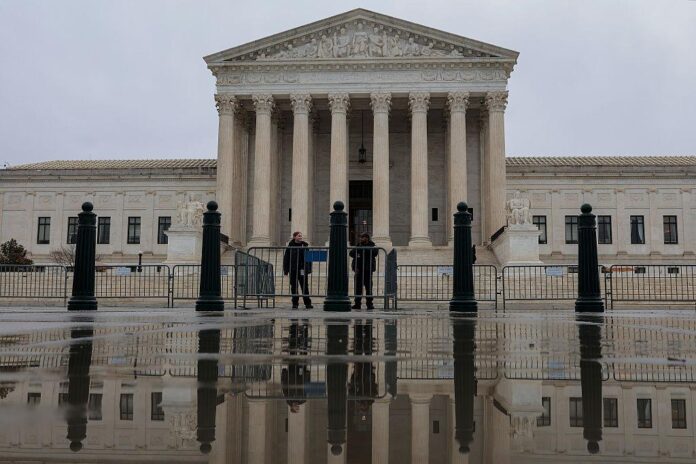
The U.S. Supreme Court has struck down former President Donald Trump’s global import tariffs, declaring they exceeded executive authority under a 1977 emergency statute. The 6–3 decision, covered by Reuters, held that Congress, not the president alone, must authorize such sweeping trade measures. The ruling marks a significant rebuke of unilateral tariff use while reaffirming statutory checks on executive power.
Trump’s tariffs — originally imposed citing national security concerns — affected hundreds of billions in imports from key partners including China, the European Union and others. Supporters had credited the tariffs with pressuring competitors and defending U.S. industries. In response to the ruling, Republican leaders and Trump‑aligned policymakers quickly vowed to pursue new legislative frameworks that would restore tariff authority through explicit congressional approval.
The ruling comes amid broader debate over trade policy and economic competitiveness. While the tariffs aimed to protect domestic production, critics argued they raised costs for U.S. consumers and disrupted supply chains. The Supreme Court’s interpretation reinforces legislative oversight, potentially reshaping how future administrations approach trade enforcement. Lawmakers from both parties now face pressure to chart a new statutory path forward.
Why It Matters
This decision redefines the boundary between executive action and legislative authority in trade policy. Tariffs are a key tool in negotiating leverage with foreign governments. Restricting unilateral tariff powers shifts leverage toward Congress and could complicate swift responses to global trade challenges.
For industries that benefited from protective duties, the ruling introduces uncertainty. Conversely, import‑dependent sectors and consumers may welcome the rollback. The outcome impacts U.S. positioning in global economic negotiations and could influence supply chain strategies and investment decisions.
Political & Geopolitical Implications
Domestically, the ruling strengthens congressional oversight and may galvanize lawmakers to draft new trade‑authority measures. Republicans supportive of Trump’s economic agenda may push for legislation that mirrors his tariff approach. Democrats, who traditionally favor different trade mechanisms, could shape compromise frameworks that balance oversight with responsiveness.
Internationally, trading partners will closely watch how the U.S. redefines tariff authority — signaling whether future trade disputes will see renewed duties or alternative instruments like targeted sanctions or negotiations.
Implications
The Supreme Court’s decision may curb executive trade actions in the short term but could also spark new bipartisan legislative efforts to redefine U.S. tariff powers. How Congress responds will shape American economic posture and global trade dynamics for years.
Sources
Supreme Court strikes down Trump’s global import tariffs as illegal