

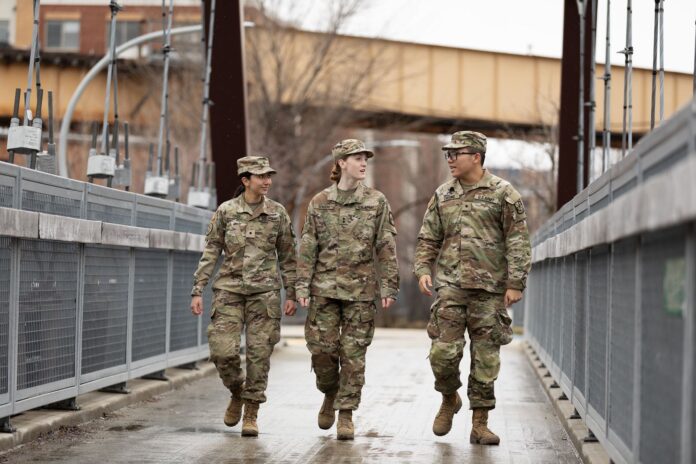
Story Highlights
The Supreme Court blocked the proposed National Guard deployment in Chicago.
The ruling reaffirmed legal boundaries on domestic military involvement.
The case reshapes how future presidents may use Guard forces.
What Happened
The U.S. Supreme Court declined to allow the Trump administration to deploy National Guard troops into the Chicago metropolitan area, delivering a landmark ruling on federal authority and domestic security operations. The proposal had been framed by administration officials as a crime‑prevention and emergency‑stabilization measure, but the Court ruled that the legal threshold for such deployment had not been met.
At the heart of the case was whether the president could invoke emergency authority to introduce Guard forces into a major U.S. city without state consent. The Court concluded that existing statutes do not allow such federalization of Guard units unless narrowly defined legal criteria are satisfied. This ruling maintains the longstanding principle that civilian law enforcement remains primarily under state and local control.
The decision immediately sparked debate across Washington. Supporters of the proposed deployment argued that high‑crime environments require federal backup when local capacity is overwhelmed. Civil‑liberty advocates countered that domestic troop deployment risks blurring the line between military and civilian authority — a boundary deeply rooted in American democratic tradition.
Why It Matters
This ruling matters because it defines how far federal authority can extend inside U.S. cities. It protects the traditional separation between military forces and everyday policing — a line that distinguishes American governance from many authoritarian systems around the world.
For future administrations, the ruling establishes a clear judicial checkpoint. Presidents must now meet higher legal standards before federalizing Guard units for domestic missions. This could reshape emergency response planning and law‑enforcement coordination nationwide.
For citizens, the ruling reinforces constitutional guardrails that protect civil liberties and prevent militarization of everyday law enforcement.
Political and Geopolitical Implications
Politically, the decision highlights the enduring strength of U.S. checks and balances. Even during security debates, executive authority remains constrained by judicial review — a feature closely watched by democratic allies abroad.
Internationally, the ruling reinforces America’s institutional credibility. Many partner nations look to U.S. governance models as benchmarks for balancing security and liberty. This ruling demonstrates that legal institutions remain central to American democracy.
Implications
Future domestic security initiatives will require more explicit legal justification and congressional cooperation, reshaping how administrations approach national emergency responses.


