Story Highlights
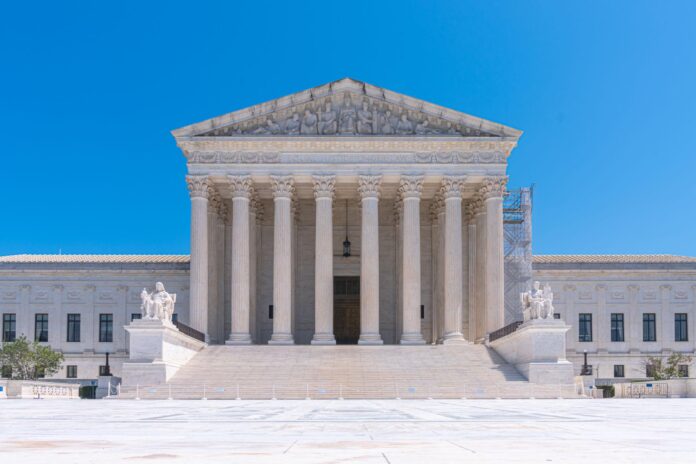
The Supreme Court of the United States declined to hear a case involving copyright protection for AI‑generated works.
Lower‑court rulings requiring human authorship for copyright remain in effect.
The decision leaves major legal questions about artificial intelligence and intellectual property unresolved.
What Happened
The Supreme Court of the United States declined to hear a closely watched case addressing whether works generated by artificial intelligence systems can qualify for copyright protection under existing U.S. law. By declining the appeal, the Court effectively allowed earlier lower‑court decisions to stand—decisions that emphasize copyright protection requires a human creator.
According to reporting from Reuters, the case centered on whether creative works produced autonomously by AI systems could be considered legally protected intellectual property. Lower courts had previously ruled that U.S. copyright law assumes a human author, meaning works created entirely by machines cannot be copyrighted under current statutes.
The Supreme Court’s refusal to take up the case does not create a new legal precedent. Instead, it maintains the existing interpretation of copyright law while leaving the broader issue unresolved. As artificial intelligence tools become increasingly capable of generating art, text, music, and code, courts and lawmakers are grappling with how existing laws should apply to new technological realities.
Why It Matters
The decision arrives at a pivotal moment for artificial intelligence development. Generative AI tools are rapidly expanding across industries including media, publishing, marketing, and software development. These technologies can produce creative outputs that resemble human work, raising questions about ownership, licensing, and intellectual property rights.
For creators and companies using AI systems, the ruling means that meaningful human involvement remains essential for securing copyright protection. If a work is generated entirely by an autonomous system, it may fall outside the protections typically granted to authors. This distinction could affect how businesses structure workflows, ensuring that human creative input plays a role in the production process.
The uncertainty also affects the broader technology sector. Companies developing AI tools must consider how intellectual property frameworks influence innovation and commercial adoption. Clear legal standards can encourage investment, while ambiguity can create compliance challenges for startups and established firms alike.
Political and Geopolitical Context
The legal debate surrounding AI and copyright reflects a broader challenge facing governments around the world: how to regulate rapidly evolving technology without stifling innovation. In the United States, Congress has begun examining potential updates to intellectual property law to address the emergence of generative AI systems.
Globally, countries are exploring different regulatory approaches. Some governments are focusing on data governance and transparency, while others emphasize intellectual property protections for both human creators and technology developers. The outcome of these debates may influence where companies choose to invest in research and development.
For the United States, maintaining a balanced approach to AI governance carries strategic importance. Strong intellectual property frameworks have historically supported American innovation, and policymakers are now considering how those frameworks should adapt to a new technological landscape.
Implications
By declining to hear the case, the Supreme Court preserved the status quo while signaling that major policy questions surrounding artificial intelligence may ultimately require legislative action rather than judicial interpretation. Until Congress updates copyright law or courts establish clearer precedents, creators and technology firms will likely continue navigating a legal gray area where human authorship remains the defining requirement for copyright protection.