Story Highlights
Supreme Court rules emergency law cannot justify sweeping global tariffs.
Decision reinforces Congress’s constitutional control over trade policy.
Markets and lawmakers assess next steps for U.S. tariff authority.
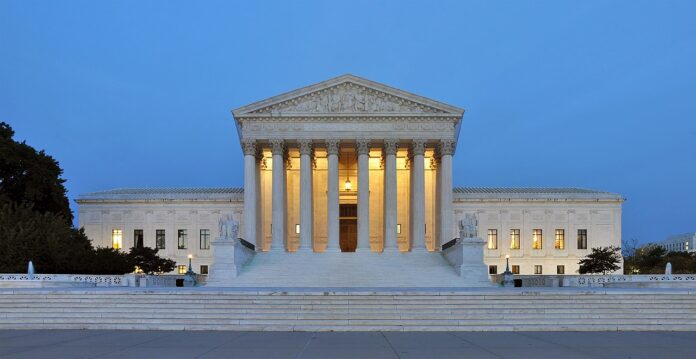
The Supreme Court of the United States has ruled that a 1977 emergency economic powers statute cannot be used to impose sweeping global tariffs without clear congressional authorization. In a 6–3 decision reported by Associated Press, the Court concluded that while the president retains authority to address specific economic threats, Congress did not explicitly grant power for broad, across‑the‑board import duties under that law.
The ruling marks a significant clarification of constitutional boundaries in trade policymaking. At issue was whether emergency authority could justify large‑scale tariffs affecting hundreds of billions of dollars in imports. The majority opinion emphasized separation of powers, underscoring that taxation and regulation of commerce fall primarily within Congress’s domain. While presidents maintain flexibility in foreign policy and targeted sanctions, the Court signaled that sweeping trade measures require clearer legislative backing.
The decision immediately reshapes the landscape for U.S. trade policy. Businesses, investors, and foreign governments now face a more defined legal framework governing tariff implementation. For companies that rely on imported goods, the ruling introduces greater predictability after years of fluctuating trade measures. For domestic industries that benefited from protective duties, it raises questions about how future safeguards might be structured under new legislation.
Financial markets responded with cautious optimism, reflecting relief over reduced uncertainty. Clearer boundaries around executive trade authority may lower volatility tied to sudden policy shifts. Analysts note that stability in tariff rules can encourage long‑term investment decisions, particularly in sectors such as manufacturing, agriculture, and technology that are heavily exposed to global supply chains.
Beyond immediate economic implications, the ruling carries broader constitutional weight. Legal scholars describe it as one of the most consequential decisions in recent years regarding executive economic authority. By narrowing interpretations of emergency statutes, the Court reinforces congressional primacy in shaping national trade policy. The decision may influence how future administrations interpret other emergency powers across economic and security domains.
Lawmakers are now expected to debate whether updated trade legislation is necessary. Some members of Congress have advocated granting clearer, more targeted tariff authority for national security concerns. Others argue that stronger oversight is needed to prevent unintended economic disruption. The ruling effectively shifts the debate from executive discretion to legislative design.
Internationally, trading partners are likely to view the decision as evidence of institutional checks within the U.S. system. A more predictable trade environment may ease diplomatic tensions that often arise from sudden tariff announcements. However, the absence of unilateral authority could also slow rapid responses during trade disputes, requiring greater coordination between branches of government.
The broader geopolitical environment adds context. Trade policy increasingly intersects with national security, technological competition, and industrial strategy. Clear legal guardrails may help stabilize negotiations with key economic partners, but structural competition in areas such as advanced manufacturing and digital infrastructure remains ongoing.
Why It Matters
Trade rules affect consumer prices, supply chains, and diplomatic relationships. By clarifying limits on emergency tariff powers, the Court reduces ambiguity that has shaped recent trade debates. Businesses benefit from predictability, while lawmakers regain central influence over future tariff frameworks.
The ruling also reinforces constitutional balance. Clear separation between executive and legislative powers can strengthen institutional credibility and provide steadier policy direction in complex global markets.
Political & Geopolitical Implications
Politically, the decision may catalyze bipartisan efforts to modernize trade statutes. Lawmakers seeking to preserve tariff flexibility will likely pursue explicit authorization mechanisms, while others may push for narrower guardrails. The debate could shape the trajectory of U.S. economic strategy heading into future election cycles.
Geopolitically, clearer legal boundaries may reassure allies and trading partners concerned about abrupt policy shifts. However, it may also require more deliberate coordination before imposing future trade restrictions. In a global environment marked by economic competition, legislative clarity could become a strategic asset.
Implications
The Supreme Court’s decision reasserts congressional authority at the heart of U.S. trade policy. While it constrains emergency tariff action in the short term, it may encourage more durable legislative frameworks moving forward. The next chapter in American trade strategy now rests squarely with Congress.
Sources
Supreme Court rules emergency law cannot justify sweeping tariffs